
Clearing the Static: A Simple Guide to EMDR Therapy for Trauma
If you’re seeking therapy, especially for difficult memories, anxiety, or trauma, you may have heard of a unique and powerful approach called EMDR.
EMDR stands for Eye Movement Desensitization and Reprocessing.
If that name sounds complicated or perhaps a little strange, you’re not alone! It involves intentionally moving your eyes or engaging in other forms of bilateral stimulation (like tapping your hands). This might seem unrelated to emotional healing, but the truth is, EMDR is one of the most thoroughly researched and effective treatments for trauma available today, recognized by major international health organizations.
This article is written just for you—the everyday person who wants a clear, simple breakdown of what EMDR is, why it works (even when traditional talk therapy stalls), and what you can expect in the session room. It’s about helping your brain finally finish processing painful events so you can move forward with less anxiety and more peace.
Time to feel better. Find a mental, physical health expert that works for you.
The Core Idea: What Happens When a Memory Gets Stuck?
To understand how EMDR works, we first need to understand how the brain processes memory—or, more accurately, how it fails to process trauma.
The Brain’s Filing System
Normally, when you experience something (like a fun day at the beach), your brain’s natural processing system takes the sights, sounds, feelings, and thoughts, consolidates them, and files them away in a neat folder labeled “Past Events.” When you recall the beach day, you remember it as past—it doesn’t feel like you are still there, and the memory doesn’t trigger a panic response.
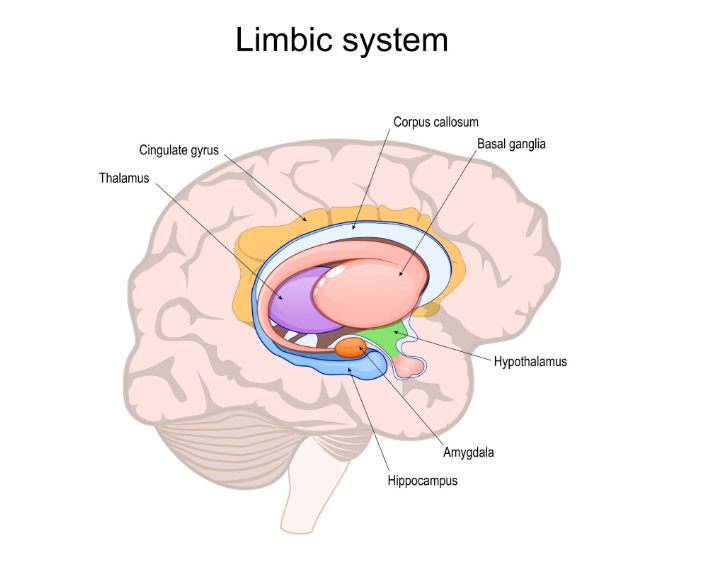
This memory processing is largely managed by the hippocampus, which gives the memory context (time and place), and the prefrontal cortex, which controls logic and planning.
The Trauma Interrupt
Now, imagine an overwhelming or traumatic event (a serious accident, a betrayal, a period of sustained neglect). When your brain detects a life threat, the emotional alarm system
Getty Images
Explore
(the amygdala) takes over. The rational, thinking part of your brain shuts down. The goal is survival, not logical processing.
- Result: The traumatic memory gets locked in the brain’s filing system without being properly processed or integrated. It’s like a computer file that was saved in a panic and became corrupted. It remains stored in the emotional memory networks.
- Symptoms: Because the memory is stuck in raw, unprocessed form, it feels like it’s happening now. Your amygdala is triggered instantly by any reminder, leading to symptoms like:
- Flashbacks: Seeing or reliving parts of the event with intense physical reactions.
- Hyperarousal: Feeling constantly jumpy, irritable, or anxious, as if danger is imminent.
- Intense Reactions: Having disproportionate emotional flare-ups when reminded of the event (a loud noise equals danger, a stern look equals an immediate threat).
The EMDR Goal: EMDR acts as a catalyst—a kind of internal “de-fragmenter”—that kickstarts the brain’s natural information processing system, allowing that stuck, painful memory to finally move from the emotional, “happening now” part of the brain to the calmer, “past event” storage area. The memory becomes integrated with the rest of your life’s narrative.
Connect Free. Improve your mental and physical health with a professional near you

The Toolkit: How Does EMDR Reprocess Memory?
EMDR was discovered in 1987 by psychologist Dr. Francine Shapiro. The method uses bilateral stimulation (BLS), which simply means stimulating both sides of the brain in an alternating rhythm.
What is Bilateral Stimulation (BLS)?
BLS is the core mechanism of EMDR. It can take three common forms:
- Eye Movements: Following the therapist’s fingers or a light bar moving back and forth across your field of vision (the original method).
- Tappers (Tactile): Holding small, hand-held pulsars that gently buzz or vibrate in an alternating pattern (left hand, right hand, left hand, right hand).
- Auditory: Listening to alternating tones or clicks through headphones (left ear, right ear, left ear, right ear).
Why Does BLS Work? (The Theory)
While scientists are still exploring the exact mechanisms, the leading theory suggests that BLS mimics the natural brain activity that occurs during REM (Rapid Eye Movement) sleep, which is when the brain naturally consolidates and processes memories from the day.
By inducing this back-and-forth rhythm while you are consciously holding the traumatic image and negative belief, EMDR essentially tricks the brain into entering a processing state. The memory becomes “unlocked” and can finally be digested, integrated, and filed away properly. This process is called adaptive information processing (AIP). The emotional intensity separates from the factual content of the memory.
8️ The Process: What Happens in a Session?
EMDR is conducted over eight structured phases. A full course of therapy might take anywhere from a few sessions (for single-incident trauma) to several months (for complex or developmental trauma), depending on the complexity of your history. The actual BLS work, known as the “reprocessing phase,” is only one part of the therapy, and it’s built upon the crucial groundwork of the preparation phases.
Phase 1 & 2: History and Preparation (Crucial for Safety!)
Before you touch any traumatic material, your therapist spends significant time building a strong foundation of safety, stability, and trust. This phase often takes one or more entire sessions.
- History: You and your therapist collaboratively identify the specific target memory (the “stuck” incident) you want to work on. You also identify past negative memories that contributed to the current problem and future positive goals you hope to achieve.
- Preparation: This is the most important part for preventing re-traumatization. Your therapist ensures you have multiple coping skills and resources to handle distress before the deep work starts. You might practice grounding techniques (bringing your awareness to the present moment) or learn how to activate a Safe/Calm Place in your imagination. This ensures you can stop the process at any time and regulate your nervous system.
Phase 3: Assessment—Targeting the Memory
In this phase, you pinpoint the exact “corrupted file” you are going to work on. You identify four key elements that define the memory’s emotional charge:
- The Image: The worst, most defining, or most vivid part of the memory (e.g., the moment before the car crash or the look on someone’s face).
- The Negative Cognition (NC): The self-blaming or self-diminishing belief you have about yourself as a result of the trauma (e.g., “I am unsafe,” “I am unlovable,” or “It was my fault”).
- The Emotion: The strongest emotion you feel when you think about the image (e.g., fear, shame, disgust).
- The Subjective Units of Disturbance (SUD): You rate the intensity of the distress from 0 (no disturbance/neutral) to 10 (highest possible disturbance).
Phase 4, 5, & 6: Reprocessing (The BLS Work)
This is the core healing part, involving the bilateral stimulation.
- Phase 4 (Desensitization): You hold the target image and the negative belief in your mind, and your therapist starts the bilateral stimulation. You simply notice whatever comes up—thoughts, feelings, images, body sensations, sounds. You are not meant to talk or try to force thoughts. The therapist will periodically pause (after a “set” of BLS) and ask, “What are you noticing now?” You report the change, and they start the BLS again. This is where the intensity (SUD score) slowly begins to drop as the brain processes the material.
- Phase 5 (Installation): Once your SUD score is low (usually 0 or 1), the memory is mostly desensitized. Now, you focus on the Positive Cognition (PC)—the healthy, true belief you want to replace the negative one with (e.g., changing “I am unsafe” to “I am safe now” or “I did the best I could”). The therapist uses BLS to help your brain deeply “install” this new positive belief, making it feel true at an emotional level.
- Phase 6 (Body Scan): Finally, you check your body while holding the installed positive belief. Since trauma is stored physically, you check for any lingering physical tension (e.g., in the jaw, shoulders, or stomach). If tension remains, BLS is used until the body feels calm and relaxed with the new, positive truth.
Phase 7 & 8: Closure and Re-evaluation
- Phase 7 (Closure): The therapist ensures you are grounded before leaving the session, often using the safe/calm place resource you practiced in Phase 2. If the memory is not fully processed, the therapist guides you on how to contain the material until the next session.
- Phase 8 (Re-evaluation): At the start of the next session, you revisit the target memory to ensure the distress score (SUD) remains low. If the memory is truly processed, it will feel neutral, distant, and firmly in the past, allowing you to recall the facts without the intense emotional punch.
What EMDR Feels Like (The Client Experience)
Many clients find EMDR surprising because it doesn’t rely on lengthy discussions or rational debate.
- It’s Active, Not Passive: You are actively engaged, but your job is to simply notice—to be an observer of your internal experience. You don’t have to try to “figure things out” or force anything. You let your brain do the work.
- It Can Be Emotional, But Contained: As the brain unlocks the memory, you might experience a surge of emotion, physical sensation, or a flood of new thoughts. This is normal and temporary. Because of the thorough preparation (Phase 2), you know you and your therapist can stop the process instantly to stabilize.
- The Memory Changes: The memory itself doesn’t disappear (you don’t forget the event), but its emotional charge fades drastically. The image might become blurry, smaller, less colorful, or simply lose its punch. The negative belief that was once concrete (“I am completely worthless”) transforms into an idea you can now logically dismiss (“I used to feel worthless, but I know that’s not true now”).
Stepping Into Freedom
If you’ve felt stuck in old reactions and painful memories, EMDR offers hope for a fundamental shift. It’s a process of giving your brain the simple biological boost it needs to finish the job of healing.
It is important to remember that EMDR should only be conducted by a certified, trained EMDR therapist. With the right guidance, you can clear the static of the past and step into a present moment that feels truly safe and free.

Free consultations. Connect free with local health professionals near you.
Conclusion
Clearing the Static and Reclaiming Your Present with EMDR
You have explored the mechanics and profound potential of Eye Movement Desensitization and Reprocessing (EMDR), understanding it as a sophisticated, body-based approach to healing trauma. This conclusion reinforces the essential takeaway: EMDR is not talk therapy; it is brain therapy. It gives your own powerful, natural processing system the boost it needs to finish integrating painful, stuck memories, allowing you to move from feeling constantly trapped in the past to being fully grounded in the present.
The Biological Reality of a “Stuck” Memory
The most crucial understanding in EMDR is that trauma symptoms are the result of a failed filing process. When you experienced the overwhelming event, your brain’s alarm center, the amygdala
, took over. The memory was saved in a “raw” state, isolated from the rest of your life’s narrative and context.
- The Problem: Because the memory is stored in this raw state, every time something reminds you of the original event, your brain reacts as if the danger is happening now. This leads to flashbacks, intense emotional spikes, and chronic hypervigilance.
- The Solution: EMDR, through the use of Bilateral Stimulation (BLS), mimics the natural processing state of REM sleep. This biological rhythm essentially “unlocks” the frozen file, allowing the hippocampus and prefrontal cortex to finally consolidate the memory. The memory is then accurately re-filed in the “Past Events” folder.
The memory does not disappear; its emotional charge disappears. You are left with the facts of what happened, but without the intense physical and emotional reaction.
The Power of the Eight-Phase Protocol
The effectiveness of EMDR lies in its rigorous, eight-phase structure, which places client safety and stability above all else. The actual reprocessing phase (Phase 4) is built upon the foundational work of preparation (Phase 2), ensuring you are always equipped to handle distress.
1. Preparation (Phase 2): The Safety Net
This phase is non-negotiable and often takes the most time. Before touching the painful memories, your therapist ensures you have:
- Internal Resources: Establishing a safe, calm place visualization or practicing grounding techniques.
- Contained Control: You know you can stop the bilateral stimulation (BLS) at any point—a vital corrective experience for trauma survivors who often felt they had no control during the original event.
This preparation proves to your nervous system that you are safe and supported throughout the process.
2. Targeting and Desensitization (Phases 3 & 4)
This is where the precision of EMDR shines. You don’t vaguely talk about your trauma; you pinpoint the core components:
- The Image: The worst moment of the event.
- The Negative Cognition (NC): The self-blaming belief you formed (“I am powerless”).
- The SUD Score: The measure of distress (0-10).
During the desensitization phase, your job is simply to notice what comes up (thoughts, feelings, body sensations) as the BLS works. You are not trying to analyze or direct the process. You are allowing your brain to follow its own natural path toward resolution. This phase is complete when the distress score drops to zero or one.
Integrating the Positive: From Survival to Resilience
Healing in EMDR is not just about reducing pain; it’s about establishing a new, healthy truth.
1. Installation (Phase 5): Rewiring the Belief
Once the negative emotional charge of the memory is gone, your therapist guides you to focus on the Positive Cognition (PC)—the true, empowering belief that you want to internalize (e.g., changing “I am powerless” to “I am strong now” or “I survived and I am capable”).
BLS is used again to help your brain fully accept this new truth at a deep, emotional level. You move from intellectually knowing you are capable to feeling it in your core.
2. The Body Scan (Phase 6): Embodied Healing
Since trauma is stored in the body, the final check involves a full body scan. You hold the positive cognition (“I am safe now”) and check every part of your body (shoulders, stomach, jaw) for any lingering tension. If tension remains, the BLS continues until your body is completely relaxed and in alignment with the positive belief. This ensures the trauma is resolved not just in your mind, but in your entire nervous system.
Stepping Into Clarity and Freedom
EMDR offers a path of hope and clarity. It teaches you that your symptoms are not signs of personal weakness, but rather the sound of a system stuck on “alarm.” By engaging in this process, you are giving your brilliant, survival-oriented brain exactly what it needs to finalize the healing.
The most common reports from clients after successful EMDR are:
- Emotional Distance: “I can recall the memory, but it doesn’t hurt anymore.”
- Physical Calm: A profound reduction in chronic anxiety, tension, and hypervigilance.
- Present Focus: A new ability to feel grounded and safe in the present moment, rather than being constantly pulled back into the past.
If you are tired of talking circles around your trauma and want a method that works directly with your brain’s own capacity for repair, EMDR is a powerful avenue toward lasting peace.
Time to feel better. Find a mental, physical health expert that works for you.
Common FAQs
If you’re considering or starting EMDR, it’s understandable to have questions about this unique, body-based approach. Here are clear, simple answers to the most common questions people ask about Eye Movement Desensitization and Reprocessing.
What is the main goal of EMDR?
The goal of EMDR is to help your brain process and integrate traumatic memories that got “stuck” in your nervous system. By using bilateral stimulation (BLS), EMDR helps move the memory from the emotional, “happening now” part of your brain to the calmer, “past event” storage area. This reduces the emotional charge and physical distress associated with the memory, allowing you to recall the facts without being overwhelmed.
Why does EMDR use eye movements or tappers? Why not just talk?
The use of bilateral stimulation (BLS)—eye movements, tappers, or auditory tones—is what differentiates EMDR. Scientists believe this alternating stimulation mimics the natural process that occurs during REM sleep, which is when your brain typically consolidates memories. BLS acts as a catalyst that temporarily “unlocks” the frozen, traumatic memory file, allowing your brain’s natural healing mechanisms to integrate it correctly.
Do I have to tell the therapist every detail of my trauma?
No. One of the great benefits of EMDR is that you do not have to verbally recount the entire traumatic story in detail. The therapist only needs you to identify the Target Image (the worst part) and the Negative Cognition (the negative belief about yourself) associated with the event. During the reprocessing phase, you just notice what comes up internally, minimizing the risk of re-traumatization that can occur from repeated verbal narration.
Is EMDR just hypnosis?
No. EMDR is not hypnosis. During the entire session, you remain fully conscious, aware, and in control. You are an active participant, monitoring your internal experience and communicating with the therapist. You can stop the process at any time, which is a key component of safety.
Common FAQs
The Session Experience
What will I feel during the reprocessing phase (Phase 4)?
During reprocessing, you simply sit and notice whatever comes up while the BLS is happening. You might notice:
- Shifting Images: The memory might change, blur, become smaller, or change color.
- Emotional Surges: You might feel a temporary surge of sadness, fear, or anger.
- Body Sensations: You might feel tingling, warmth, tension, or a change in breath. This is all normal and signals that your brain is actively processing the stuck information. The goal is to let these sensations and images come and go without judgment or analysis.
What if the session brings up intense feelings?
Because EMDR is an eight-phase protocol, your therapist spends significant time in Phase 2 (Preparation) ensuring you have strong coping skills, like the Calm/Safe Place visualization and grounding techniques. If intense feelings arise, your therapist will guide you to stop the BLS immediately and use one of these techniques to stabilize your system. The process is always client-led and contained.
What is the difference between the Negative Cognition (NC) and the Positive Cognition (PC)?
- NC (Negative Cognition): The self-blaming or self-diminishing belief you hold as a result of the trauma (e.g., “I am not good enough,” “I am powerless,” or “It was my fault”).
- PC (Positive Cognition): The healthy, true belief you want to replace the NC with (e.g., “I am competent,” “I am safe now,” or “I did the best I could”).
The reprocessing phase reduces the distress around the NC, and the installation phase (Phase 5) helps your brain emotionally accept the PC.
How long does it take for EMDR to work?
The duration varies depending on the complexity of your trauma history. For a single-incident trauma (like a car accident), significant reprocessing might occur in as little as 3 to 6 sessions. For complex or developmental trauma (childhood neglect, long-term abuse), it may require a longer course of therapy over several months or more, as multiple memories need to be processed systematically.
Common FAQs
After the Session
Will I forget the memory after EMDR?
No, you will not forget the memory. The facts of the event—who, what, when, where—will remain the same. What changes is the emotional and physical charge. After successful EMDR, the memory will feel neutral, distant, and firmly in the past. You will be able to talk about it without triggering the intense anxiety or physical distress you felt before.
Should I expect to feel tired or emotional after a session?
It is common to feel a bit tired, reflective, or “fuzzy” after an intensive reprocessing session, similar to how you might feel after a vivid dream. Your brain has done a lot of work! Your therapist will use Phase 7 (Closure) to ensure you are fully grounded before leaving. It is generally advised to schedule light activity after your session and be gentle with yourself, knowing your brain is continuing to process.
People also ask
Q: What kind of trauma is EMDR used for?
A: What conditions and problems does EMDR treat? The most widespread use of EMDR is for treating post-traumatic stress disorder (PTSD). Mental healthcare providers also use it in the treatment of the following conditions: Anxiety disorders: Generalized anxiety disorder, panic disorder, phobias and social anxiety/phobia.
Q:Is EMDR therapy safe?
A: Yes, EMDR therapy is considered safe when conducted by a trained and licensed therapist. It is a well-researched and evidence-based treatment for trauma and other mental health issues.
Q: What are EMDR therapy side effects?
A: – Explanation: Some individuals report physical side effects after EMDR, such as headaches, dizziness and fatigue. These symptoms are generally mild and short-lived. – Management: Staying hydrated, getting adequate rest and discussing these symptoms with your therapist can help alleviate discomfort.
Q:Who is EMDR not suitable for?
A: People with active psychosis, uncontrolled bipolar disorder, severe dissociative disorders, or active substance abuse are typically not good candidates for EMDR therapy. Those in current crisis situations, lacking basic coping skills, or unable to form therapeutic relationships also need alternative approaches.
NOTICE TO USERS
MindBodyToday is not intended to be a substitute for professional advice, diagnosis, medical treatment, or therapy. Always seek the advice of your physician or qualified mental health provider with any questions you may have regarding any mental health symptom or medical condition. Never disregard professional psychological or medical advice nor delay in seeking professional advice or treatment because of something you have read on MindBodyToday.
Share this article

Let us know about your needs

Quickly reach the right healthcare Pro

Message health care pros and get the help you need.
Popular Healthcare Professionals Near You
You might also like

What is Face Your Fear and…
, What is Exposure Therapy for Anxiety? Everything you need to know Find a Pro Facing the Fear Monster: A […]

What is Psychodynamic Therapy Explained Guide?
, What is Psychodynamic Therapy Principles? Everything you need to know Find a Pro Digging Deeper: A Simple Guide to […]

What is DBT Therapy Made Simple…
, What is Dialectical Behavior Therapy (DBT) ? Everything you need to know Find a Pro Navigating the Storm: Understanding […]

