Digging Deeper: A Simple Guide to Psychodynamic Therapy Principles
Hello! If you’ve started therapy, or are thinking about it, you know that the journey often involves talking about the past. Your therapist might gently guide conversations toward your childhood, your early relationships with your parents, or the way you reacted to significant events years ago.
You might wonder, “Why are we spending so much time on the past when I’m struggling with anxiety today? Shouldn’t we be focusing on what I can do right now to feel better?”
The answer lies in one of the most enduring and foundational approaches to understanding the human mind: Psychodynamic Therapy.
Psychodynamic therapy is not just about solving today’s immediate, conscious problems; it’s about understanding the root cause of those problems—the deep, often unconscious patterns and emotional conflicts that started in your early life. It’s based on the idea that the struggles you face today are often reruns of old scripts, and that true, lasting change requires editing the script’s origin story, not just managing the current performance.
Time to feel better. Find a mental, physical health expert that works for you.
This article is for you—the everyday person, the “therapy customer”—who wants a clear, simple, and warm explanation of what psychodynamic therapy is, why it focuses on the past, and how recognizing your deepest patterns can be the key to unlocking emotional freedom today.
What is Psychodynamic Therapy, Anyway? The Iceberg Model
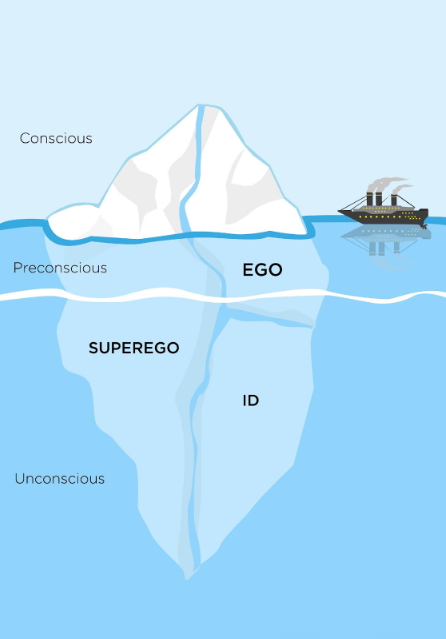
At its core, Psychodynamic Therapy descends from the work of Sigmund Freud, though modern approaches have evolved significantly to be shorter, more focused on present relationships, and less rigid. The most helpful way to understand the psychodynamic view of the mind is through the Iceberg Model.
- The Tip (The Conscious Mind): This is the small part above the water. It’s what you know right now—your immediate thoughts, feelings, and current awareness. For example: “I feel anxious about this presentation.”
- The Waterline (The Preconscious Mind): This is just beneath the surface. These are memories or thoughts you aren’t actively thinking about but can easily retrieve if prompted. For example: “What did I have for dinner last night? Oh, tacos.”
- The Deep Water (The Unconscious Mind): This is the massive, submerged part—the engine room of your mind. It holds all the feelings, memories, desires, urges, and emotional patterns that are too painful, overwhelming, or socially unacceptable for your conscious mind to handle. These contents are actively kept out of your awareness, but they are constantly influencing your behavior, relationships, and mood today.
The Central Principle of Psychodynamic Therapy: The unconscious drives the conscious. Your current anxiety, your tendency to choose emotionally unavailable partners, and your habit of self-sabotage are not random; they are often the visible symptoms of a conflict or pattern that lives deep in your unconscious mind. The goal of psychodynamic therapy is to bring the unconscious into the conscious, so you can understand it, integrate it, and stop letting it run the show without your permission.
The Core Principles: How the Past Becomes the Present
Your therapist uses the following key principles to understand and interpret what is happening in your life and in the therapy room. These concepts serve as the road signs that point toward the root cause of your current struggles.
- The Importance of Early Life Experiences (The Blueprint)
Psychodynamic therapy places enormous value on your childhood and early relationships, particularly with your primary caregivers. Why? Because these early experiences form your foundational emotional blueprint or Internal Working Model for how relationships work, how you should treat yourself, and what you can expect from the world.
- Forming Core Beliefs: If, as a child, your cries were met with inconsistency, neglect, or ridicule, you learned: “My needs won’t be met,” or “Showing vulnerability is unsafe.” This core lesson doesn’t just disappear; it becomes an unconscious model you carry into every adult relationship, making you anxious, dismissive, or prone to trusting the wrong people.
- Unmet Needs and Repetition: Psychodynamic work often focuses on identifying these unmet emotional needs from childhood (e.g., the need for secure attachment, validation, or autonomy). When those needs weren’t met then, you spend your adult life unconsciously trying to get them met in inappropriate or unhealthy ways—this is often called repetition compulsion (unconsciously repeating a painful relational pattern in hopes of mastering it). For example, you might repeatedly seek out partners who are emotionally unavailable, just like a parent was, hoping this time you can earn their love.
By exploring the past, you see that your present behavior is often a desperate, unconscious, and creative attempt to fix an old wound.
Connect Free. Improve your mental and physical health with a professional near you
- Defense Mechanisms: Protecting the Vulnerable Heart
Because the truth about our past pains or our unacceptable desires is often too much for the conscious mind to handle, the mind develops automatic, internal strategies to keep that content hidden in the unconscious. These are called Defense Mechanisms.
- Function: Defense mechanisms are brilliant, automatic survival tools developed in childhood to protect your vulnerable self from overwhelming anxiety or psychic pain. They allow you to function when the truth is too difficult to face.
- Problem: While they helped you survive childhood, they become rigid in adulthood, prevent intimacy, and cause problems because they distort reality.
- Examples of Common Defenses:
- Repression: Pushing painful memories or urges completely out of conscious awareness.
- Denial: Refusing to acknowledge a painful reality.
- Projection: Attributing your own unacceptable thoughts or feelings onto someone else. (Example: You feel intensely angry at your boss, but instead of acknowledging it, you accuse your boss of being angry and unfair to you.)
- Intellectualization: Talking about painful feelings in a cold, academic, or overly analytical way to avoid experiencing the emotion itself.
In therapy, recognizing when you are using a defense mechanism is crucial. The therapist gently points out the defense, not to criticize you, but to help you see the barrier you’ve erected, so you can choose to lower it and access the feeling it’s hiding.
- Transference: The Rerun in the Room
This is arguably the most powerful concept in psychodynamic therapy and one of the keys to deep healing. Transference is the unconscious act of projecting feelings, attitudes, and expectations from a significant past relationship (usually a parent, sibling, or early caregiver) onto a person in the present—most clearly, the therapist.
- The Unconscious Play: If your father was distant and critical, you might find yourself feeling anxious, judged, or ignored by your kind, present therapist, even though they haven’t done anything critical. Your unconscious mind is saying, “Wait, this person has power and attention; they must behave like my father did!”
- The Purpose: The therapy room becomes a safe “laboratory” or a “stage” for you to unconsciously re-enact your most problematic relationship patterns. This allows your therapist to see the pattern in real-time, which is a powerful moment of discovery.
- Working with Transference: When your therapist notices transference, they don’t take it personally. They use it as evidence, gently pointing it out: “I notice you seem afraid of my feedback, just like you described feeling about your father’s feedback. Can we explore that feeling right here, right now, as you feel it toward me?” This allows you to experience the old, painful feeling in a new, corrective, safe relationship, which is the core of the healing process—experiencing the past, but resolving it in the present.
How Psychodynamic Therapy Works in the Session
Your psychodynamic therapist is actively listening and looking for the patterns in your story, your feelings, and your relationship with them.
- Free Association and Unedited Expression
Often, psychodynamic therapy involves you talking relatively freely about whatever comes to mind—a dream, a random thought, a strong feeling, or a mundane event. This is Free Association.
- The Goal: By speaking without censoring, editing, or worrying about logic, you give the unconscious a chance to leak out. A random tangent, an abrupt change of subject, or a slip of the tongue (a “Freudian slip”) often reveals the hidden conflict that the conscious mind is trying to suppress.
- The Therapist’s Role: They listen less for the literal content of the story and more for the gaps, the sudden shifts in emotion, and the recurring themes that suggest an underlying anxiety or conflict.
- The Therapeutic Alliance: Safety and Trust
While the past is central, the actual vehicle for healing is the present relationship with your therapist—the Therapeutic Alliance.
- This relationship must be deeply trusting, consistent, and reliable. It provides a “holding environment”—a safe, consistent place where you can risk exploring painful emotions and test out new ways of relating without the fear of abandonment or rejection.
- The therapist models a different, healthier relational experience than you might have had in childhood, providing a Corrective Emotional Experience that updates your old blueprints and allows you to form better relationships outside the therapy room.
A Final Supportive Word: From Understanding to Freedom
Engaging in psychodynamic therapy can sometimes feel unsettling because it deliberately surfaces material you’ve spent a lifetime trying to hide. It requires courage to look at the darker, messier parts of your history and your personality.
But the promise is enormous: When you understand the origin of your struggles—when you bring that massive, submerged iceberg into the light—you stop living on auto-pilot. You stop letting the emotional needs and defenses of your past dictate your decisions in the present. You gain true insight, which leads to agency—the power to consciously choose a different, healthier path forward. You move from saying, “Why does this always happen to me?” to saying, “I understand why I do this, and now I choose to do something new.”
The goal is not to live in the past, but to understand the past deeply enough so you can finally live fully in the present.
Free consultations. Connect free with local health professionals near you.
Conclusion
Wrapping Up Your Journey: The Enduring Power and Promise of Psychodynamic Therapy
If you’ve explored the core principles of Psychodynamic Therapy, you’ve completed a profound and often challenging process. You have moved beyond simply addressing your symptoms and have courageously begun to understand the deep, often hidden roots of your current struggles. You’ve realized that your present-day anxiety, relationship challenges, and self-defeating behaviors are not random flaws, but rather re-enactments of old scripts and unconscious attempts to resolve early emotional conflicts.
The conclusion of this therapeutic journey is not an abrupt end, but a major shift in perspective and power. This final section focuses on the three enduring gifts that Psychodynamic Therapy offers to you, the therapy customer, as you move forward: profound insight, the freedom of agency, and the corrective experience of a new relational blueprint.
- The Gift of Profound Insight: Unmasking the Unconscious
Before psychodynamic work, your struggles felt chaotic and confusing because the causes were submerged in the unconscious mind
. Insight, in this context, is not just intellectual understanding; it is the emotional realization of how the past lives in the present.
- De-Personalizing the Problem: By using tools like free association and exploring defense mechanisms, you discover the origins of your core fears. You realize, for example, that your tendency to intellectualize arguments or to deny your anger wasn’t a personality defect; it was a brilliant and necessary survival strategy developed in childhood to manage an overwhelming family environment. This realization shifts the burden from “I am flawed” to “I learned to cope brilliantly, and now I can choose a new skill.”
- Seeing the Blueprint: You gain clarity on your Internal Working Models—the unconscious rules about relationships learned early on. You see clearly why you consistently choose partners who are emotionally unavailable (repetition compulsion) or why you immediately fear criticism from an authority figure (transference). This knowledge allows you to anticipate your own automatic reactions and choose a different, healthier response instead of being blindly driven by the past.
- Integrating the Whole Self: The process involves integrating the “rejected” or “unacceptable” parts of yourself (unconscious feelings, hidden desires, or shameful memories) back into your conscious identity. When the whole self is seen and understood, the pressure to maintain rigid defense mechanisms eases, freeing up enormous emotional energy.
The gift of profound insight is the realization that your current struggles are not random, but hold a deep, understandable meaning rooted in your emotional history.
- The Freedom of Agency: Moving Beyond Repetition
Insight is powerful, but it’s only half the journey. The true promise of psychodynamic therapy lies in cultivating agency—the ability to act, choose, and feel effectively in your own life.
- Interrupting the Pattern: When the unconscious pattern (the old script) is brought into the light, it loses its power to control you automatically. For example, once you understand that your fear of intimacy stems from an early experience of inconsistent love, you can interrupt the automatic impulse to push away a current, healthy partner. You gain a moment of conscious choice: “This sudden urge to run is the old pattern—it’s the transference from my childhood fear. I can choose to stay and be vulnerable instead.”
- Challenging Defense Mechanisms: You learn to catch your defenses in action. When you feel the urge to intellectualize a painful feeling, you recognize the defense and choose, instead, to allow yourself to feel the raw sadness or vulnerability, even for a moment. This active choice strengthens your conscious self and reduces the need for the rigid, isolating defenses.
- Embracing Ambivalence: Life and relationships are complex, full of contradictions (love and anger, need for independence and need for closeness). Psychodynamic work helps you tolerate these messy feelings (ambivalence) without having to resort to black-and-white thinking (splitting). This allows you to engage with the world and others more flexibly and authentically, no longer needing perfect certainty to feel safe.
The freedom of agency is the shift from passively repeating the past to actively authoring your present and future.
- The Corrective Experience: Updating the Relational Blueprint
While much of the work involves analyzing the past, the core mechanism of healing is the present relationship with your therapist—the Therapeutic Alliance. This relationship acts as a safe, consistent model that fundamentally updates your old relational blueprints.
- Safe Re-Enactment: The therapist provides a safe “stage” for the most difficult relational dramas to unfold through transference. You might unconsciously test the therapist by being late, seeking excessive reassurance, or expressing hostility, unconsciously recreating old power dynamics. Unlike the original caregivers, the therapist does not react to the provocation; they remain consistent, reliable, and non-judgmental.
- The Corrective Emotional Experience: The therapist’s stable, consistent presence provides a Corrective Emotional Experience. For example, if your childhood caregivers were inconsistent or abandoning, the experience of having a therapist who is consistently present, reliable, and non-critical teaches your unconscious mind a new, healthier blueprint: “It is possible for a powerful person to be consistent and safe. My needs can be met.”
- Internalizing the Therapist: As therapy progresses, you begin to internalize the therapist’s voice—their non-judgmental curiosity, their capacity to tolerate complex feelings, and their supportive stability. This internalized presence becomes a lifelong resource, strengthening your own inner voice and capacity for self-support long after therapy concludes.
The enduring promise of Psychodynamic Therapy is that you don’t just understand your past—you resolve it by rewriting your most fundamental relational rules in the safety of the present. You leave therapy with a more cohesive sense of self, a profound understanding of your own complexity, and the conscious power to choose new patterns.
Time to feel better. Find a mental, physical health expert that works for you.
Common FAQs
If you’ve been introduced to Psychodynamic Therapy, you know it’s a deep dive into the past and the unconscious mind. It’s natural to have questions about how these historical concepts actually help with present-day problems. Here are answers to the most common questions from people engaging with this powerful approach.
People also ask
Q: What are the principles of psychodynamic therapy?
A: Psychodynamic therapy encourages the expression and processing of difficult emotions, which is crucial for healing. By exploring and expressing repressed or unconscious emotions, individuals can experience emotional relief and gain new perspectives on their experiences.
Q:What is the principle digging tool used by psychoanalysis?
A:The principal “digging” tool used by psychoanalysis is Free association. This technique involves the patient freely sharing thoughts, feelings, and memories without censorship to explore the unconscious. It helps uncover repressed thoughts and emotions, providing insight into the patient’s underlying issues.
Q: What are the 5 elements of psychodynamic therapy?
A:Psychodynamic therapy comprises five essential elements: the exploration of unconscious processes, the significance of early childhood experiences, the therapeutic relationship, the examination of defense mechanisms, and the focus on transference and countertransference.
Q:What is the core principle of psychodynamic theory?
A: Psychodynamic theory refers to psychological frameworks that focus on the psychological drives and forces within individuals, explaining human behavior and personality as influenced by unconscious motivations and conflicts, originating from Sigmund Freud’s psychoanalysis.