
What is Mindfulness-Based Stress Reduction (MBSR)
?
Everything you need to know
Finding Anchor in the Storm: A Simple Guide to Mindfulness-Based Stress Reduction (MBSR)
Introduction: The Overwhelmed Mind
If you’re considering therapy or reading about ways to manage stress, you know what it feels like to have an overwhelmed mind. It’s the feeling of living life on fast-forward, where your brain is constantly churning—worrying about the past, planning the future, and rarely settling into the present moment.
This constant mental noise—the deadlines, the anxieties, the endless to-do list—isn’t just exhausting; it’s the root of chronic stress, anxiety, and often, physical discomfort.
You might have heard of Mindfulness-Based Stress Reduction (MBSR) and wondered: Is this just meditation? Is it some ancient spiritual practice? Will it actually help me deal with my mortgage, my boss, or my kids?
The simple, powerful answer is yes.
MBSR, pioneered by Jon Kabat-Zinn in the 1970s at the University of Massachusetts Medical School, is a highly practical, secular (non-religious) program based on decades of scientific research. It is a systematic, evidence-based way of training your mind to be present, to handle difficult thoughts and feelings without being swept away by them, and to fundamentally change your relationship with stress. The program was originally designed to help people deal with chronic pain and illnesses that conventional medicine couldn’t fully address, proving its power in challenging physical and mental situations.
Time to feel better. Find a mental, physical health expert that works for you.
Think of MBSR not as a cure for stress, but as a re-education program for your attention. It doesn’t remove the waves of stress, but it teaches you how to surf them. It gives you an anchor so that when the storm hits, you don’t capsize.
This guide will walk you through what MBSR is, how it works, what happens during the eight-week program, and how these simple practices can fundamentally change the way you live your life.
What Exactly Is MBSR?
MBSR is an intensive, eight-week psycho-educational program designed to teach you mindfulness skills and apply them directly to the challenges and stressors of your everyday life. It involves weekly group sessions led by a certified instructor, along with daily home practice.
-
The Core Definition of Mindfulness
Mindfulness is a simple concept, but it’s hard to practice:
Mindfulness is paying attention, on purpose, in the present moment, non-judgmentally.
- Paying Attention: It’s about directing your focus away from the mental chatter.
- On Purpose: It’s intentional; you choose to do it, making it an active state.
- In the Present Moment: It’s about anchoring yourself to what is happening right now (the feeling of your breath, the sensation of your body in the chair, the sound of rain).
- Non-Judgmentally: This is the hardest and most freeing part. It means observing your thoughts, feelings, and sensations without immediately labeling them as “good,” “bad,” “stupid,” or “failure.” You simply notice them, acknowledging their presence without getting tangled up in them. This non-judgmental stance is critical because judgment fuels shame and anxiety.
-
The Science of the Pause: Creating Space
Our brains are constantly wired for “doing”—solving problems, planning, reacting. When stress hits, the primitive part of our brain (the amygdala) takes over, triggering the fight, flight, or freeze response. This protective mechanism, while useful for survival, is over-activated by modern-day stressors (like a looming deadline or a difficult conversation).
MBSR teaches you to insert a pause between a stressful event (or a painful thought) and your automatic, often destructive, reaction.
- Before MBSR: Event → Automatic Negative Thought → Immediate Intense Reaction/Panic.
- After MBSR: Event → Pause/Mindful Awareness → Observe Thought (Acknowledge, “Oh, there’s the worry thought”) → Choose a Wise Response.
This pause is where your freedom and resilience lie. It shifts you from being stuck in “doing mode” (constantly fixing or fighting) to operating in “being mode”—allowing things to be as they are, moment by moment, without immediate urgency to control them. This simple shift reduces the surge of stress hormones in the body.
The MBSR Toolkit: Three Foundational Practices
The MBSR program is structured around three main practices, which are taught sequentially over the eight weeks. These practices are designed to integrate mind and body awareness.
-
The Body Scan
This is often the first formal practice taught and is a powerful way to reconnect with your physical self.
- What it is: You lie on your back (or sit comfortably) and systematically bring your attention to different parts of your body, starting usually with your toes and moving all the way up to your head.
- What it does: The goal is simply to notice sensations—tingling, warmth, tension, numbness—as they arise, without trying to change them. This practice helps you become deeply aware of where you hold stress in your body (e.g., tight shoulders, clenched jaw). By noticing these sensations non-judgmentally, you learn to separate the mental narrative of stress from the physical reality of the sensation. It anchors your awareness firmly in the body, pulling your attention out of the chaotic, worrying mind.
-
Mindful Movement (Gentle Yoga)
MBSR uses simple, gentle yoga and stretching movements. You do not need any prior yoga experience or high flexibility.
- What it is: You perform simple movements, coordinating them with your breath, paying close attention to the sensations of stretching, fatigue, and balance.
- What it does: This teaches you to bring mindfulness into action. It’s easy to be mindful sitting still, but harder when your body is in motion or experiencing mild discomfort. This practice teaches you to acknowledge the feeling of physical strain (“This stretch is challenging”) without reacting with judgment (“I’m too stiff” or “This hurts, I must stop”). It teaches you to explore the edge of discomfort gently, building a healthier relationship with effort and pain.
Connect Free. Improve your mental and physical health with a professional near you

-
Sitting Meditation (Focusing on the Breath)
This is the classic form of mindfulness and the core practice for training attention.
- What it is: You sit upright, relaxed but alert, and anchor your attention to a neutral, reliable sensation, usually the feeling of the breath moving in and out of your body.
- What it does: Your mind will wander—into planning, judging, or worrying. That is not failure; that is simply what minds do. The practice is not about stopping thoughts; it’s about noticing when the mind has wandered and then gently and without judgment bringing your attention back to the breath. You are building the mental muscle of attention—the ability to redirect focus.
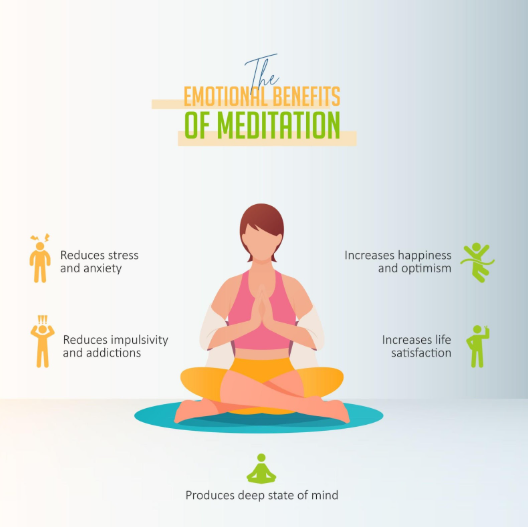
The repeated, non-judgmental return to the breath is the key mechanism of change.
The Eight-Week Journey: A Roadmap to Change
The MBSR program is delivered in a highly structured format over eight weeks, requiring a significant time commitment (2.5-hour weekly sessions plus 45-60 minutes of daily home practice).
Weeks 1-2: Awakening to the Present
- Theme: Awareness of the present moment and the automatic pilot. You realize just how often your mind is elsewhere, driven by habits.
- Practice Focus: Body Scan and learning to anchor to the breath.
- Key Insight: You start seeing your thoughts as separate from your reality. They are mental events, not facts about the world.
Weeks 3-4: The Stress Response and Barriers
- Theme: Learning about the physical and psychological mechanisms of stress, reactivity, and identifying the internal barriers (like judgment and attachment) that block awareness.
- Practice Focus: Formal sitting meditation and mindful movement deepen.
- Key Insight: You learn to recognize the early warning signs of stress in your body (tension, shallow breath) before the emotional storm fully hits.
Weeks 5-6: Working with Difficulty and Emotions
- Theme: Shifting the relationship with difficult emotions, chronic pain, and intense sensations. This is often the deepest part of the program.
- Practice Focus: Introducing the concept of “acceptance”—not a passive resignation, but an active willingness to allow the current feelings and sensations to be present without fighting them.
- Key Insight: You learn to “turn toward” discomfort with curiosity rather than immediately trying to run away from it (which often increases stress). This prevents the “second arrow” of suffering (the self-judgment we add to original pain).
Weeks 7-8 and The Retreat: Integration and Continuation
- Theme: Integrating mindfulness into communication, daily life, and long-term self-care.
- The Retreat: A full day of silent, guided practice helps solidify the habits and provides a profound experience of continuous presence, showing you what sustained peace can feel like.
- Key Insight: You create a clear plan for maintaining the practice, recognizing that mindfulness is not a temporary fix, but a way of life that requires ongoing cultivation.
The Transformative Results: Changing Your Relationship with Stress
MBSR doesn’t promise to eliminate your problems, but it promises to fundamentally change how you relate to them, leading to tangible benefits:
-
Reduced Emotional Reactivity
Because of the pause you’ve trained your mind to create, you gain the ability to step back from an emotion. Instead of immediately snapping back in an argument or spiraling into panic over a worry, you have the space to choose a wise, intentional response rather than being driven by autopilot emotional reactions.
-
Increased Resilience
When bad things happen, MBSR training means you don’t instantly get trapped in the loop of self-blame or “Why me?” You learn to accept the difficulty of the present moment (“This is hard”) without judging your reaction to it. This acceptance of reality frees up massive mental energy that was previously wasted fighting what already is, strengthening your capacity to cope.
-
Physical Health Benefits
The sustained reduction of the stress response has measurable physical benefits. By consistently down-regulating the nervous system through mindful breathing and body awareness, studies have shown MBSR can lead to:
- Lower levels of the stress hormone cortisol.
- Improved immune system functioning.
- Reduced blood pressure and lower heart rate.
- Better sleep quality and reduced pain sensitivity.
-
Living Fully in Your Life
Perhaps the most beautiful outcome is realizing how much of your life you’ve missed while lost in future planning or past regret. By anchoring into the present—the taste of a meal, the sound of laughter, the warmth of the sun—you start experiencing your life directly, not through the filtering, judging lens of the mind.
The Final Word: Just Start Where You Are
MBSR is not about achieving some perfected, empty state of mind. It’s about being fully, imperfectly human. You will still worry. Your mind will still wander thousands of times during a single sitting. The only difference is that now, you have the skills to notice it, and gently, with curiosity, return to the anchor.
The hardest step is simply showing up to the cushion or the mat. You don’t need to believe in it to start; you just need to commit to the daily practice. The benefits will unfold in their own time, transforming your relationship with stress from one of constant battle to one of mindful navigation.
Free consultations. Connect free with local health professionals near you.
Conclusion
Embracing the Present: The Lasting Conclusion of MBSR Practice
From Automatic Pilot to Intentional Living
If you have journeyed through this guide, you have done more than just read about a therapy program; you have grasped the fundamental truth that suffering is often caused not by the initial pain, but by our resistance and reaction to it. You now understand that the mental noise—the planning, the judging, the regretting—is the automatic pilot that keeps you trapped in the cycle of stress.
We began this journey seeking an anchor in the storm. The ultimate conclusion of engaging with Mindfulness-Based Stress Reduction (MBSR) is the powerful realization that you are the anchor. You have the innate capacity to step out of the mental whirlpool and settle into the calm certainty of the present moment. MBSR is not about stopping the mind from thinking; it is about fundamentally changing your relationship with your thoughts and feelings.
Choosing MBSR is choosing a life defined by intentionality rather than reactivity. This conclusion will solidify those profound gains, emphasize the crucial role of continued practice, and prepare you to integrate these skills into the beautiful, messy reality of your everyday life.
The Three Enduring Gifts of MBSR
The transformation achieved through the eight-week MBSR program is permanent, provided the commitment to daily practice remains. The program grants you three enduring gifts that reshape your experience of life:
-
Discerning Thoughts from Facts (The Anti-Ruminator)
Before mindfulness, a thought like, “I am going to fail,” felt like a predictive, catastrophic fact that demanded immediate attention and panic. MBSR dismantles this automatic belief.
Through repeated practice in sitting meditation and Body Scan, you train your mind to label a thought simply as a thought. You learn to acknowledge it—”Oh, there is the worry about failing”—and then return to your anchor (the breath). This process, repeated hundreds of times, creates a mental distance, leading to the profound realization: I am not my thoughts. This skill stops the destructive cycle of rumination, where a negative thought triggers emotional distress, which then triggers more negative thoughts. You learn to observe the mental traffic without jumping into the driver’s seat of every passing car.
-
Willingness: Embracing the Difficulty
The hardest pillar of MBSR is acceptance or willingness—especially in Weeks 5 and 6 when focusing on working with difficulty. This does not mean passive resignation or saying, “I guess I’ll always be stressed.” Instead, it is the active, courageous choice to acknowledge the present reality: “Right now, I feel intense anxiety, and I will allow this feeling to be here, just for this moment.”
By learning to turn toward discomfort with curiosity instead of automatically recoiling (the “fight/flight” reaction), you take away the “second arrow” of suffering. The “first arrow” is the painful event (e.g., losing a job); the “second arrow” is the self-judgment and resistance we add (e.g., “I shouldn’t feel this way,” “I’m weak for being upset”). MBSR teaches you to drop the second arrow, conserving massive amounts of mental and physical energy previously spent fighting reality.
-
Embodied Presence: Living in Your Body
Modern stress often leads to dissociation—we live entirely in our heads, disconnected from the physical body where stress hormones and tension reside. The Body Scan practice is the elegant solution.
By systematically bringing your non-judgmental attention to physical sensations, you anchor your awareness in the present moment, which is always safe. This physical presence is a powerful counter-force to anxiety, which lives almost entirely in the hypothetical future. Furthermore, you gain subtle, early insight into your stress response. You learn to recognize the slight tightening in your jaw or the shallowing of your breath as the very first signs of stress, allowing you to intervene mindfully with a deliberate breath or stretch before the full emotional spiral takes hold.
Sustaining the Practice: The Commitment to Now
MBSR is not a miracle cure taken over eight weeks; it is a skill set that requires continuous, gentle practice. The true test of the program is not how you meditate in a quiet room, but how you live the rest of your life.
-
Formal vs. Informal Practice
- Formal Practice: This is your dedicated time—the 20-45 minutes you spend on the cushion doing the Sitting Meditation or the Body Scan. This time is vital for strengthening the core muscle of attention. You must protect this time, just as you protect any important appointment.
- Informal Practice: This is integrating mindfulness into daily life. It’s the constant application of “paying attention, on purpose, non-judgmentally.” You practice during mundane tasks: the feeling of water while doing dishes, the sensation of walking, the taste and smell of your food. Every red light, every phone ring, every moment of waiting becomes an opportunity to pause and anchor yourself to the present.
-
The “Non-Striving” Mindset
The biggest mistake students make after the program is falling into the “striving” trap: trying too hard to achieve a specific outcome (like an empty mind or perfect calm).
- The Paradox: The goal of mindfulness is non-striving. You are not trying to get anywhere; you are simply allowing yourself to be exactly where you are. If your mind wanders a thousand times during a 20-minute sit, then your practice that day was the thousand times you gently brought your attention back. That is success. Letting go of the pressure to be perfect is, in itself, an act of mindfulness.
-
The Lifelong Retreat
The Day of Mindfulness retreat at the end of the program is designed to show you that deep, continuous presence is possible. Use that experience as a compass—a reminder of the calm and stability that is always accessible beneath the mental turbulence.
As you move forward, recognize that life will continue to be challenging. Your commitment to MBSR means that when stress inevitably hits, your reaction will be different. Instead of being carried away, you will automatically reach for the anchor of your breath and the non-judgmental acceptance of the moment, realizing that even in the midst of turmoil, a calm center remains.
The Final Word: The Present Is Your Home
The journey through MBSR teaches you that the peace you seek is not something you have to find outside of yourself; it resides within. It is not about changing your circumstances, but about changing your relationship to them.
You have the tools. You have the knowledge. You have the capacity to choose awareness over autopilot. Trust your body, anchor to your breath, and recognize that every single moment, no matter how challenging, is an opportunity to come home to yourself.
Embrace the continuous practice, and watch as your entire life unfolds with greater clarity, peace, and resilience.
Time to feel better. Find a mental, physical health expert that works for you.
Common FAQs
You’ve learned that MBSR is a practical, science-based approach to handling stress and managing your attention. Here are answers to common questions people have about the program and the practice.
How is MBSR different from just taking a yoga class or doing guided meditation on an app?
MBSR is a highly structured, intensive eight-week educational program, not just a collection of exercises.
- Structure and Intent: MBSR is taught by a certified instructor who follows a specific curriculum designed to systematically address the mechanisms of stress, reactivity, and self-judgment. It builds week upon week.
- Integration: It focuses explicitly on integrating mindfulness into handling difficult emotions, chronic pain, and interpersonal stress, which goes beyond general relaxation or physical exercise.
- The Retreat: The program includes a mandatory full-day “Day of Mindfulness” retreat to solidify the skills, an element rarely found in simple apps or casual classes.
Do I have to stop my other therapy (like CBT) to do MBSR?
No, often the opposite is true. MBSR works excellently in conjunction with other forms of therapy.
- MBSR: Teaches you to step out of the stress cycle by cultivating awareness and non-judgmental acceptance of thoughts and feelings.
- CBT (Cognitive Behavioral Therapy): Teaches you specific skills to challenge and restructure negative thoughts.
MBSR gives you the vital pause between a thought and a reaction, which makes applying CBT skills much easier.
I can't sit still for long. Do I have to meditate for an hour a day?
The formal practice time does build up, but the emphasis is on consistency over time.
- The program typically starts with shorter practices (10–20 minutes) and gradually works up to 45–60 minutes of daily practice.
- More importantly, MBSR includes the Body Scan (often done lying down) and Mindful Movement (gentle yoga), so sitting still is only one component. The goal is not perfection, but commitment. If you get distracted, that’s normal; the practice is simply returning your attention gently to the present moment.
Is MBSR religious or spiritual?
No. MBSR is entirely secular and non-religious.
- It uses techniques rooted in ancient contemplative traditions (like Buddhism) but strips away all spiritual or religious doctrine. It is taught in hospitals, medical schools, and universities.
- The focus is purely on the psychological, emotional, and physical benefits of training attention and cultivating awareness.
Common FAQs
Challenges and Results
If I accept a difficult feeling, won't I just become lazy or passive about my problems?
This is the most common misconception about acceptance in MBSR.
- Acceptance ≠ Resignation: Accepting a difficult feeling (e.g., “I feel sad right now”) does not mean resigning yourself to the situation (e.g., “I will always be sad and won’t try to change”).
- The Power of Acceptance: When you stop fighting or judging the feeling, you free up the massive mental energy that was spent on resistance. This energy is then available to choose a wise, active response to the situation. Acceptance is a prerequisite for effective action.
What if my mind wanders constantly during meditation? Am I failing?
Absolutely not. Mind wandering is not failure; it is the practice.
- The mind is designed to think and wander. The goal of sitting meditation is not to stop thinking.
- The skill you are building is the muscle of awareness—noticing when the mind has wandered and gently bringing your attention back to your anchor (the breath). This repeated, non-judgmental return is the entire point of the practice and is what builds lasting mental resilience.
How quickly will I see results from the MBSR program?
MBSR is not a quick fix; it’s a process of re-education that takes commitment.
- Early Weeks (1-3): You will likely notice moments of calm and increased awareness of how often your mind wanders. You will start recognizing your stress triggers sooner.
- Later Weeks (5-8): Deeper shifts occur here, especially in your ability to handle difficult emotions and pain without immediate reactivity.
- Long-Term: The real, lasting benefit comes from daily, consistent practice after the program ends. The more you integrate mindfulness, the more resilient and less reactive you become over months and years.
Will MBSR help me with my chronic physical pain?
MBSR was originally developed to help patients cope with chronic pain and illness. It works by changing your relationship with the pain sensation.
- Pain often creates a cycle of suffering: physical sensation →mental fear/judgment →increased tension →increased pain.
- MBSR teaches you to use the Body Scan to separate the sensation of pain from the mental narrative about the pain. This lessens the emotional suffering and often reduces the perceived intensity of the sensation itself, leading to better coping and improved quality of life.
People also ask
Q: What is a mindfulness anchor?
A: If you want to focus on your body, a good mindfulness anchor would be the sound and movement of your breathing, in and out. If you want to focus on your environment, consider lighting a candle or sticks of incense. Common examples of mindfulness anchors include: Breathing.
Q:What is the purpose of using an anchor phrase in mindfulness practice?
A: In the midst of this end of year rush, mindfulness offers an anchor, a way to ground yourself in the present moment rather than being swept away by worry about what comes next or regret about what’s already passed.
Q: What is the MBSR stress reduction program?
A:Mindfulness Based Stress Reduction (MBSR) therapy is a meditation therapy, though originally designed for stress management, it is being used for treating a variety of illnesses such as depression, anxiety, chronic pain, cancer, diabetes mellitus, hypertension, skin and immune disorders.
Q:What are the three types of anchors?
A: One with a very long chain is the simplest answer! The three most common types today are the Fisherman’s anchor, Danforth anchor and Bruce anchor. Here’s a quick look at their pros and con.
NOTICE TO USERS
MindBodyToday is not intended to be a substitute for professional advice, diagnosis, medical treatment, or therapy. Always seek the advice of your physician or qualified mental health provider with any questions you may have regarding any mental health symptom or medical condition. Never disregard professional psychological or medical advice nor delay in seeking professional advice or treatment because of something you have read on MindBodyToday.
Share this article

Let us know about your needs

Quickly reach the right healthcare Pro

Message health care pros and get the help you need.
Popular Healthcare Professionals Near You
You might also like

What is Face Your Fear and…
, What is Exposure Therapy for Anxiety?Everything you need to know Find a Pro Facing the Fear Monster: A Simple […]

What is Psychodynamic Therapy Explained Guide?
, What is Psychodynamic Therapy Principles? Everything you need to know Find a Pro Digging Deeper: A Simple Guide to […]

What is DBT Therapy Made Simple…
, What is Dialectical Behavior Therapy (DBT) ? Everything you need to know Find a Pro Navigating the Storm: Understanding […]

