Anchoring in the Present: A Simple Guide to Acceptance and Commitment Therapy (ACT)
Introduction: The Fight You Can’t Win
Think about the last time you felt anxious, sad, or overwhelmed. What was your immediate reaction? For most of us, it’s a desperate urge to fix it, fight it, or make it go away. This struggle is entirely human; we are taught from a young age that if something hurts, we must eliminate it.
We tell ourselves: “I shouldn’t feel this way. I must stop this panic. I need to get rid of this sad thought.”
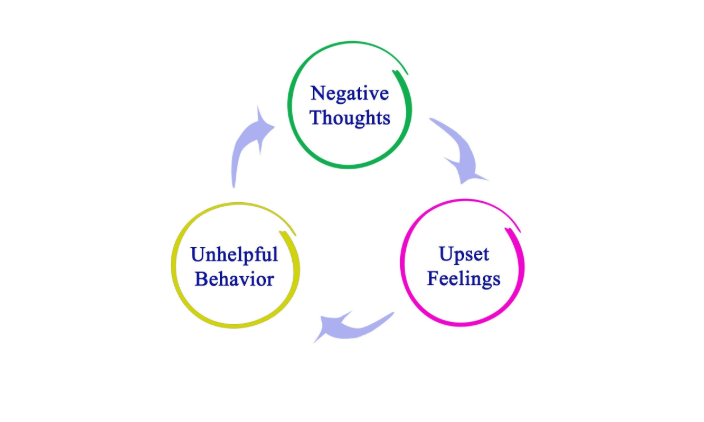
This constant internal struggle—this exhausting attempt to control our difficult thoughts and feelings—is the heart of what keeps many of us stuck in a cycle of suffering. We spend so much energy fighting our inner world that we miss out on living our actual lives.
If you are starting therapy or looking for a different approach, you may have heard of Acceptance and Commitment Therapy (ACT) (pronounced like the word “act”). ACT is a powerful, modern, evidence-based therapy that offers a radical shift: stop fighting your thoughts and feelings, and start investing your energy into living a rich, meaningful life.
ACT doesn’t aim to eliminate your struggles; it aims to fundamentally change your relationship with them. It teaches you to hold your difficult feelings gently, much like holding a fussy baby, so you are free to commit to actions that align with what truly matters to you.
Time to feel better. Find a mental, physical health expert that works for you.
This guide will demystify ACT for you, the therapy customer. We will explore its core principles—often called the ACT Hexaflex—show you how your mind creates unnecessary struggle, and explain how a therapist uses simple, practical techniques to help you choose courage over comfort, and meaning over mood.
The Core Problem: Creative Hopelessness and the Mind’s Trap
The foundation of ACT is the idea that the primary source of human suffering is not the pain itself, but the struggle to avoid the pain. This struggle is often rooted in the literal, problem-solving function of the human mind.
- The Trap of Experimental Avoidance
For years, you have been using strategies—perhaps distraction, emotional shutdown, addiction, or obsessive worry—to avoid uncomfortable internal experiences (thoughts, feelings, memories). ACT calls this Experiential Avoidance.
While avoiding pain works well for external problems (you avoid touching a hot stove), it fails spectacularly for internal emotional pain. The more you try to push the emotion away, the bigger and more persistent it becomes.
This leads to a point of “Creative Hopelessness.” This isn’t giving up on life; it’s honestly assessing all your past control strategies and concluding: “I have tried everything to eliminate my anxiety, and not only has it not worked, but the effort of controlling it has consumed my life.” This realization—that the struggle is the problem, not the pain—is the creative space where true change begins. You become ready to try something entirely new: Acceptance.
- Cognitive Fusion: The Mind as a Word Machine
Your mind’s job is to solve problems, predict danger, and communicate. It does this by creating words, labels, and judgments.
When your mind creates a negative thought (e.g., “I’m a failure,” or “This panic will never end”), your brain often treats that thought as a literal threat or a rigid fact about the world. ACT calls this process Cognitive Fusion—you are fused, or stuck, to your thoughts.
When you are fused, the thought is the experience. If your mind says, “You’re a failure,” you feel like a failure, and you act like a failure. This fusion often creates unnecessary suffering by trapping you in a cycle of negativity. The goal of ACT is to help you gently unhook from these literal interpretations.
The ACT Hexaflex: Six Pathways to Psychological Flexibility
ACT aims to help you achieve Psychological Flexibility—the ability to fully contact the present moment, including uncomfortable thoughts and feelings, and still choose to take action guided by your values.
The ACT Hexaflex model consists of six interconnected processes, working together to loosen the grip of experiential avoidance:
- Acceptance (Making Room for the Uncomfortable)
Acceptance is not resignation; it is an active choice to allow difficult, unwanted private experiences (thoughts, feelings, physical sensations) to simply exist, without fighting them or trying to change them.
- The Analogy: Imagine you are holding a beach ball underwater. Holding it down requires immense, exhausting effort. Acceptance is simply letting go of the beach ball and allowing it to float on the surface. The feeling (the ball) is still there, but your energy is freed up to focus on living.
- The Practice: When anxiety hits, instead of saying, “Stop feeling anxious,” you practice saying, “Hello, Anxiety. I see you here with me right now. I feel my heart racing, and I will make room for that feeling while I continue to do what matters.”
Connect Free. Improve your mental and physical health with a professional near you
- Cognitive Defusion (Un-Hooking from Thoughts)
Defusion is the process of learning to see your thoughts as just words or mental events, rather than literal truths or commands you must obey. This creates distance between you and the content of your mind.
- The Practice: Your therapist might ask you to try simple, often humorous, exercises to create distance from a difficult thought:
- Say the thought out loud: Repeat the thought, “I am a failure,” in a silly voice, or sing it to a familiar tune. This breaks the seriousness and literality of the thought.
- Add a phrase: Instead of saying, “I’m worthless,” say, “I am having the thought that I am worthless.” This tiny linguistic shift reminds you that you are the observer of the thought, not the thought itself.
- Label the thought: Look at the thought and label its function: “Ah, there’s a judgment thought,” or “That’s a worry thought.”
- Being Present (Coming Home to Now)
This involves consciously focusing your attention on your experience in the current moment, open to whatever is happening, both internally and externally. This is mindfulness, delivered with a purpose.
- The Goal: To reduce time spent lost in regret about the past or worry about the future. By anchoring your awareness to the present, you interrupt the mind’s endless storytelling.
- The Practice: Simple, structured mindfulness exercises help anchor you. You might be asked to focus on the feeling of your feet on the floor, the sound of the air conditioning, or the subtle sensation of your breath. These anchors pull you out of your mind’s stories and back into reality.
- Self as Context (The Observer Self)
This concept involves recognizing that there is a stable, observing part of you that is separate from your ever-changing thoughts, feelings, and roles.
- The Analogy: Imagine you are the sky, and your thoughts and feelings are the weather (clouds, wind, rain). The weather changes constantly—sometimes sunny, sometimes stormy—but the sky remains, unharmed, providing the space for the weather to pass.
- The Insight: You realize that even when you feel crippling shame, the part of you that notices the shame is still present, whole, and unchanged. This “Observer Self” is your anchor, a constant source of stability, proving that you are not broken, you are simply experiencing difficult weather.
- Values (Defining What Matters)
Values are your deepest, heart-felt desires for how you want to behave as a human being. They are not goals you can tick off (like “Get a promotion”); they are directions you move in continuously (like “Being a supportive colleague”).
- The Question: ACT asks: “What do you want your life to stand for?”
- The Discovery: Your therapist will help you clarify values across different domains (e.g., relationships, career, health, spirituality). Values provide the motivation and the compass for your committed action. If your value is “Kindness,” then your actions are judged not by whether they eliminate anxiety, but by whether they align with kindness.
- Committed Action (Taking Value-Guided Steps)
Committed Action is the final step where you set concrete, manageable goals and take action that moves you in the direction of your chosen values, even if those actions bring up difficult feelings.
- Courage over Comfort: If your value is “Connection,” but you have social anxiety, the committed action is to text a friend or attend a small gathering, accepting that the anxiety will likely come along for the ride. The goal is not to eliminate anxiety first; the goal is to live your value, accepting the anxiety as the passenger.
- The Process: These are not grand leaps, but small, consistent steps guided by your compass.
ACT in Practice: Beyond Talk Therapy
ACT is highly experiential. The therapist serves as a coach, guiding you through exercises designed to rewire your relationship with your inner experience, rather than just talking about your problems.
- Metaphors and Exercises: ACT therapists rely heavily on metaphors because they help the mind bypass its usual logical resistance. You might try the Tug-of-War with the Monster metaphor, where the monster represents your problem (anxiety). You spend all your energy pulling the rope against the monster, and your life is consumed by the struggle. The ACT intervention? Drop the rope. The monster is still there, but you are now free to walk away and live your life.
- Skills Over Solutions: The therapist won’t help you argue with the thought “I’m a failure.” They will help you learn the skill of unhooking from it (defusion), so the thought loses its power to control your actions. They are coaching you in psychological flexibility.
- The Power of “And”: ACT encourages you to live in a world of “and.” “I am having a panic attack, AND I can still write one paragraph toward my project.” Action is taken with the difficult feeling. This simple linguistic shift is where courage is found, turning anxiety from an obstacle into a neutral companion.
The Transformative Conclusion: Living a Rich, Full Life
The final promise of Acceptance and Commitment Therapy is not a life without pain—because pain is a natural, unavoidable part of the human experience. The promise is a life of meaning and vitality, lived on your own terms.
By stopping the exhausting fight with your inner world (Creative Hopelessness) and embracing acceptance, you free up tremendous energy. This energy can now be committed to pursuing your values: being a supportive parent, contributing to your community, creating art, or building a loving partnership.
ACT teaches you that courage is not the absence of fear; it is taking value-guided action while fear is present.
You are ready to step off the mental treadmill of control, gently accept the weather of your inner world, and commit to actions that make your life worth living.
Free consultations. Connect free with local health professionals near you.
Conclusion
Steering the Ship: The Conclusion of Acceptance and Commitment Therapy (ACT)
From Battleground to Compass
If you have journeyed through this guide, you have made the radical discovery that the core of your suffering may not be your anxiety, depression, or difficult thoughts, but the internal battle you wage against them. You have learned that your mind, in its well-meaning attempt to protect you, often traps you in Experiential Avoidance—the exhausting, futile fight to control the uncontrollable.
We began with the powerful insight that Creative Hopelessness is the necessary moment where you realize your old control strategies have failed, opening the door to something new: Acceptance. The ultimate conclusion of engaging with ACT is the realization that true freedom is found not in eliminating pain, but in choosing to live a rich, full lifewith the pain as an unavoidable passenger.
Choosing ACT is choosing to shift your energy from fighting the passenger to driving the bus toward your desired destination. This conclusion will reinforce the central components of the ACT Hexaflex—Acceptance, Defusion, and Committed Action—and prepare you to consciously navigate the weather of your inner world, anchored by your deepest personal values.
The Three Enduring Gifts of ACT
The practice of psychological flexibility, built through the ACT model, provides three transformative gifts that redefine your relationship with yourself and your life.
- The Freedom of Defusion
The greatest power ACT gives you is the ability to unhook from the literal grip of your negative thoughts. Through Cognitive Defusion, you learn that you are not your thoughts; you are the human being having the thoughts.
- The Shift: Instead of treating the thought “I am a fraud” as a literal, debilitating fact, you learn to label it: “Ah, there’s the old ‘I am a fraud’ story showing up again.”
- The Result: When the thought loses its literal, threatening power, it also loses its ability to control your behavior. You can observe the thought with gentle distance, allowing it to pass like a cloud, rather than feeling obligated to follow its command. This frees up immense mental and emotional bandwidth previously consumed by arguing with or believing the content of your mind.
- The Power of the Observer Self
ACT introduces you to the concept of the Self as Context, often called the Observer Self—the stable, unchanging part of you that simply notices your experiences.
- The Analogy: If your thoughts and feelings are the content (the actors, scenes, and sounds on a stage), the Observer Self is the stage itself—the stable space where all the drama unfolds. The stage is not hurt by the play; it merely provides the space for it.
- The Insight: This realization provides radical, continuous comfort. Regardless of how terrible your anxiety or despair feels in the moment, the part of you that notices the feeling is whole, stable, and untroubled. This is your permanent anchor, the non-judgmental witness to your entire life experience. When you feel completely lost or overwhelmed, you can always return to the simple act of noticing, which connects you to this fundamental stability.
- The Clarity of Values-Driven Action
The most practical and motivating gift of ACT is the clear definition of your Values and the resulting ability to take Committed Action.
- The Compass: Values clarify your direction. They are not external goals, but internal qualities of action—How do I want to be? (e.g., Kind, Creative, Present, Courageous).
- The Motivation: This compass redefines success. Success is no longer measured by whether you felt comfortable while acting, but whether your action aligned with your chosen value. If your value is “Authenticity,” and you show up to a meeting and speak your truth while shaking with fear, that action is a profound success. This shift moves you away from a life dictated by chasing comfort and toward a life defined by meaning.
Sustaining the Practice: Carrying the Hexaflex into Life
Psychological flexibility is a discipline that requires continuous, gentle practice. It means choosing the ACT stance—Acceptance, Defusion, and Action—each time you face an internal challenge.
- The Acceptance Reminder: Radical “Willingness”
Acceptance requires a deliberate attitude of Willingness—the open posture toward your inner experience.
- The Practice: When difficult feelings show up, try the simple, active practice of “Making Room.” Instead of tensing your body, literally soften your shoulders and relax your hands. Breathe into the feeling and use the phrase, “I don’t like this feeling, but I am willing to have it here right now.” This small physical and mental act interrupts the flight-or-fight response and frees up the energy previously spent on resistance.
- Integrating Mindfulness and Purpose
The ACT practice of Being Present becomes integrated into your life by focusing your attention on activities that align with your values.
- Purposeful Presence: If your value is “Connection with my children,” practice the mindfulness skill of anchoring (e.g., noticing the texture of their hair, the sound of their laugh) while you are playing with them. This isn’t abstract meditation; it’s a tool to pull you out of your mind’s internal chatter (“I’m failing as a parent,” “I should be working”) and back into the meaningful present moment.
- The Power of the “Courage Loop”
ACT helps you create a new, functional loop of behavior that replaces the avoidance loop.
- Acknowledge the Feeling (Acceptance): “Fear is here.”
- Define the Value (Clarity): “My value is ‘Growth’ or ‘Contribution.'”
- Take the Action (Commitment): Take one small step toward the value (e.g., sending the email, asking the question, starting the walk), accepting the fear as an accompaniment.
This Courage Loop builds psychological momentum and rewires your brain to associate difficult feelings not with shutdown, but with meaningful action.
The Transformative Conclusion: The Life You Want to Live
The final promise of Acceptance and Commitment Therapy is a radical one: your pain does not have to dictate the direction or quality of your life.
By stopping the exhausting fight with your anxiety, your sadness, or your self-judgment, you free up the tremendous energy needed to pursue your values—the things that truly light you up and give your existence depth.
ACT is a compassionate, practical, and highly effective framework for human flourishing. It teaches you that a rich, full, and meaningful life is defined not by the absence of storms, but by the skill and courage with which you steer your ship toward your chosen destination, regardless of the weather.
You have the compass (your values), the tools (acceptance and defusion), and the freedom to act. Now, go live the life you want to live.
Time to feel better. Find a mental, physical health expert that works for you.
Common FAQs
You’ve explored the core ideas of ACT: that fighting your inner experiences causes suffering, and that freedom comes from choosing a life guided by your values while accepting difficult thoughts and feelings. Here are answers to common questions about ACT.
People also ask
Q: What is anchoring in therapy?
A: In NLP, “anchoring” refers to the process of associating an internal response with some external or internal trigger so that the response may be quickly, and sometimes covertly, re-accessed.
Q:What are the 4 A's of acceptance and commitment therapy?
A: In ACT, we think of acceptance in terms of the “four A’s”: Acknowledge, Allow, Accommodate & Appreciate. Here we explore each of these steps involved in the process of acceptance.
Q: What is anchoring in the present moment?
A: Anchoring in the present moment means using mindfulness to stay aware of what’s happening right now — without judgment. You use an anchor (like breathing or a physical sensation) to ground yourself whenever your mind wanders. It’s how you shift from “thinking” to “being.”
Q:What is an example of anchoring?
A: Perhaps one of the best examples of the anchoring effect is Black Friday. Shoppers pour over endless sales ads, map their shopping routes and time their visits all for the chance to receive steep discounts.