Finding Your Inner “Why”: A Simple Guide to Motivational Interviewing in Recovery
If you’re currently in recovery, thinking about making a change, or supporting someone who is, you know that the journey to sobriety is rarely a straight line. It’s often filled with hesitation, back-and-forth decisions, and moments where one part of you wants to change desperately, and another part wants to stay exactly where you are. This feeling of being torn is completely normal, and it has a name: ambivalence. It’s the feeling of simultaneously wanting to keep doing something because it offers comfort or relief, while also wanting to stop because of the negative consequences it causes.
When you work with a therapist or counselor who uses Motivational Interviewing (MI), they aren’t trying to force you to change, nor are they trying to convince you of how terrible your situation is. Instead, they are acting as a humble guide and a trusted collaborator, helping you navigate that messy, complex ambivalence and find the deep, personal reasons for change that already exist inside you. They understand that the strongest, most sustainable motivation is always self-motivation.
This article is for you—the everyday therapy customer—to understand what Motivational Interviewing is, why its approach feels so radically different from other conversations you might have had, and how it can be the key that unlocks your personal motivation for long-lasting recovery.
Time to feel better. Find a mental, physical health expert that works for you.
Part 1: Moving Beyond the “Righting Reflex” and Confrontation
For many decades, the standard approach to addiction counseling was based on the idea that clients needed a harsh dose of reality. Counselors often adopted a confrontational stance, believing that denial was the primary obstacle and that forceful persuasion was necessary to break through it. This often involved:
- Telling and Lecturing: The counselor would deliver a long list of all the terrible things that would happen if the client didn’t stop, focusing on failure and risks.
- Arguing and Debating: If the client disagreed or defended their substance use (saying, “It helps me relax,” or “I only drink on weekends”), the counselor would push back, trying to “win” the argument for sobriety.
- Imposing Goals: Assigning goals or steps that didn’t feel authentic or chosen by the client.
Why Confrontation Backfires
The core issue with this confrontational approach is that it triggers a powerful, natural human response called the “Righting Reflex.”
The Righting Reflex is the well-meaning instinct that a helper, counselor, or loved one has to “fix” what is wrong with you. However, when you feel judged, told what to do, or lectured, you instinctively pull back. You become defensive, protective of your choices, and focused on justifying your behavior rather than exploring change. The energy that should be used for making change is instead used to defend the status quo. In recovery, this leads to:
- Resistance: Clients become closed off, resistant to ideas, or may simply quit therapy because they feel criticized.
- Reinforcement of the Problem: By focusing their energy on defending their substance use, clients actually end up articulating stronger reasons for continuing the behavior.
Motivational Interviewing flips this script entirely. It recognizes that arguments are counterproductive and that the only person who can truly change you is you. The job of the therapist shifts from being the “fixer” to being the respectful, non-judgmental “guide.”
Part 2: The Foundation of Motivational Interviewing (MI)
Motivational Interviewing, developed by psychologists William Miller and Stephen Rollnick, is a supportive, collaborative, and goal-oriented conversation style. It is based on the idea that people are much more likely to be persuaded by the reasons that come from their own mouth than those coming from someone else’s.
MI is built on four core operating principles, often summarized by the acronym RULE:
R: Resist the Righting Reflex
The therapist consciously steps back from the need to fix, rescue, or tell you what to do. They understand that their expertise is in the process of change, not in knowing the right answers for your life. They practice listening much more than speaking.
U: Understand Your Motivation
The therapist is genuinely curious about your perspective, your deepest values, and the reasons you might want things to be different. They avoid imposing external motivation (like pressure from family or the court) and instead help you uncover the internal motivation—the reasons that truly matter to you.
L: Listen with Empathy
Empathy is the foundational skill of MI. The therapist seeks to understand your feelings, your struggles, and the difficulty of your situation without judgment. This deep, non-judgmental listening creates a safe psychological space where you feel truly heard and validated, making it far easier to open up honestly about the realities of both using and attempting sobriety.
E: Empower the Client
MI operates from a position of respect, recognizing that you have the inherent wisdom, strengths, and personal resources to succeed. The therapist helps you explore past successes (even small ones) and highlights your personal agency, reinforcing the message that you are the expert on your own life and capable of finding effective solutions.
Part 3: The Toolkit of MI: OARS to Navigate Ambivalence
In a session using MI, the conversation feels different because the therapist is intentionally using specific communication skills—often summarized by the acronym OARS—to gently steer the conversation toward change.
O: Open-Ended Questions
These are questions designed to invite pause, reflection, and elaboration, encouraging you to do most of the talking. They cannot be answered with a simple “yes” or “no.”
- Instead of: “Do you want to stop drinking?” (Closed)
- The MI therapist asks:“What are some of the things that worry you about your current use, and if things were going really well, what would your life look like six months from now?”
Connect Free. Improve your mental and physical health with a professional near you
A: Affirmations
Affirmations are genuine statements of recognition that highlight your efforts, intentions, strengths, and commitment. They are used to build self-confidence, which is often severely eroded by addiction.
- Example: Instead of dwelling on a recent slip, the therapist might say, “I appreciate your honesty in sharing that slip. It shows great integrity and commitment to this process that you brought that up right away.”
R: Reflections
Reflections are the most frequent and powerful MI tool. The therapist listens carefully and repeats, rephrases, or amplifies what you just said. Hearing your own words, particularly your conflicted feelings, repeated back to you by a respectful third party can create a powerful realization.
- Client says: “I really hate how much money I’m spending on this habit, but honestly, I don’t know what I would do with myself on Friday nights without it.”
- Therapist reflects:“So, on one hand, the financial cost is really bothering you, and on the other hand, you are facing a significant concern about how you would fill that social and emotional void.” (This highlights the specific conflict at the heart of the ambivalence.)
S: Summaries
Summaries are used to gather several pieces of information—especially statements that lean toward change—and present them back to you concisely. This intentionally amplifies your motivation and allows you to hear the strength of your own desire for change.
- Therapist Summary:“Let me check if I understand. Over the last ten minutes, we’ve established that you are tired of disappointing your family, you feel capable of finding a new job if you stop using, and you want to start exercising again because that’s when you feel best. Is that right? These seem like very important reasons for pursuing sobriety.”
Part 4: Harnessing Change Talk
In MI, the therapist is keenly listening for Change Talk, which is any language from you that expresses a desire, ability, reason, need, or commitment to change. The therapist’s primary skill is to gently and consistently draw out and reinforce this language.
- Desire: “I wish I could wake up feeling healthy.”
- Ability: “I think I could handle those triggers if I had my partner with me.”
- Reasons: “I need to quit because I promised myself I would be a better parent.”
- Commitment: “I am going to research three recovery programs this week.”
The therapist avoids challenging Sustain Talk (statements that defend the status quo, like “It’s not that bad,” or “I don’t think I can do it”). By not arguing against the resistance, the therapist creates a respectful space, which paradoxically encourages the client to explore their own ambivalence and resolve it internally.
Motivational Interviewing is a deeply effective, respectful, and empowering approach to recovery because it fundamentally honors you as the expert on your own life. It doesn’t attempt to impose motivation from the outside; it simply provides the skilled guidance necessary for you to discover the powerful, sustainable “why” within.
Free consultations. Connect free with local health professionals near you.
Conclusion
Stepping Forward with Found Motivation
You’ve learned that the journey through addiction recovery is often marked by ambivalence—that natural, human feeling of being torn between wanting to change and wanting to stay the same. You now understand that Motivational Interviewing (MI) is not about forcing, confronting, or telling you what to do. Instead, it’s a respectful, collaborative conversation designed to unlock the power of your own, deeply personal reasons for change.
The conclusion of understanding MI isn’t just about knowing a new therapy acronym; it’s about realizing that the most effective tool in your recovery is already inside you: your own motivation and values. This realization is often the difference between temporary compliance and lasting commitment.
The Central Shift: From External Pressure to Internal Power
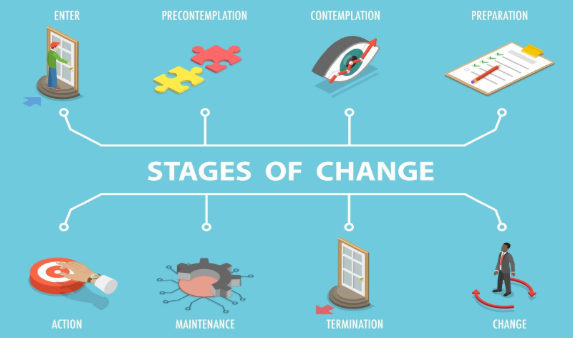
In the past, seeking help often meant facing external pressure: “You have to quit for your job,” or “Your family won’t talk to you until you stop.” While these pressures can be effective in getting a person to the therapist’s office (the Precontemplation stage), they are rarely strong enough to sustain the difficulty of long-term sobriety (the Maintenance stage).
MI fundamentally shifts the source of power. It moves the conversation from the external “have to” to the internal “want to.”
- External Pressure:I must go to meetings so the judge doesn’t send me back to jail. (Motivation disappears when the external threat is removed.)
- Internal Motivation (Change Talk):I want to go to meetings because I feel less anxious and more connected to people who understand me. (Motivation is self-sustaining because the reward is internal comfort and health.)
When your therapist, using the tools of MI (OARS), listens for and reflects your Change Talk, they are doing more than just summarizing; they are acting as a mirror that shows you the strength and clarity of your own desire for a better life. They are amplifying the voice inside you that says, “I am worth the struggle,” making that voice louder and clearer than the voice of ambivalence.
Why Ambivalence is a Starting Point, Not a Failure
One of the most important takeaways from Motivational Interviewing is the reframing of ambivalence. Often, people view being uncertain about recovery as a moral failure, a sign of being “in denial,” or proof that they aren’t ready to get better.
MI views ambivalence simply as a normal state in the Contemplation stage of change.
Ambivalence is not a wall to be climbed over; it is a doorway to be walked through.
The MI therapist respects your ambivalence by acknowledging both sides of the coin: “You like the way using helps you turn off your mind at night, and you hate the way it makes you feel like a terrible parent in the morning.” By stating both the benefits (Sustain Talk) and the costs (Change Talk), the therapist creates a dialogue that leads to discrepancy.
Discrepancy is the gentle tension created when a person sees a conflict between their current behavior (substance use) and their deeply held values (being a good parent, being healthy, having financial stability). The therapist doesn’t create this tension; they simply use reflective listening to help you notice it. It is your discomfort with the gap between your ideal self and your current self that becomes the engine for movement into the Preparation and Action stages.
The Three Commitments of an MI Therapist
If you are seeking out a provider who uses this approach, there are three core commitments you should expect your therapist to uphold, creating the necessary therapeutic environment for motivation to flourish:
- Partnership, Not Hierarchy (Collaboration)
The relationship is not that of expert-to-patient, where the therapist dictates the treatment. It is a partnership. You bring the expertise on your life, your culture, your triggers, and your values. The therapist brings the expertise on the process of change. Decisions about goals, resources, and speed are made together, increasing your sense of ownership and commitment to the plan.
- Radical Acceptance (Compassion)
The therapist accepts you where you are, without judgment. This means accepting your use, accepting your fears, and accepting your uncertainty. This radical acceptance is the antidote to the shame that often fuels addiction. When shame is lowered, defensiveness drops, and you can engage honestly. The therapist communicates: “I see your struggle, I understand why you feel stuck, and I am here to help you explore your options, not to judge your choices.”
- Evocation (Drawing Out)
The therapist’s primary task is to draw out the resources and motivation that are already there. They don’t try to “put in” motivation. Through powerful, open-ended questions, they encourage you to articulate your hopes, dreams, and values. Questions like:
- “What do you imagine your life would look like five years from now if you successfully made this change?”
- “What are the best reasons you have for making a change?”
- “What small steps do you feel capable of taking this week?”
By focusing on your language of ability and desire, the therapist helps you build a strong, internal argument for recovery.
Conclusion: The Path Forward is Your Own
Motivational Interviewing is a deeply effective approach because it respects the universal truth of human nature: People are persuaded by the reasons they themselves discover. It gives you permission to be ambivalent, helps you sort through that ambivalence, and ensures that the recovery plan you land on is not one you were forced into, but one you genuinely chose.
If you are currently wrestling with the idea of recovery, feeling like you are perpetually stuck in the Contemplation stage, seeking a therapist trained in MI is one of the most proactive and supportive steps you can take. They won’t solve the problem for you, but they will expertly guide you to your own solution. They will help you find that inner “why” that is strong enough to carry you not just to the starting line, but through the long journey of maintenance and a fulfilling sober life.
The decision to change is yours, and with MI, you gain a supportive partner committed to helping you find the clarity and confidence to embrace it.
Time to feel better. Find a mental, physical health expert that works for you.
Common FAQs
If you’re considering a therapist who uses Motivational Interviewing (MI) for addiction recovery, it’s normal to have questions about how this approach differs and what it will feel like. Here are clear, simple answers to the most common questions.
People also ask
Q: What is motivational interviewing in recovery?
A:Motivational interviewing (MI) (7), which originated in the field of addiction treatment, is a promising concept for encouraging motivation to change in patients that are currently either unwilling or ambivalent to change, and can be deployed even with limited time resources.
Q:What are the 5 R's of motivational interviewing?
A: The “5Rs,” Relevance, Risks, Rewards, Roadblocks, and Repetition, are designed to motivate tobacco users who are unwilling to quit at this time.
Q: How to find your why in recovery?
A: Taking time for self-reflection can help clarify the deeper reasons for seeking sobriety. Define specific, achievable goals that align with your values. For instance, if your motivation is to rebuild trust with loved ones, set goals to communicate openly and consistently with them throughout your recovery.
Q:What are the 4 pillars of MI?
A: The 4 Processes include Engaging, Focusing, Evoking, and Planning. These processes are not linear or a step by step guide to MI. Engaging naturally comes first because you need to have good engagement prior to having a conversation about change.