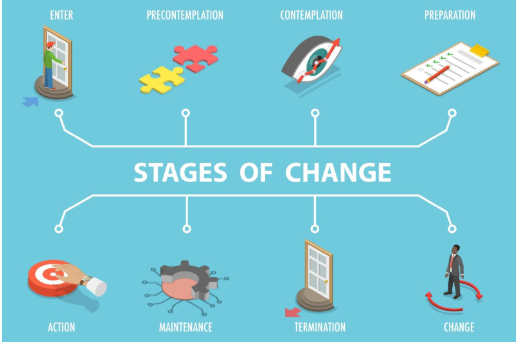
Motivational Interviewing: Finding Your Own “Why” for Change
If you’re reading this, you’ve likely spent significant time thinking about making a big change in your life, especially concerning substance use, drinking, or other behaviors you feel are holding you back. You might have tried to quit or cut back, perhaps many times, only to find yourself back where you started. And if you’re like most people, you know intuitively that simply being told what to do, feeling judged, or having someone lecture you about the consequences rarely works. In fact, external pressure often makes you want to dig in your heels and resist even more.
This is the core, deeply empathetic insight behind Motivational Interviewing (MI).
MI is a powerful, evidence-based approach used by therapists, counselors, and coaches to help you navigate the difficult, often confusing, and frustrating process of change. It’s not a sneaky tactic for tricking you into sobriety; it’s a respectful, human, and collaborative conversation that focuses entirely on you—your goals, your unique values, and your own deeply personal reasons for wanting things to be different.
Time to feel better. Find a mental, physical health expert that works for you.
Think of it this way: traditional, directive approaches might focus on telling you why you need to change. MI, on the other hand, focuses on helping you discover and articulate your own intrinsic “why.” Your therapist using MI acts as a supportive, highly skilled guide, not an authority figure or an expert on your problems, helping you unlock the motivation that’s already inside you.
This article is for you, the everyday therapy customer, to understand what MI is, how it works to melt away resistance, and how this compassionate approach can help you finally get unstuck and move toward a self-chosen life in recovery.
Part 1: The MI Mindset—Collaboration, Acceptance, and Trust
Motivational Interviewing is a specific style of communication driven by four core principles, often abbreviated as DECA. These principles define the atmosphere of the conversation, making it feel safe, non-judgmental, and genuinely helpful, unlike the confrontational approaches of the past.
- Partnership (Collaboration)
MI recognizes that you are the expert on your own life and your challenges. The therapist does not impose solutions, expert ideas, or diagnoses; instead, you work together as a team to explore the problem and the potential solutions. It feels like two people sitting side-by-side, looking at the same map, trying to figure out the most viable and sustainable route forward. The goal is to avoid the dynamic where the client feels lectured, forced, or defensive, which instantly shuts down honesty and vulnerability.
- Acceptance
This is the foundation of the relationship—unconditional positive regard. Your therapist accepts you fully, without judgment, regardless of your current behavior or choices. Acceptance in MI has four key aspects that must be communicated constantly:
- Absolute Worth: Believing in your inherent goodness and potential as a human being.
- Accurate Empathy: Deeply listening to and reflecting back your perspective to ensure profound understanding, even if the therapist doesn’t agree with your choices or actions.
- Autonomy Support: Acknowledging that the decision to change—or not to change—is always, 100%, yours. This reduces pressure and fosters responsibility.
- Affirmation: Specifically recognizing your strengths, efforts, positive intentions, and past successes. Affirmations build the self-confidence necessary for taking difficult action.
- Compassion
MI is rooted in the deep, active desire to promote your welfare and give priority to your needs. This isn’t just a friendly demeanor; it’s a genuine, ethical commitment to acting in your best interest throughout the entire recovery process.
- Evocation (Drawing Out)
This is the most defining and powerful characteristic. Instead of importing motivation from the outside (“You should quit because your health is failing”), the therapist’s primary task is to evoke or draw out your own existing reasons for change. The powerful truth, confirmed by decades of research, is that motivation for lasting change comes from your own values and goals, not from external pressure, fear, or guilt.
Part 2: Working with Ambivalence—The Crossroads of Change
If you’re struggling with addiction or a challenging habit, you are likely sitting in a highly conflicted state called ambivalence. This is the feeling of simultaneously wanting to change AND wanting to stay the same. It is the core reason people feel “stuck.”
- Part of you wants to change: You miss genuine connection, you hate feeling hungover or secretive, you worry about your long-term health, and you want to be a better, more present parent or partner.
- Part of you wants to stay the same: The substance provides reliable relief from chronic stress, it temporarily numbs emotional pain, it helps you socialize, it’s familiar, and stopping feels scary, hard, and overwhelming.
Ambivalence is normal, not a sign of failure or lack of willpower. It’s like standing at a crossroads, clearly seeing the benefits of both paths, and feeling paralyzed by the tension between the two. In MI, the therapist doesn’t judge this ambivalence. They help you explore it thoroughly, often through techniques like “Decisional Balancing,” where you clearly list the pros and cons of both continuing the current behavior and moving toward a new, healthier behavior. By clearly and calmly articulating both sides, you lessen the paralyzing tension and prepare the mind for change.
Connect Free. Improve your mental and physical health with a professional near you
Part 3: The Four Key Processes of the Conversation
An MI conversation generally moves through four natural, flowing processes. It’s not a rigid checklist, but a guide for the therapist to manage the conversation flow and maximize its effectiveness.
- Engaging (Building the Relationship)
The first step is always establishing trust and rapport. The client must feel respected, heard, and understood. If you don’t feel safe, you won’t talk honestly, and no lasting progress can be made. This process prioritizes listening, acceptance, and communicating accurate empathy.
- Focusing (Finding the Target)
This involves clarifying the agenda. You and the therapist decide together what target behavior or area of concern to address first. This might be “cutting back on drinking,” “getting help for underlying depression,” or “exploring relationship issues that precede relapse.” The goal is mutual agreement on the direction and what specific change is important to you.
- Evoking (Eliciting Change Talk)
This is the core engine of MI. The therapist asks specific, open-ended questions designed to elicit “Change Talk”—any speech by the client that favors movement toward change. Change Talk reveals your own internal reasons, desires, abilities, commitments, and needs related to making the shift.
- Example of an Evoking Question: “On a scale of 1 to 10, how important is it to you right now to cut back on your drinking?”
- The Follow-up Magic: If you say “4,” the therapist will follow up by asking: “That’s interesting. Why a 4 and not a 2? What are the reasons you see that make it a 4?” This technique avoids confrontation and cleverly forces you to argue for change, which is always far more persuasive than hearing the therapist argue for it.
- Planning (Mapping the Route)
Once the client’s motivation is clearly high and the goal is agreed upon, the conversation shifts to developing a concrete, workable plan. The plan is always collaborative, built around your resources, strengths, and what feels manageable. It moves from general goals to specific, tiny, first steps, often referencing your own previously expressed Change Talk for conviction.
Part 4: The Core Communication Skills (OARS)
To maintain the compassionate, collaborative spirit, MI therapists rely on four essential communication skills, known by the acronym OARS. These are the tools that create the MI atmosphere.
O – Open Questions
Questions that cannot be answered with a simple “yes” or “no.” They invite the client to reflect, elaborate, and explore their ambivalence.
- Instead of: “Do you want to stop drinking?” (Closed, invites defensiveness)
- Ask: “What are your main concerns about your current substance use, and what would your life look like if you didn’t have those concerns?” (Open, invites reflection)
A – Affirmations
Statements that recognize the client’s strengths, efforts, and positive intentions. Affirmations boost self-confidence and self-efficacy, which are crucial for believing change is possible.
- Example: “It took a lot of honesty and courage to even bring up this subject today; that shows real commitment to your future.”
R – Reflective Listening
This is deep listening where the therapist guesses the meaning or emotion behind what the client said and feeds it back. This validates the client’s feelings and ensures the therapist truly understands their perspective, confirming empathy.
- Client: “I hate how much I’ve been arguing with my wife, but when I stop drinking, I just feel too anxious to function or sleep.”
- Therapist Reflection: “So, it sounds like on one hand, your relationship and family life are incredibly important to you, but on the other, the physical and emotional anxiety you face when your sober feels like an overwhelming barrier that needs a solution.” (This confirms the ambivalence gently.)
S – Summaries
Briefly collecting and presenting back a cluster of the client’s recent statements, especially highlighting the “Change Talk.” Summaries help organize thoughts, connect the dots for the client, and reinforce the client’s own articulated motivation before moving toward the planning stage.
Conclusion: You Already Have the Power to Change
Motivational Interviewing is a deeply respectful and powerful process because it operates on the unwavering trust that you already possess the inner resources and motivation required for recovery. It views resistance not as a personality flaw or a defiance, but as a temporary state—a signal that the therapist needs to adjust their approach, listen deeper, and evoke the client’s own wisdom.
If you have felt judged, pressured, or talked at in the past in counseling or recovery settings, MI offers a different path—one where you are the respected, autonomous leader of your own journey. By collaboratively exploring your ambivalence, gently drawing out your own deep-seated reasons for change, and using compassionate communication, MI helps you stop fighting the process and start moving with clarity and conviction toward a truly self-chosen life in recovery.
Free consultations. Connect free with local health professionals near you.
Conclusion
Reclaiming Energy and Living by Your Values with ACT
You’ve explored the structured, yet flexible world of Acceptance and Commitment Therapy (ACT), realizing that the intense, frustrating feeling of being “stuck” stems not from your thoughts or feelings themselves, but from the relentless, exhausting struggle to control or eliminate them. You now understand that the common-sense strategy of avoidance is actually the root of the problem, leading to the internal “Tug-of-War” that wastes massive amounts of emotional and cognitive energy.
The core conclusion of understanding the ACT framework is one of profound emotional liberation and focused action. ACT teaches you to drop the rope, unhook from your mind’s endless, judgmental chatter (Defusion), and anchor yourself in your deepest Values. This process reclaims the vast energy previously wasted on internal conflict and redirects it toward building a rich, meaningful life. ACT is not about feeling happy all the time; it is about cultivating Psychological Flexibility—the ability to act on your values even when pain, doubt, or fear are present.
The Triumph of Psychological Flexibility
The ultimate goal of ACT is to achieve Psychological Flexibility, which is the ability to contact the present moment fully, with awareness and openness, and to take action guided by your values. This flexibility is the dynamic, fluid integration of the six core ACT processes.
- Openness (Acceptance & Defusion): You open up to your internal experiences (feelings and thoughts) rather than fighting them. You allow the pain to exist without dictating your behavior.
- Awareness (Present Moment & Self-as-Context): You anchor yourself in the here and now, distinguishing between the constant stream of mental chatter and your stable, observing self.
- Engagement (Values & Committed Action): You identify your desired direction (Values) and take practical, effective steps (Committed Action) that move you closer to that life.
Psychological flexibility allows you to hold your pain gently while keeping your hands actively engaged in living your life. It transforms chronic avoidance into courageous, value-driven action.
Acceptance and Defusion: Ending the Internal War
The principles of Acceptance and Defusion are the foundation for ending the “creative hopelessness” of the internal war.
- Acceptance is an Active Stance: This is not about liking the pain; it is a willful choice to allow discomfort to be present. Every time you choose acceptance over struggle, you save energy. ACT therapists guide you toward seeing acceptance as a necessary precondition for action. If you demand that anxiety leaves before you live, you grant anxiety total control over your life. Acceptance takes the power back.
- Defusion as a Re-Evaluation of Truth: The mind is a brilliant tool, but it is not a perfect judge of reality, especially when it is triggered by old learning or emotional pain. Defusion skills (like saying “I am noticing the thought that…”) teach you to step back and re-evaluate the utility of your thoughts. You learn to ask: “Is this thought helpful right now? Does following this thought move me toward my values or away from them?” The truth of the thought matters less than its function in your life. This process fundamentally shifts your power dynamic: you become the user of your mind, not its subject.
Values and Committed Action: The Meaningful Trajectory
While the first four processes of the Hexaflex are about developing skills of awareness and openness, Values and Committed Action provide the essential answer to “What now?” They ensure that ACT is not just a tool for feeling better, but a dedicated pathway to living better.
- Values are the Compass: Values are the answer to the deepest question: “If I were living the life I truly wanted, what qualities of action and presence would define me?” They provide an intrinsic, powerful motivation that cannot be taken away by external circumstances or moods. Because values are chosen and internal (e.g., “being a kind friend”), they are always available as a guide, unlike external goals (e.g., “get a promotion”).
- Committed Action is Movement: This final phase integrates all the other skills. It requires you to identify concrete, small, achievable behaviors that align with your chosen values. The key insight is that action must be taken in the presence of the barrier. For instance, if you value “Contribution,” Committed Action might be volunteering at an event while experiencing intense social anxiety (Acceptance and Defusion at work). The action becomes a powerful statement to your mind that your values are more important than your momentary discomfort.
This cycle—identifying a value, accepting the inevitable internal barrier, defusing from the self-doubting thoughts, and taking the small, committed step—is the mechanism by which ACT restores purpose and efficacy to the client’s life.
Conclusion: A Self-Chosen Life, Not a Pain-Free One
ACT therapy offers a revolutionary perspective on healing: a rich and meaningful life is not achieved by eliminating pain, but by consistently taking action that aligns with your deepest values, even in the presence of that pain.
By committing to this structured, focused work, you move past the limitations of the past and the fear of the future. The outcome is not merely the absence of distress, but the active presence of well-being: renewed confidence, greater emotional regulation, and the capacity for living with purpose. You stop being controlled by avoidance and start leading your life by choosing your actions based on what matters most to you. You are reclaiming the driver’s seat and directing your life toward a destination you freely defined.
Time to feel better. Find a mental, physical health expert that works for you.
Common FAQs
Motivational Interviewing (MI) is a unique and effective approach to changing habits like substance use. Since it focuses on collaboration rather than confrontation, clients often have specific questions about how it works. Here are clear, simple answers to the most frequent FAQs.
People also ask
Q: What are the motivational interviewing techniques for change?
A: Motivational interviewing is a counselling method that involves enhancing a patient’s motivation to change by means of four guiding principles, represented by the acronym RULE: Resist the righting reflex; Understand the patient’s own motivations; Listen with empathy; and Empower the patient.
Q:What is motivational interviewing?
A: Motivational Interviewing is a counseling approach that can help people identify their feelings about behavior change, resolve inconsistencies with how they feel about making behavior change(s), and then make a plan to follow and update as needed.
Q: What are the 5 principles of motivational interviewing?
A: He presents the concept of “Motivational Interviewing” (MI) as a way of communicating trust between two people involved in a conversation. O’Neill says the five pillars of MI are autonomy, acceptance, adaptation, empathy, and evocation.
Q:What are the 4 stages of change?
A: It helps you to predict how people will react to change, so you can support them on that transition. When change is first introduced at work, the people affected will typically go through four stages. These can be visualised on the change curve. The stages are shock, anger, acceptance and commitment.