The Art of Healing: A Simple Guide to Art Therapy Approaches
Hello! If you’re reading this, you’re likely on a journey of self-discovery, healing, or simply seeking a better way to navigate life’s challenges. You might be in therapy right now, or you might be wondering what other options are out there beyond traditional talk therapy. It takes courage to explore these paths, and I want you to know that you are in a supportive space.
We all have feelings and experiences that are just too big, too tangled, or too deep for words. Sometimes, sitting and talking feels impossible, or maybe you feel like you’ve already talked about something a hundred times without finding real relief.
That’s where Art Therapy comes in. It’s not an art class, and you absolutely do not need to be “good” at art. Art therapy is a special kind of therapy where you use things like paint, clay, crayons, or even simple scribbles to explore your inner world. It’s a way to bypass the struggle for words and let your hands, colors, and shapes do the talking. The focus is always on the process of creating, not the final artwork.
Let’s dive into what art therapy is, why it works, and the different approaches a therapist might use to help you on your healing journey.
Time to feel better. Find a mental, physical health expert that works for you.
What Makes Art Therapy Different? Going Beyond Words
Imagine your emotions are like waves in the ocean. Talk therapy often involves describing the waves—their size, how they feel when they hit the shore, and where they came from. Art therapy, however, invites you to become the wave, or perhaps to paint the turbulence and the calm all at once. It gives you a direct, sensory way to engage with what you are feeling, without the filter of language.
Art therapy combines the creative process with the principles of psychotherapy. A trained art therapist—who has knowledge in both art and psychology—guides you. They create a safe, non-judgmental space where you can:
- Express what you can’t say: Some emotions, especially those linked to trauma, are stored in your non-verbal memory. Art gives these deep-seated feelings an immediate, safe outlet. By using color, texture, and form, you communicate things that may be literally unspeakable.
- Gain new insight: When you externalize an image (put it outside of yourself onto the paper or clay), you can look at it with fresh eyes. You might suddenly discover a pattern, a hidden fear, or a resource of strength you never realized was within you. The art becomes a tangible object you can reflect upon and change.
- Reduce stress and regulate emotions: The act of making something—focusing on the colors, the textures, and the rhythmic movements—can be naturally soothing, bringing you into a state of mindfulness and regulating your nervous system. It’s an active way to move from feeling overwhelmed to feeling centered.
The Three Main Approaches to Art Therapy: Your Healing Toolbox
While all art therapists share the core belief that art heals, they often lean into one of three main ways of working. Understanding these approaches can help you find a therapist whose style resonates with you.
- Art as Therapy (The Journey is the Destination)
This approach is the most focused on the intrinsic value of the creative act itself. It’s often used when the goal is not interpretation, but simply emotional relief, self-soothing, and a sense of mastery.
- What it focuses on: The soothing, stress-reducing, and self-regulating benefits of the creative process. It emphasizes the feeling of the brush gliding on the paper, the smell of the paint, or the physical effort of shaping the clay. The therapist is essentially creating an environment where you can use the art materials to calm or energize yourself.
- Your role: You are encouraged to fully immerse yourself in the art-making. You might be asked to simply scribble without lifting your hand, paint to the rhythm of music, or tear and rip paper to release tension. The goal is to be fully present in the process.
- The Therapist’s Role: They are often quieter, focusing on creating a safe, accepting atmosphere and observing your process. The verbal discussion may be minimal, focusing purely on how you felt physically and emotionally while creating, rather than what the image means.
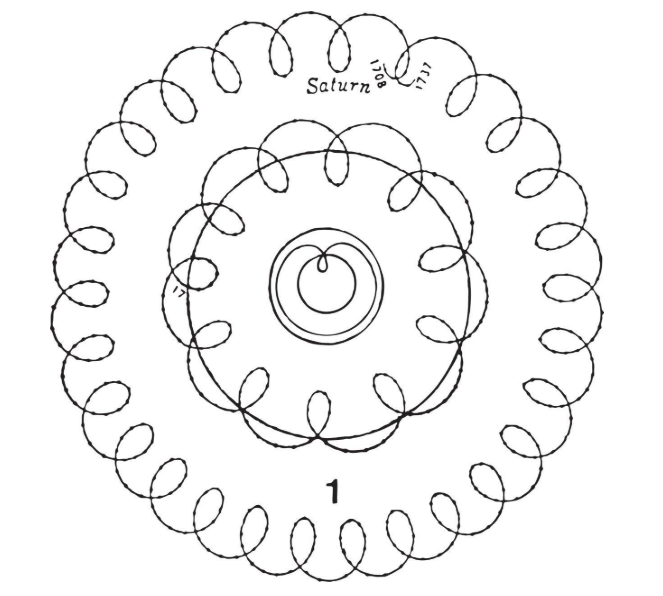
- Example Activity: Mandala Drawing. You are given a circular template and simply fill it in with patterns and colors, focusing on the repetitive motion and how it calms your mind.
Though the image provided relates to an astronomical model, the concept of a Mandala in art therapy is about focusing on a centered, contained form to promote calmness and integration.
Connect Free. Improve your mental and physical health with a professional near you
- Psychodynamic/Analytic Art Therapy (Digging for Deeper Meaning)
This approach sees your artwork as a profound window into your unconscious mind, much like dreams are analyzed. It’s based on traditional psychoanalytic theories, suggesting that the images, symbols, and forms you create are manifestations of your past experiences, inner conflicts, and current psychological landscape.
- What it focuses on: Interpreting the symbolism, colors, figures, and narratives that appear in your art. The art is a communication from the parts of you that cannot speak directly.
- Your role: You create a piece, and then you and your therapist spend significant time discussing the visual language of your work. The therapist might ask you to tell a story about the image, give a voice to a specific character, or describe what different colors represent to you.
- The Therapist’s Role: They are actively involved in the dialogue, helping you explore the symbolism in your work. They may use clinical theory to guide their questions, linking elements in your drawing to potential themes like separation, attachment, or defense mechanisms. They help you connect the art to your current struggles, past history, and relationship patterns.
- Example Activity: Creating a “Family Portrait.” Instead of drawing people realistically, you might use abstract shapes, colors, or animals to represent family members. The therapist would then help you explore the spatial relationships, boundaries, and emotional tones depicted.
- Art Psychotherapy (Blending Art and Talk)
This approach is a highly interactive and flexible blend of the previous two. It uses art to generate insights and feelings, which are then processed and understood through a verbal, collaborative dialogue with the therapist. The art acts as the starting point, the prompt, or the third entity in the room that facilitates the conversation.
- What it focuses on: Using the art-making process to bring up conscious and pre-conscious feelings, which are then processed through conversation. The therapeutic relationship (the safety and trust between you and the therapist) is central to this work.
- Your role: You might create a piece prompted by a specific feeling (“Paint your coping mechanism”) or relationship challenge. You then discuss the work, and your own interpretation is always prioritized. The therapist guides the discussion but affirms that you are the expert on what you created.
- The Therapist’s Role: They facilitate the process, offering prompts, and then asking open-ended questions like, “What does this dark area feel like when you touch it?” or “What moment in the creation of this piece felt the most difficult?” They help you translate the experience of creating the art into verbal understanding, emotional regulation, and practical coping skills.
- Example Activity: The ‘Bridge Drawing’. You are asked to draw a bridge connecting where you are now to where you want to be. The discussion then focuses on what materials you used for the bridge, what obstacles are underneath, and what you need to feel safe crossing it.
A Final Word on Your Journey
Art therapy offers a way to move toward healing when words fail, when you’re tired of talking, or when you just need a different kind of connection to yourself. It reminds you that you don’t have to be a masterpiece to be valuable, and that the act of creation, in and of itself, is a powerful act of self-care and resilience.
If you are considering art therapy, remember these two things:
- You are not being graded. There is no “good” or “bad” art in therapy. The value is in the honesty and the effort you put into the process.
- It is your story. You are the expert on your own creation. The therapist is there simply to help you see and understand the pictures you are painting of your inner world, empowering you to make the changes you want to see.
Keep exploring, keep creating, and keep being brave on this incredible journey.
Free consultations. Connect free with local health professionals near you.
Conclusion
Integrating Art Therapy into Your Life
This article has explored the vibrant and diverse world of Art Therapy, moving beyond the traditional image of simply “drawing your feelings.” We have seen that art therapy is not a single, rigid method, but rather a flexible framework that utilizes the creative process as a powerful agent for emotional discovery and psychological healing.
It is a modality that honors the complexity of the human experience, recognizing that some truths are better expressed through color, texture, and shape than through the limitations of vocabulary.
To recap, we have covered the fundamental differences between art therapy and conventional art-making, emphasizing that the focus is on the process of creation and the insights gained, not the aesthetic quality of the final product. You do not need to be an artist to benefit from this work; in fact, sometimes having no formal training allows for a more honest and unfiltered expression.
We have also detailed the three main approaches an art therapist might take: Art as Therapy, which focuses on the sensory and regulating act of creating; Psychodynamic/Analytic Art Therapy, which uses art as a symbolic language to access the unconscious; and Art Psychotherapy, the collaborative blending of art and verbal dialogue.
Now, let’s bring these threads together and discuss the enduring importance of this approach, how it offers a unique form of closure, and the practical next steps for integrating this creative mindset into your ongoing life journey.
The Unique Power of a Visual Conclusion
One of the most profound aspects of art therapy lies in its ability to provide a form of visual conclusion—an insight or resolution that is tangible and enduring. In talk therapy, a session often ends with a verbal summary or a new thought to chew on. While this is effective, words can sometimes feel abstract and fleeting. You might leave a session feeling understood, but by the next morning, the specific “aha!” moment may have lost its sharp edges.
In art therapy, you walk away with a physical artifact—a painting, a sculpture, or a collage. This piece of art is a documented moment of your emotional truth. For example, if you spent a session using clay to externalize and contain a feeling of anxiety, you can literally hold your anxiety in your hands.
This act moves the emotion from an overwhelming internal state to an external, manageable object. When the session ends, that small clay figure stands on the shelf as a reminder that you successfully faced, handled, and shaped that feeling. This tangibility can be incredibly empowering and offers a non-verbal form of closure on the issue explored in that moment.
Furthermore, art can reveal a sense of completion even when the verbal narrative is still unresolved. A piece of art, even a messy one, has edges and boundaries. It is a contained whole within the four corners of a page or the physical limits of a sculpture.
This visual completeness can offer a psychological sense of safety and integration, suggesting to your mind, “This is the feeling, and it is contained here,” even if the problem itself persists outside the session. It provides a “container” for the chaos, making the healing journey feel less like an endless sea and more like a series of navigable islands.
Art as Integration and Ongoing Self-Care
Therapy, regardless of the approach, is fundamentally about integration—bringing disconnected parts of yourself (your past self, your present emotions, your future goals) into a coherent whole. Art therapy excels at this because the creative process mirrors the process of psychological integration.
When you mix two separate colors to create a new one, you are performing an act of integration. When you take disparate magazine clippings and arrange them to create a meaningful whole in a collage, you are integrating. This hands-on process trains your mind to accept complexity and synthesis.
The mindset fostered in art therapy is a valuable self-care tool long after you leave the therapist’s office. You don’t need a formal session to pick up a pencil and engage in these practices. You can mindfully scribble when overwhelmed; simply making marks on paper without a goal can regulate your nervous system.
This is taking the “Art as Therapy” approach into your daily life to calm the fight-or-flight response. You can also journal visually. Instead of writing a diary entry, draw a simple, abstract representation of your day. This offers a quick emotional check-in that can be more honest than the words you might consciously choose.
Over time, you may find that certain colors or shapes hold personal meaning for you—perhaps blue represents a sense of calm, or a jagged line means tension. Recognizing and using these personal symbols gives you a private, powerful, and immediate language for processing feelings. It creates a bridge between your inner world and your daily life, allowing you to “check the weather” of your internal landscape at any moment.
Taking the Next Step: Is Art Therapy Right for You?
If you are a therapy customer considering this path, you might still wonder if it is a good fit. Statistics show that art therapy is increasingly sought after; for instance, according to recent clinical surveys, approximately 70% of trauma survivors find non-verbal therapies more effective for initial processing than traditional talk therapy alone. Art therapy is not just for people who love to draw; it is especially effective for those who:
- Struggle with Verbal Expression: If you often feel tongue-tied, or your thoughts race when you try to talk about difficult feelings, art can be a powerful release valve.
- Have Experienced Trauma: Traumatic memories are often stored non-verbally in the body and the limbic system. Art can provide a safe distance and indirect route to process these memories without the overwhelming pressure of verbal recall.
- Seek an Active Form of Therapy: If sitting and talking feels passive, and you prefer a dynamic, hands-on approach to problem-solving and self-exploration.
- Want to Access Deep Creativity: Art therapy can unlock creative potential, which often translates into greater flexibility and innovative problem-solving in other areas of life.
Finding a Practitioner
When looking for an art therapist, the key is to find someone who is board-certified. In many places, this means they have specific credentials like ATR-BC (Registered Art Therapist, Board Certified). It is completely appropriate to interview a potential therapist and ask them about their preferred approach: Do they lean more toward the analytic side?
Do they focus mostly on the sensory process? Asking these questions will help ensure their style aligns with your personal comfort and goals.Ultimately, your healing journey is unique, and you are the ultimate guide. Art therapy simply offers a set of innovative tools—paints, clay, collage, and more—to help you navigate the complex internal landscape of feelings and memories.
It affirms that within you lies the capacity not just to endure your past, but to creatively re-shape your future. By bringing art into your life, you are choosing a path that celebrates color over silence and creation over stagnation.
Time to feel better. Find a mental, physical health expert that works for you.
Common FAQs
Here are some of the most common questions people have when they are learning about or considering Art Therapy, answered simply and directly for the therapy customer.
People also ask
Q: What are the 4 types of healing?
A: From Francis and Judith MacNutt, I have learned about the four types of healing: physical healing, emotional (inner) healing, deliverance from evil spirits and spiritual weaknesses/strongholds.
Q:What are CBT coping skillsWhat are the 5 elements of healing?
A: The Five Elements are stages of transformation: Water (birth), Wood (growth), Fire (ripening), Earth (harvest), and Metal (decay).
Q: What are the 3 C's of art?
A: Molly and I are so proud to share The 3 C’s of Art: Composition, Color, and Creativity. This course will help you grow as an artist, refine your skills, and create work that feels truly yours.
Q:What is the oldest healing method?
A: Ayurveda is considered to be the oldest healing science. It is translated to “the science of life.” It originated in India over 5,000 years ago.