
What is Cognitive Behavioral Therapy (CBT)?
Everything you need to know
Changing Your Mind, Changing Your Life: A Simple Guide to Cognitive Behavioral Therapy (CBT)
Hello! If you are considering therapy or are already on your healing journey, you’ve probably heard the term Cognitive Behavioral Therapy (CBT). It’s one of the most widely used, research-backed, and effective forms of therapy available today. CBT has been proven effective for a wide range of issues, including generalized anxiety disorder, panic disorder, major depressive disorder, phobias, obsessive-compulsive disorder (OCD), chronic pain, insomnia, and managing anger.
But what exactly is it? Does it mean your therapist is going to analyze your thoughts like a scientist? Do you have to keep a complicated journal?
The short answer is: CBT is a practical, here-and-now approach that teaches you how to become your own therapist. It’s not about endless discussion of the past; it’s about learning concrete skills to manage your current feelings and reactions.
Time to feel better. Find a mental, physical health expert that works for you.
At its core, CBT is based on one simple, powerful idea: Your thoughts, feelings, and actions are all connected, and you can learn to manage challenging feelings by changing either your unhelpful thinking patterns (Cognitive) or your behavior (Behavioral).
This article is designed to be a clear, simple guide just for you—the therapy customer. We’ll break down the core components of CBT, show you how it works in real life, and explain why it’s such a powerful tool for lasting change.
The Core Idea: The CBT Triangle
The entire framework of CBT rests on understanding the powerful, fast-moving connection between three elements, often called the CBT Triangle (or Cognitive Triad).
Imagine you are driving, and someone cuts you off aggressively.
|
Element |
Example |
Result |
|---|---|---|
|
Event (Situation) |
A driver cuts you off aggressively. |
— |
|
Thought (Cognition) |
“That driver is a selfish idiot. I am never safe on the road.” (Automatic Negative Thought) |
Anger, Fear, Anxiety |
|
Feeling (Emotion) |
Anger, tension, heart racing. |
Yelling, slamming on brakes, road rage (Behavior) |
|
Action (Behavior) |
Yelling, slamming on the brakes. |
Increased distress, possible accident, reinforced belief that driving is dangerous. |
The crucial insight of CBT is this: The event itself (being cut off) did not cause your intense anger; your interpretation (your thought) of the event did.
If you had a different thought—say, “That person must be in an emergency” or “I’m glad I stayed safe”—your feeling would be pity or mild annoyance, and your action would be to simply slow down and move on.
CBT teaches you to slow down this lightning-fast process, identify the unhelpful thought, and intentionally choose a new thought or action that leads to a more helpful, balanced feeling.
Part 1: The “C” (Cognitive) Component – Working with Thoughts
The first half of CBT focuses on your cognitions, or thoughts. A central goal is to identify and challenge the automatic, often negative, thoughts (ANTs) that pop into your head, especially during stressful situations.
Automatic Negative Thoughts (ANTs)
These are the immediate, habitual, often irrational thoughts that jump up when triggered. They feel true, but they are often distorted. In CBT, we learn to treat ANTs as hypotheses to be tested, not facts to be believed. You can learn to catch these ANTs by recognizing that the way you feel (anxiety, sadness, or anger) is usually tied to a specific thought.
Identifying Cognitive Distortions (The Unhelpful Thinking Styles)
We all fall into common patterns of unhelpful thinking. Learning to name these patterns is the first step toward changing them. Your therapist will help you recognize when your ANTs are actually one of these distortions. This process of naming them reduces their power:
|
Distortion |
Description |
Example (The Thought) |
|---|---|---|
|
All-or-Nothing Thinking |
Seeing things in rigid extremes (black or white, complete success or total failure). |
“If I don’t get a perfect score on this report, I am a complete failure at my job.” |
|
Catastrophizing |
Exaggerating the importance of negative events or jumping to the absolute worst possible conclusion. |
“I made a small mistake at work. I’m going to be called in tomorrow, fired, and then I’ll never find another job.” |
|
“Should” Statements |
Holding rigid, often unrealistic rules about how you and others should behave. |
“I should always be productive and happy,” or “They shouldn’t have been so rude.” (Leads to guilt, frustration, and resentment.) |
|
Mental Filter |
Focusing exclusively on the negative detail while filtering out or dismissing all the positive aspects of a situation. |
Someone gives you five compliments and one minor criticism, and you only dwell on the criticism, ignoring the good feedback. |
|
Mind Reading |
Assuming you know what others are thinking without any factual evidence. |
“My friend hasn’t texted back in an hour; they must be angry at me because of what I said yesterday.” |
|
Emotional Reasoning |
Believing something is true just because you feel it strongly, treating feelings as facts. |
“I feel overwhelmingly anxious about this trip, therefore the trip must be dangerous.” |
Cognitive Restructuring: Testing the Facts
Once you identify an unhelpful thought or distortion, the work of cognitive restructuring begins. This is the practical process of challenging the evidence for your original thought and developing a more balanced, rational, and helpful thought.
Your therapist will guide you through a systematic series of questions designed to introduce logic and evidence into your emotional thinking. This technique is often recorded in a “Thought Record” homework sheet:
- Identify the Situation and the Feeling: What happened, and how intense was the resulting emotion (e.g., 8/10 anxiety)?
- Identify the ANT: What was the actual thought that created that feeling? (e.g., “They hate me.”)
- Examine the Evidence: What real, concrete facts support this thought? What real, concrete facts are against this thought? (Look for ignored data and exceptions.)
- Decatastrophizing: What is the worst thing that could realistically happen? (And if that happens, how would I cope?)
- Develop a Balanced Thought: Based on all the evidence, what is the most realistic, balanced, and helpful interpretation? (e.g., “My friend is probably busy, and even if they were annoyed, I handled the situation respectfully.”)
The goal is not to force yourself to be unrealistically optimistic, but to find a thought that is more accurate, less extreme, and more helpful for regulating your emotions.
Part 2: The “B” (Behavioral) Component – Working with Actions
The second half of CBT focuses on changing your behavior. Actions and habits are often easier to change than deep-seated beliefs, and changing your behavior can profoundly shift your feelings and challenge your beliefs.
- Behavioral Activation (For Depression and Low Motivation)
When someone is depressed, the inclination is to withdraw, rest, and avoid activities. This avoidance, however, reinforces the thought, “I have no energy, and nothing feels good,” leading to deeper depression.
Behavioral Activation (BA) flips this script. It works by encouraging you to schedule and commit to activities that are either:
- Mastery Activities: Things that give you a sense of accomplishment (e.g., doing laundry, cleaning a room, finishing a work task, sending an email).
- Pleasure Activities: Things that you used to enjoy, even if they don’t sound appealing right now (e.g., calling a friend, listening to music, taking a short walk).
By actively engaging in these tasks, you gather evidence against the ANTs that say, “I can’t do anything,” or “Nothing brings me joy.” The action creates the feeling, not the other way around.
- Exposure Techniques (For Anxiety, Phobias, and OCD)
Avoidance is the fuel for anxiety. The behavioral component of CBT uses controlled exposure to teach the brain that feared situations are safe. This is done systematically and gradually:
- Creating a Hierarchy: You start with the least scary version of the feared situation (e.g., looking at a picture of a spider) and gradually work up the ladder (e.g., being in the same room as a spider).
- Non-Avoidance: The crucial step is staying in the situation (the action) until your anxiety naturally drops (habituation). This behavioral commitment directly challenges the thought, “This is dangerous; I must escape,” and replaces it with the new learned thought, “I stayed, and I survived the feeling. I am safe.”
- Skill Training and Behavioral Experiments
CBT often involves learning and practicing specific skills and testing beliefs in the real world:
- Relaxation Techniques: Learning deep breathing, progressive muscle relaxation, or grounding techniques to regulate the body’s physical reaction to stress, reducing the intensity of the “fight-or-flight” response.
- Assertiveness Training: Practicing how to clearly express your needs and boundaries without becoming aggressive or passive.
- Behavioral Experiments: Intentionally testing an ANT to see if it holds true. If you have the thought, “Everyone is watching me and judging me,” the experiment might be: walking down the street wearing mismatched socks and then consciously observing how few people actually notice or care. The evidence disproves the catastrophic thought.
Connect Free. Improve your mental and physical health with a professional near you

The Practical Side: What to Expect in CBT
CBT is a very active, engaging, and collaborative style of therapy.
- It’s Collaborative and Goal-Oriented
CBT is teamwork. You and your therapist work together to set very specific, measurable goals (e.g., “I want to reduce my panic attacks from four per month to zero within three months,” or “I want to challenge my mind reading thoughts 50% of the time”). Sessions are highly structured and focused on reviewing progress toward these goals.
- You Get Homework
CBT requires practice! You are expected to be active in your healing by practicing the techniques outside the therapy room. This homework is not busywork; it’s the core of the change. It’s how you rewire your brain outside of the therapeutic hour.
- Thought Records are the most common tool.
- Behavioral logs tracking activities and correlating them with mood are often used for depression.
- It Focuses on the Present
While CBT acknowledges how past experiences shaped your core beliefs (deep-seated ideas like “I am unlovable” or “The world is unsafe”), the focus is primarily on how those beliefs are showing up right now and how you can manage your current problems using practical, actionable steps.
The Lasting Power of CBT: Why it Works
CBT’s strength lies in its ability to empower you, the client, to become your own source of support and change.
- It’s Transparent and Educational: The techniques and the rationale behind them are fully explained to you. You are taught the mechanics of your own mind and become a skilled observer of your own internal process.
- It’s Practical and Skill-Based: You walk away from therapy with a concrete “toolkit” of skills (thought records, behavioral activation plans, relaxation techniques) that you can immediately apply to new challenges for the rest of your life.
- It’s Based on Evidence: CBT focuses on measurable thoughts and behaviors, and its effectiveness has been rigorously studied and proven for a wide variety of conditions, giving confidence that the techniques you are learning truly work.
CBT doesn’t promise that you’ll never have a negative thought or bad day again. It promises that you will have the skills to recognize those moments, challenge the automatic noise, and choose a healthier, more balanced, and ultimately more helpful response, moving you from being a victim of your thoughts to being the manager of your mind.
Part 1: Detailed Guide to the Mechanisms and Techniques of Cognitive Behavioral Therapy (CBT)
Hello! If you are exploring therapy, Cognitive Behavioral Therapy (CBT) is one of the most effective and practical tools you can learn. It’s a structured, goal-oriented approach that teaches you how to manage your moods and reactions by changing the way you think and act.1 CBT is not about analyzing your childhood; it’s about giving you concrete skills to use right now.
This article breaks down the core components of CBT, showing you how it works and what to expect from the practical techniques used in sessions.
I. The Core Foundation: The CBT Triangle
CBT rests on one fundamental principle: Our thoughts, feelings, and actions are all interconnected. Change one, and you automatically influence the other two.
The CBT Triangle illustrates this cycle: a Situation leads to an Automatic Thought, which creates a Feeling, and that feeling then drives a Behavior (Action).2
The key insight is that our intense emotional reactions are usually caused not by the event itself, but by our personal interpretation (our thought) of that event. For example, if your friend cancels lunch:
- Unhelpful Thought: “They hate me, and I’m a burden.”
- Feeling: Sadness, Shame.
- Behavior: Isolating, refusing to text them back.
- Result: The feeling of loneliness and the thought (“I’m a burden”) are reinforced.
CBT teaches you to interrupt this lightning-fast cycle and challenge the unhelpful thought.3
II. The “C” (Cognitive) Component: Mastering Your Thoughts
The cognitive component of CBT is all about increasing your awareness of your thinking patterns and learning to challenge those that are unhelpful or distorted.4
1. Identifying Automatic Negative Thoughts (ANTs)
ANTs are the immediate, habitual, and often irrational thoughts that jump into your head, especially under stress.5 In CBT, we treat ANTs as hypotheses to be tested, not facts to be believed. You learn to spot ANTs by paying attention to when your mood suddenly shifts to anxiety, sadness, or anger.
2. Recognizing Cognitive Distortions (Unhelpful Thinking Styles)
We all fall into common traps of irrational thinking. Learning to name these patterns reduces their power and is the first step toward correcting them.
|
Distortion |
The Trap |
Example |
|---|---|---|
|
All-or-Nothing Thinking |
Seeing life in extremes: good or bad, success or failure. |
“I missed one deadline, so I am a total failure.” |
|
Catastrophizing |
Assuming the absolute worst possible outcome is inevitable. |
“My headache means I must have a serious disease.” |
|
Emotional Reasoning |
Believing something is true because you feel it strongly. |
“I feel overwhelmingly anxious about flying, so the plane must be dangerous.” |
|
Mind Reading |
Assuming you know what others are thinking without evidence. |
“My coworker didn’t smile at me, so they must be criticizing me.” |
|
“Should” Statements |
Holding yourself or others to rigid, often unrealistic rules. |
“I should never make a mistake,” or “People should always be fair.” |
|
Mental Filter |
Focusing only on the negative details and ignoring the positive. |
Receiving ten compliments and dwelling exclusively on the one criticism. |
3. Cognitive Restructuring: The Evidence Check
Once an unhelpful thought is identified, cognitive restructuring is the process of testing that thought with logic and evidence.6 This is often done using a Thought Record—a piece of homework that guides you through an evidence-based investigation.7
The steps involve asking powerful, rational questions:
- What is the factual evidence supporting this thought? (Stick only to provable facts.)
- What is the factual evidence against this thought? (Look for ignored information, exceptions to the rule.)
- What is the most balanced, realistic, and helpful perspective? (The goal is not forced positivity, but accuracy.)
- What would I tell a friend who had this exact thought?
By consistently doing this, you weaken the old, unhelpful neural pathways and build new, more rational ones.
III. The “B” (Behavioral) Component: Action as an Antidote
The behavioral component recognizes that sometimes, changing your actions is the fastest way to change your feelings and challenge your beliefs.
1. Behavioral Activation (Action Over Apathy)
This technique is highly effective for depression. When depressed, the thought is, “I have no energy and nothing brings me joy,” leading to the behavior of isolating and resting. This behavior reinforces the thought.
Behavioral Activation (BA) flips the script by scheduling and committing to activities that are either:
- Mastery Activities: Tasks that provide a sense of accomplishment (e.g., paying a bill, cleaning the kitchen).
- Pleasure Activities: Tasks that were once enjoyable (e.g., listening to music, calling a friend).
The key is that you commit to the action regardless of how you feel. The action of doing the thing gathers concrete evidence against the automatic negative thoughts, thereby improving mood.
2. Exposure Techniques (Confronting Avoidance)
For anxiety, phobias, and OCD, avoidance is the core problem. The behavior of avoiding a feared situation teaches the brain, “The danger was real, and escaping saved me.”8
Exposure techniques involve systematically and gradually confronting the feared situation (e.g., touching a doorknob for someone with contamination fears).9 This is done by creating a Fear Hierarchy and moving up the ladder one step at a time.10 The behavioral commitment to staying in the situation until anxiety naturally drops (habituation) is the powerful action that rewires the brain, proving the fear was unfounded and the situation is safe.11
3. Skill Training and Behavioral Experiments
CBT uses practical actions to build resilience:12
- Relaxation Skills: Learning deep breathing or progressive muscle relaxation
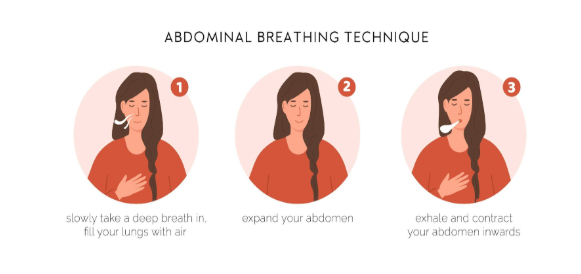
to directly manage the body’s fight-or-flight response.
- Role-Playing: Practicing a difficult conversation (like setting a boundary or asking for a raise) with the therapist before trying it in real life.13
- Behavioral Experiments: Intentionally testing a catastrophic thought (e.g., intentionally dropping a pen in a public place to see if people actually stare and judge you, thus disproving the “Everyone is watching me” thought).14

Free consultations. Connect free with local health professionals near you.
Conclusion
Cognitive Behavioral Therapy (CBT) is an incredibly powerful, practical, and effective tool for emotional health.15 It operates on the simple, verifiable truth that our thoughts, feelings, and actions are deeply intertwined, and we can achieve lasting change by mastering the skills to manage our own interpretations and reactions.
By teaching you how to identify and restructure unhelpful thought patterns (Cognitive Restructuring) and implement intentional actions to challenge fear and apathy (Behavioral Activation and Exposure), CBT empowers you to become your own therapist.16 This process provides a transparent, evidence-based toolkit that gives you control over your emotional life, enabling you to apply rational, helpful responses to any challenge the future may bring.
Time to feel better. Find a mental, physical health expert that works for you.
Common FAQs
Cognitive Behavioral Therapy (CBT)
What is the main idea behind CBT in the simplest terms?
The main idea is simple: Your feelings are not caused by the things that happen to you; they are caused by the way you think about the things that happen to you.
CBT teaches you that you can manage difficult emotions (like anxiety or depression) by actively learning to identify and change your unhelpful thinking patterns (Cognitions) and your behaviors (Actions). It gives you the skills to interrupt that cycle.
Is CBT just about thinking positive thoughts all the time?
No, definitely not. The goal of CBT is not to force yourself to be happy or unrealistically positive. That’s actually a common cognitive distortion called “should” statements (“I should always be happy”).
Instead, the goal is to find a thought that is more balanced, more realistic, and more helpful. If you think, “I am a total failure,” the balanced thought might be, “I failed at that one task, but I succeeded at three others, and I can learn from this mistake.” It’s about accuracy, not forced optimism.
What exactly is a "Cognitive Distortion"?
A cognitive distortion is a habitual, flawed way of thinking that your brain uses automatically, especially when you are stressed. They are like mental shortcuts that make you feel bad.
Your therapist will teach you to name them (like Catastrophizing, Mind Reading, or All-or-Nothing Thinking). Learning to identify the distortion reduces its power, allowing you to challenge the thought and replace it with a more rational one.
Why is "homework" so important in CBT?
Homework is the core of CBT because it’s how you practice the skills outside the therapy room and rewire your brain.
Therapy only lasts for one hour a week. For the other 167 hours, you need to be actively practicing the techniques. Homework, like filling out Thought Records or committing to a Behavioral Experiment, is what takes the skill from being an idea to becoming a habit that leads to lasting change.
What are Thought Records, and how do they work?
A Thought Record is a structured piece of homework that teaches you how to do Cognitive Restructuring.
It’s a way to investigate your automatic negative thoughts (ANTs). You write down the situation, the ANT, and the resulting emotion. Then, you systematically challenge the thought by asking: “What is the evidence for this thought? What is the evidence against it?” This forces your rational mind to examine the facts and develop a more balanced conclusion.
I'm depressed and have no energy. How does CBT help if I can't even get out of bed?
For depression, CBT often starts with the Behavioral Component, specifically Behavioral Activation (BA).
When you’re depressed, your thought is, “I have no energy.” If you listen to that thought, you withdraw, which reinforces the depression. BA flips this script: you schedule and commit to activities (like taking a 10-minute walk or doing one small chore) regardless of how you feel. This action gathers evidence against the thought, demonstrating that you can do things, which can gradually lift your mood.
Is CBT a long-term or short-term therapy?
CBT is generally considered a short-term, goal-oriented therapy.
The length varies based on the issue (a specific phobia might take 8-12 sessions, while managing chronic depression might take 6-12 months). The goal is not open-ended exploration; it’s to equip you with the toolkit of skills necessary to become your own therapist so you can manage challenges independently.
How does CBT treat anxiety and phobias?
It treats them by using Exposure Techniques (part of the behavioral component).
Anxiety is fueled by avoidance. CBT helps you create a fear hierarchy and encourages you to gradually, systematically confront the feared situation, starting with the least scary version. The core rule is to stay in the situation until your anxiety naturally drops. This behavioral commitment proves to your brain that the situation is safe, dismantling the anxious thought.
People also ask
Q: Can you do CBT online?
A: CBT can be done in person, online, or on the phone.
Q:How effective is CBT for PTSD?
A: Group CBT showed significant reductions in PTSD symptoms, both in clinical interview and self-report measures. Among treatment completers, 88.3% of group CBT relative to 31.3% of the minimum contact comparison participants did not satisfy criteria for PTSD at post-treatment.
Q: What is the 10 minute CBT approach in primary care?
A:The 10 Minute CBT approach builds upon commonly used skills in general practice, such as using open questions, summarizing, identifying health beliefs and hand-over, but offers an additional structure to apply the skills effectively to understand and change common emotional problems.
Q:Can I practice CBT at home?
A: One of the first CBT skills you can practice at home is learning to recognize automatic thoughts. These are the quick, often unconscious thoughts that pop up in response to situations. Examples include: “I always mess things up.”
NOTICE TO USERS
MindBodyToday is not intended to be a substitute for professional advice, diagnosis, medical treatment, or therapy. Always seek the advice of your physician or qualified mental health provider with any questions you may have regarding any mental health symptom or medical condition. Never disregard professional psychological or medical advice nor delay in seeking professional advice or treatment because of something you have read on MindBodyToday.
Share this article

Let us know about your needs

Quickly reach the right healthcare Pro

Message health care pros and get the help you need.
Popular Healthcare Professionals Near You
You might also like

What is Psychodynamic Therapy Principles?
, What is Psychodynamic Therapy Principles? Everything you need to know Find a Pro Digging Deeper: A Simple Guide to […]

What is Dialectical Behavior Therapy (DBT)?
, What is Dialectical Behavior Therapy (DBT) ? Everything you need to know Find a Pro Navigating the Storm: Understanding […]

What is Cognitive Behavioral Therapy (CBT)?
, What is Cognitive Behavioral Therapy (CBT) ? Everything you need to know Find a Pro Your Thoughts Are Not […]