A Paradigm Shift in Service Delivery and System Design
Trauma-Informed Care (TIC) represents a fundamental philosophical and operational shift across human service systems, moving beyond the traditional focus on symptom management and diagnosis to an understanding of how trauma affects neurological, psychological, and social functioning. TIC is not a specific therapeutic technique but an organizational framework and clinical approach that recognizes the high prevalence of trauma in all populations seeking services and the profound, pervasive impact trauma has on an individual’s life, development, and capacity for engagement. The core question shifts from “What is wrong with you?” to “What happened to you?” This crucial shift guides every interaction, procedure, and policy within an organization.
Time to feel better. Find a mental, physical health expert that works for you.
Part 1: How Trauma Gets “Stuck” in the Brain
Before diving into EMDR, it helps to understand what happens in the brain when you experience a traumatic event.
The Brain’s Natural Filing System
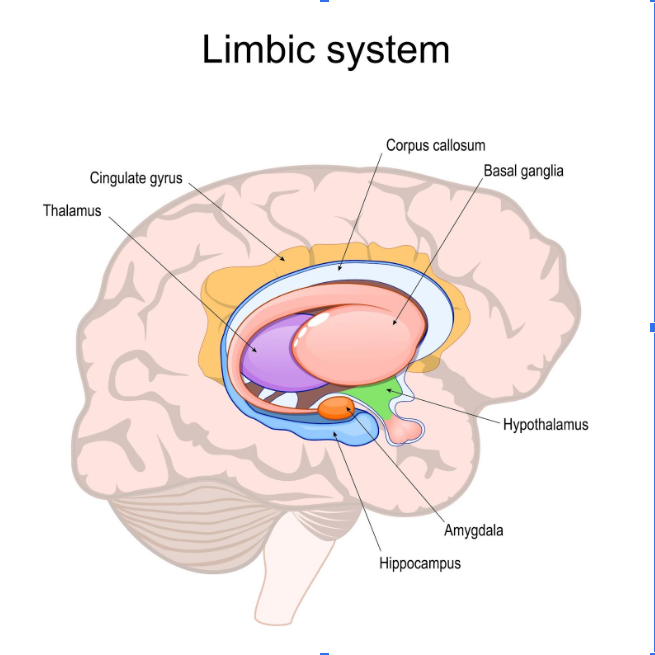
Normally, when something happens—you go to the grocery store, you laugh at a joke—your brain processes that information. It gives the memory a timestamp, connects it to other related memories, recognizes the emotions involved, and stores it neatly in your long-term memory system. You can recall it easily, and it feels like “something that happened in the past.” This orderly process happens automatically thanks to the coordinated activity of different parts of your brain, particularly the hippocampus (responsible for context and timing) and the prefrontal cortex (responsible for reasoning and control).
When Trauma Interrupts the System
When something truly terrifying or overwhelming happens (like a car accident, a violent event, or repeated emotional abuse), your brain goes into survival mode (fight, flight, or freeze).
During this intense stress, the brain’s normal processing system gets overloaded and interrupted. The amygdala, the brain’s fear center, screams “Danger!” and takes over. High levels of stress hormones flood the system, essentially preventing the memory from being filed correctly by the hippocampus. Instead, it gets stored in the emotional part of the brain in a raw, unprocessed form.
- The result: The memory is essentially stuck. It remains “live” and active. When you are reminded of the event by a trigger (a sound, a smell, a similar feeling), your brain reacts as if the danger is happening right now, complete with the original physical sensations, raw emotions, and distorted beliefs.
- A Simple Analogy: Imagine your memory as a computer file. When the trauma happens, the file is corrupted. It’s stored with the image, sound, and raw emotion frozen inside, and every time you try to open it, the emotional panic of the original moment crashes your system. This is what leads to flashbacks, nightmares, and chronic anxiety.
EMDR is the tool designed to “unstick” that corrupted file and allow the brain’s natural processing system to finally complete its job, bringing the memory out of the amygdala’s grip and into the reasoning prefrontal cortex.
👁️ Part 2: What is EMDR and How Does it Work?
EMDR therapy was developed in the late 1980s by Dr. Francine Shapiro. The core concept is that a technique called Bilateral Stimulation helps the brain unlock and reprocess traumatic memories.
The Role of Bilateral Stimulation (BLS)
Bilateral Stimulation simply means alternating stimulation (left side, right side) of the body or senses. This is thought to engage both hemispheres of the brain in a rhythmic way, which seems to distract the emotional center enough to allow the thinking brain to work. This can be achieved through a few methods:
- Eye Movements: Following the therapist’s fingers or a light bar back and forth (the most traditional method).
- Tappers (Tactile): Holding small handheld buzzers that alternate vibration from left to right.
- Audio Tones: Listening to alternating sounds in headphones.
Why Does BLS Work? (The Theories)
While researchers are still exploring the exact mechanism, the most popular and supported theory links EMDR to what happens when you dream:
- The REM Sleep Connection: When you sleep, you go through periods of Rapid Eye Movement (REM) sleep. This is when your brain is naturally busy processing the day’s events and memories. The back-and-forth eye movement in REM sleep is thought to be the brain’s way of integrating and filing information.
- The EMDR Hypothesis: EMDR essentially mimics the brain’s natural REM state while you are awake. By directing your attention to the painful memory while simultaneously engaging in BLS, you activate the brain’s natural healing mechanism. It’s like jump-starting a stalled engine.
- The Outcome: The alternating stimulation seems to soothe the emotional centers of the brain (like the amygdala, which triggers fear) and allows the memory to move to the prefrontal cortex—the thinking, reasoning part of the brain. The emotional “charge” is diffused, the distorted negative beliefs are replaced with positive, realistic ones, and the memory is finally filed as “something bad that happened, but is now over.”
Connect Free. Improve your mental and physical health with a professional near you
Part 3: The Eight Phases of EMDR Therapy
EMDR is not just about waving hands. It is a highly structured, eight-phase process. Knowing these phases helps set expectations and gives you confidence in the structure and ethical practice of your therapist.
Phase 1: History Taking and Treatment Planning
This is the beginning. You and your therapist will thoroughly discuss your history, focusing not only on major traumas but also on difficult life experiences that may have shaped your current distress. You’ll identify the specific memories (the “targets”) that are causing you trouble, and create a roadmap, often working backward from current problems to their earliest originating memory.
Phase 2: Preparation and Stabilization
This is arguably the most important phase for your safety and comfort. Your therapist will teach you various coping and self-soothing techniques (like grounding exercises, a personalized “safe place” visualization, and emotional containment strategies). These tools are your emotional emergency kit, ensuring you can manage any distress that comes up during the processing phases. You do not start processing trauma until you feel stable, secure, and equipped with these resources. This phase may take one session or several, depending on your needs.
Phase 3: Assessment
You will identify a specific target memory and break down its component parts for processing:
- The Image: What picture comes to mind that best represents the worst part of the memory?
- Negative Cognition (NC): What negative belief do you hold about yourself related to that memory (e.g., “I am helpless,” “I am unlovable,” “It was my fault”)?
- Positive Cognition (PC): What positive, true belief would you rather hold (e.g., “I am safe now,” “I did the best I could,” “I am strong and capable”)?
- SUD (Subjective Units of Distress): On a scale of 0 (no distress) to 10 (highest distress), how badly does the memory bother you right now?
- VIV (Validity of the Positive Cognition): On a scale of 1 (completely false) to 7 (completely true), how true does the Positive Cognition feel to you right now?
Phase 4: Desensitization
This is the core “processing” phase where you use the Bilateral Stimulation (BLS).
- You focus on the negative image and the Negative Cognition, noting your SUD level.
- Your therapist begins the BLS in short sets (usually 20-30 seconds).
- After each set, the BLS stops, and the therapist simply asks: “What did you notice?”
- You report whatever spontaneously came to mind (a new image, a shift in feeling, a body sensation, a random thought, or a shift in perspective). The therapist does not analyze or guide; they just ask you to briefly focus on that new notice and start the BLS again.
- The Brain Does the Work: The back-and-forth process continues until the SUD level drops to 0 or 1. The memory’s emotional charge is fading, and you may find that the negative image has become smaller, fuzzier, or simply less important.
Phase 5: Installation
Once the distress is gone (SUD is 0 or 1), you now focus on strengthening the Positive Cognition (PC) you identified earlier (e.g., “I am safe now”). You focus on the PC while using BLS until the VIV rating hits a strong 6 or 7. This is the moment you install the healing, positive belief into the now-neutralized memory, making it the dominant feeling associated with the event.
Phase 6: Body Scan
You are asked to think about the original memory and the newly installed Positive Cognition, and then to notice your body from head to toe. Trauma often leaves somatic residue—chronic tension, tightness, or uncomfortable physical sensations. If any are found, you target them with more BLS until the body feels completely calm and neutral. This ensures the trauma is fully processed on a physical, as well as an emotional and cognitive, level.
Phase 7: Closure
The therapist ensures you are calm and stable before ending the session. They may remind you of your grounding techniques from Phase 2 and emphasize that processing can continue between sessions (which is normal and expected). They will teach you how to “contain” any leftover distress using the tools you learned, securing it until the next session.
Phase 8: Re-evaluation
At the start of the next session, the therapist checks the target memory from the previous session to ensure the gains were maintained and the distress level is still low (usually 0). If the memory is still calm, you move on to a new target memory on your roadmap.
Part 4: What You Can Expect & Why It’s Unique
EMDR often feels very different from traditional talk therapy.
It’s Not Just Talk Therapy
In many processing sets, you will do very little talking. The Bilateral Stimulation is the communication. Your brain is doing the deep work while you simply observe what’s happening. The therapist is there to guide the process, not to interpret your thoughts or offer deep analysis. This can be a relief for people who have struggled to “talk through” their trauma without relief.
Your Brain Takes the Lead
In EMDR, you’re not trying to force a conclusion or think your way out of the problem. You simply report what you notice. Your brain might jump from the target memory to a childhood experience, then to a related fear, and back again. This meandering is exactly how the brain makes new, healthy connections and processes information. Trust the process—your brain knows what it needs to heal.
You Are in Control
Despite the intensity of the emotional content, you are always in charge.
- You can ask the therapist to stop the BLS at any time and for any reason.
- You control the speed and intensity of the stimulation (e.g., faster or slower eye movements).
- Your therapist makes sure you are prepared with tools (Phase 2) so that you never feel overwhelmed or out of control.
The Power of “Aha!” Moments
One of the most rewarding parts of EMDR is the spontaneous insight. You might suddenly realize, “Oh, the reason I always over-apologize is because that childhood memory taught me it was the only way to be safe.” These insights often arrive without effort, simply as a result of the memory being fully processed.
The Outcome: It’s Over, Not Gone
After successful EMDR, the memory of the traumatic event remains, but its toxicity is gone. You will be able to talk about the event without reliving the physical terror or the emotional collapse. It’s no longer a burning presence in your life; it’s just a page in your history book, and you are the one who gets to turn the page.
A Final Word of Warmth
Seeking EMDR therapy is choosing a path of profound healing. It is a commitment to telling your nervous system that the danger is over, and it’s time to rest and integrate.
Be patient with yourself. Healing from trauma is a marathon, not a sprint, but EMDR can be an incredibly effective way to clear the hurdles that keep holding you back. You deserve to feel peace, and your brain has the capacity to find it.
Free consultations. Connect free with local health professionals near you.
Conclusion
A Final Word of Warmth: The Lasting Shift to Freedom and Resilience
Choosing EMDR therapy is choosing a path of profound, deep-seated healing. It is a commitment to telling your nervous system, at its most fundamental level, that the danger is over, and its time to rest, process, and integrate. It is an act of self-compassion that acknowledges the past’s real impact while claiming your power in the present.
Beyond Coping: The Power of Integration
Many traditional therapies for trauma focus on teaching you to cope with or manage symptoms. They give you tools to use when a trigger happens. While incredibly valuable, this approach can sometimes feel like constantly battling a wildfire—you’re exhausted, but the fire is always smoldering.
EMDR, however, is fundamentally different. It aims for integration, which is the psychological process of taking the raw, unprocessed memory (the “corrupted file”) and transforming it into a cohesive narrative that is properly stored in your brain’s memory network.
- From “Happening Now” to “Happened Then”: Successful EMDR shifts the memory from an emotional, visceral truth that impacts your daily choices to a cognitive fact that is part of your history. You don’t lose the memory; you lose the charge. You can talk about the event without your heart pounding, your muscles tensing, or your mind racing. This change is powerful because it frees up immense mental and emotional energy you previously spent guarding yourself against triggers.
- The Neuroplasticity Advantage: The bilateral stimulation (BLS) utilized in EMDR is believed to activate the brain’s natural capacity for neuroplasticity—its ability to reorganize itself by forming new neural connections. In simple terms, you are literally giving your brain a chance to rebuild the pathways around the traumatic memory. The distress signal is re-routed away from the fear center (the amygdala) and toward the rational center (the prefrontal cortex).
This makes the change biological, not just behavioral.
The Shift in Self-Belief
One of the most insidious and painful effects of trauma is the negative self-belief it installs (the Negative Cognition, or NC). These beliefs—such as “I am helpless,” “I am unlovable,” or “I am permanently damaged”—become the lens through which you view every situation and relationship.
The installation phase (Phase 5) of EMDR is vital for replacing this harmful core belief with a realistic, positive one (the Positive Cognition, or PC). This is not just wishful thinking; it’s the result of processing the memory so thoroughly that your emotional experience validates the new belief.
- It’s not: “I’m going to try to believe I’m safe.”
- It becomes: “I know I am safe, because the memory is no longer a threat, and I survived it. I am strong.”
This shift is what moves you from the role of a victim (someone defined by what happened to them) to a survivor (someone who integrates the past while defining their own future). This newfound internal validation ripples out into every area of your life, improving your self-worth and your ability to form healthy relationships.
What to Expect After Treatment?
Healing is rarely a neat, linear line, but after successful EMDR work on a target memory, you can generally expect several key changes:
- Reduced Reactivity: Triggers that once sent you spiraling lose their intensity. While you might still notice the trigger, you’ll be able to observe it and choose your response, rather than being instantly hijacked by fear.
- Less Need for Defense: You may find you rely less on your old coping mechanisms—like emotional numbing, avoidance, or perfectionism. As the internal threat fades, the need for these defenses fades too.
- Physical Relief: Because trauma often gets trapped in the body (chronic tension, jaw clenching, headaches), many clients report a significant reduction in physical pain and tension after the body scan phase (Phase 6).
- A Broader Emotional Range: When you’re no longer constantly on guard, you have more bandwidth to experience joy, excitement, and deep connection. Life feels richer, not just less terrifying.
A Final Word on Courage and Patience
Undertaking EMDR is a powerful and courageous journey. It requires you to consciously look at the things you’ve spent years trying to avoid.
- Be Patient with the Process: While some individuals experience rapid relief, others may need more time, especially if dealing with complex, layered, or early-childhood trauma. Trust the structure and your therapist’s guidance.
- Trust Your Therapist: The therapeutic alliance in EMDR is non-negotiable. You are going into deep, sometimes unsettling, territory, and you need to feel absolutely safe with your guide. If you are having doubts or uncomfortable feelings about the process or the therapist, speak up—addressing these feelings can sometimes be part of the healing itself.
- Trust Your Brain: Remember, the core power of EMDR comes from your own brain’s inherent ability to heal. You are simply giving it the rhythmic boost it needs to complete its natural work.
You deserve to feel peace. You deserve to be defined by your future, not limited by your past. EMDR offers a tangible path to achieve that freedom.
Time to feel better. Find a mental, physical health expert that works for you.
Common FAQs
It’s natural to have questions when exploring a therapy approach as powerful and unique as EMDR. Here are answers to some of the most common questions people ask, designed to be clear and supportive.
People also ask
Q: How does EMDR rewire the brain?
A: When you undergo EMDR, you access memories of a trauma event in very specific ways. Combined with eye movements and guided instructions, accessing those memories helps you reprocess what you remember from the negative event. That reprocessing helps “repair” the mental injury from that memory.
Q:What are the 8 stages of EMDR?
A: The eight phases are 1) history taking and treatment planning, 2) preparation, 3) assessment, 4) desensitization, 5) installation, 6) body scan, 7) closure and 8) reevaluation.
Q: What is the EMDR therapy?
A: EMDR is a structured therapy that encourages the patient to focus briefly on the trauma memory while simultaneously experiencing bilateral stimulation (typically eye movements), which is associated with a reduction in the vividness and emotion associated with the trauma memories.
Q:Who is not suitable for EMDR?
A:
People with active psychosis, uncontrolled bipolar disorder, severe dissociative disorders, or active substance abuse are typically not good candidates for EMDR therapy. Those in current crisis situations, lacking basic coping skills, or unable to form therapeutic relationships also need alternative approaches.Jul 18, 2025
EMDR not a good candidate: Who Avoids Eye Movement Therapy
The Empowering Space
https://theempoweringspace.com › emdr-not-good-candi…