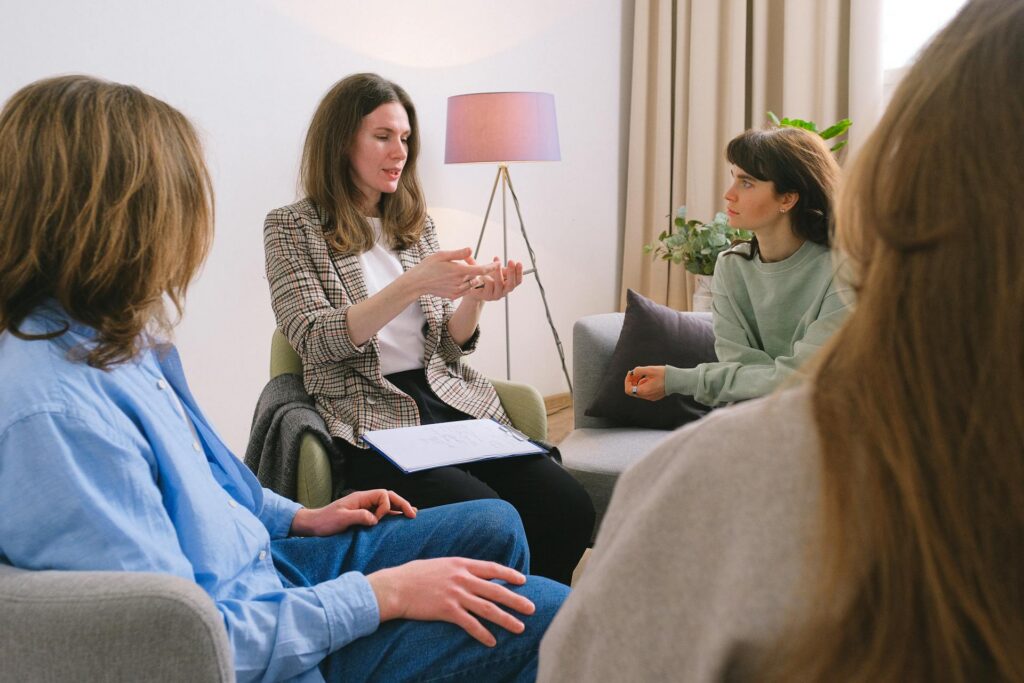
Group Therapy Dynamics: The Therapeutic Power of the Collective Field
Group Therapy, distinct from individual psychotherapy, is a powerful modality that utilizes the interpersonal processes and dynamic interactions inherent in a structured collective setting to facilitate healing, insight, and behavioral change. The central conceptual model posits that the group is not merely a collection of individuals; rather, it functions as a social microcosm—a condensed, representative world in which members inevitably replicate their characteristic patterns of relating, interacting, and maladaptive behaviors observed in their everyday lives. The group setting thus provides a unique, safe, and immediate laboratory for observation, experimentation, and corrective emotional experiences. The primary agent of change is the group itself, specifically the complex network of relationships, communication patterns, and emotional bonds that develop over time. The therapist’s role shifts from a primary focus on the individual to a focus on the group process—the “how” of interaction (who speaks to whom, with what tone, and what is avoided) rather than merely the “what” of the content. The efficacy of Group Therapy, as articulated by pioneers like Irvin Yalom, is rooted in the synergistic power of the group’s dynamic forces, collectively known as the curative factors.
This comprehensive article will explore the historical evolution and theoretical foundations of Group Therapy, detail the essential clinical characteristics that define the group as a social microcosm, and systematically analyze the primary dynamics of group development, cohesion, and conflict. Understanding these concepts is paramount for appreciating the complexity and therapeutic potential of harnessing the collective relational field for individual psychological growth.
Time to feel better. Find a mental, physical health expert that works for you.
- Theoretical Foundations and The Curative Factors
The theoretical justification for Group Therapy’s effectiveness rests on a unique set of interpersonally and experientially derived mechanisms of change, first systematically cataloged by Irvin Yalom, which transcend the mechanisms of individual work.
- The Group as a Social Microcosm
This core concept explains why the group setting is so uniquely effective in diagnosing and treating interpersonal difficulties. The group is an authentic slice of the member’s life.
- Replication of Outside Reality: Over time, typically within the first few months, the group setting becomes a natural replica of the members’ social world. Members unconsciously and involuntarily begin to display their habitual, often maladaptive, ways of relating, such as being overly critical, seeking excessive approval, avoiding intimacy, or competing for attention. These behaviors emerge spontaneously.
- The “Here-and-Now” Focus: The therapist encourages the group to shift its focus from discussing past events or external problems (content) to examining the interactions occurring in the moment (process). Observing one’s own dysfunctional behavior as it happens—for example, seeing oneself interrupt another member—provides immediate, powerful feedback and creates a potent leverage point for therapeutic intervention and change that cannot be replicated in one-on-one therapy.
- Yalom’s Curative Factors (Agents of Change)
Yalom identified several interactive factors that collectively explain why groups facilitate personal and relational change. These factors often operate simultaneously, creating a synergistic effect.
- Instillation of Hope: Observing other members with similar issues improve fosters a sense of optimism that recovery and change are possible for oneself.
- Universality: The immense relief and reduction of shame experienced upon realizing that one’s deepest problems, feelings, or fears are not unique, but shared by others.
- Imparting Information: This includes receiving didactic instruction from the leader about psychological health, group functioning, or coping mechanisms, as well as receiving direct advice and guidance from fellow members.
- Altruism: The invaluable experience of genuinely helping another person in the group boosts self-esteem, provides a sense of value, and shifts the focus away from self-preoccupation.
- Corrective Recapitulation of the Primary Family Group: The group unconsciously comes to resemble the member’s family of origin. This allows the member to relive and work through unresolved conflicts with family-like figures (authority figures, sibling-like peers) in a safer, more adaptive context where new, healthier responses are encouraged and supported.
- Development of Socializing Techniques: Members learn and practice new, adaptive social skills, such as giving and receiving feedback, conflict management, and effective communication, within the supportive environment of the group
- Group Structure and Developmental Stages
The group is a dynamic system that inevitably evolves through predictable stages, each characterized by distinct interpersonal themes, core anxieties, and leadership challenges that must be successfully navigated for growth.
- Initial Stage (Forming and Orienting)
This stage is defined by members’ dependence on the leader and high anxiety regarding self-disclosure and acceptance.
- Anxiety and Safety Concerns: Members are typically cautious, guarded, and rely heavily on the leader for structure and approval. Communication is often superficial, focusing on safe, external content and searching for easily identifiable commonalities among members to reduce risk.
- Dependency and Leadership: The core conflict revolves around dependence on the leader. Members unconsciously test the rules and boundaries of the group, seeking clarity on commitment, confidentiality, and the perceived competence of the therapist. The leader’s transparency and adherence to boundaries are crucial here.
- Primary Task: The immediate task is establishing basic trust, defining roles, and laying the groundwork for basic norms, such as confidentiality, commitment, and respectful, direct communication, ensuring a predictable structure.
- Transition Stage (Storming and Conflict)
As initial trust tentatively develops, underlying anxieties, power struggles, and relational fears begin to emerge, marking a critical period of therapeutic risk and opportunity.
- Conflict and Hostility: This stage is characterized by increased frustration, impatience with the group process or other members, and overt or covert criticism directed toward the leader or peers. This emotional confrontation is a necessary phase for moving past superficiality and establishing authentic relationships.
- Testing Boundaries: Members challenge the established norms, roles, and the therapist’s authority (often reflecting unresolved authority conflicts or relational fears from their past). The group must learn to differentiate between content (what they are arguing about) and process (how they are arguing).
- Flight and Resistance: Members may exhibit resistance through silence, intellectualization, chronic lateness, absenteeism, or dropping out of the group. The leader’s task is to facilitate the expression of the underlying conflict and move toward understanding the process of the resistance, normalizing the difficulty of this stage.
- Working Stage (Cohesion and Productivity)
Successful and persistent navigation through the transition stage leads to the establishment of a mature, highly cohesive, and productive working environment where deep change can occur.
- Group Cohesion: Members feel deeply connected, accepted, and valued. This high level of trust allows for deep self-disclosure, honest feedback, and genuine risk-taking in experimenting with new behaviors.
- “Here-and-Now” Focus Dominance: Process commentary becomes the norm. Members offer genuine, constructive feedback and are able to confront each other directly, but with care and respect, maximizing the corrective and curative potential of the group experience.
- Increased Self-Responsibility: Members begin to take ownership of the group’s agenda and their own healing process, recognizing their symptoms as manifestations of interpersonal patterns rather than isolated diseases requiring external fixing.
Connect Free. Improve your mental and physical health with a professional near you
III. Dynamics of Cohesion and Conflict
The group’s ultimate capacity for therapeutic efficacy is inextricably linked to its ability to tolerate and constructively utilize both connection (cohesion) and inevitable disagreement (conflict).
- Group Cohesion
Cohesion is the therapeutic analog of the positive therapeutic alliance in individual therapy; it is the feeling of belonging, mutual attractiveness among members, and commitment to the collective.
- Prerequisite for Change: High cohesion creates a powerful safety net, allowing members to engage in the painful but necessary work of self-disclosure and confronting their ingrained maladaptive patterns. Without sufficient cohesion, the anxiety generated by conflict or deep exposure is overwhelming, leading to splintering.
- High Cohesion Benefits: Cohesion is empirically correlated with better attendance, increased willingness to work through difficult material, and significantly improved therapeutic outcomes. It is the “social glue” that sustains the therapeutic effort.
- Management of Conflict
Conflict is inevitable in any close relational system and is considered necessary for deep therapeutic change, as it mirrors and reactivates real-world relational disagreements.
- Therapeutic Function: When conflict is addressed openly and constructively—by focusing on the process of the disagreement rather than just the surface content—it provides an opportunity for the corrective recapitulation of the family group and the development of new, adaptive communication and assertion skills.
- Leader’s Role: The leader actively models and mediates constructive conflict resolution, intervening to ensure that hostility is expressed directly, non-destructively, and with a focus on understanding the underlying interpersonal dynamic and the emotional impact of the interaction.
Free consultations. Connect free with local health professionals near you.
Conclusion
Group Therapy—The Relational Engine for Deep and Lasting Change
The detailed exploration of Group Therapy Dynamics confirms that this modality offers a therapeutic environment unlike any other, uniquely positioned to address the interpersonal and relational nature of psychological distress. Group Therapy harnesses the collective power of the therapeutic field, transforming the setting into a social microcosm where members’ maladaptive relational patterns are spontaneously and vividly replicated. The efficacy of this approach is comprehensively explained by Yalom’s Curative Factors, which include the powerful effects of universality, altruism, and the corrective recapitulation of the family group. This conclusion will synthesize how the group leader strategically utilizes the “here-and-now” focus to maximize insight, detail the critical function of group cohesion as the prerequisite for risk-taking, and affirm the ultimate systemic goal: guiding the group through its developmental stages to achieve a state of high productivity and profound individual change through collective effort.
- The Role of the Group Therapist and Process Focus
The function of the group therapist is fundamentally different from that of an individual therapist, centering on the management of group-level dynamics and the promotion of process awareness.
- Shifting from Content to Process
The most vital skill of the group leader is the ability to shift the group’s attention from the content of the conversation (the “what”) to the process of the interaction (the “how”).
- Process Commentary: The leader intervenes to make explicit the underlying dynamics that are typically unconscious. For instance, if a member speaks only to the leader, the therapist might comment on the process: “I notice that whenever Sarah starts to talk about her feelings, John immediately asks me a question. I wonder what’s happening between you two right now.” This intervention makes the interpersonal transaction the subject of analysis.
- Maximizing the “Here-and-Now”: This process commentary focuses the group on the current moment, where behavior is observable and verifiable. By focusing on the present interaction, the group provides immediate, authentic feedback that is far more impactful than discussing past events, turning the group into a living laboratory for experimentation and learning.
- The Therapist as Model and Regulator
The leader serves as a powerful role model for constructive, effective interpersonal behavior and emotional regulation.
- Modeling: The therapist models ideal behavior, including giving and receiving direct, honest feedback, acknowledging and processing their own feelings about the group’s dynamics, and navigating conflict constructively. This demonstration teaches members how to manage difficult emotions within a relationship without resorting to avoidance or destructive attack.
- Gatekeeping and Intervening: The leader has a responsibility to protect the group norms, especially confidentiality, and to prevent destructive behavior (e.g., highly aggressive attacks, monopolizing the floor). By maintaining a safe, structured environment, the leader ensures that the anxiety generated by the therapeutic work remains tolerable, thus preventing attrition and preserving cohesion.
- Cohesion, Universality, and the Corrective Experience
The ultimate power of Group Therapy lies in the synergy of the curative factors that emerge once the group achieves a critical level of safety and connection.
- Group Cohesion as the Safety Net
Group cohesion—the sense of “we-ness,” acceptance, and belonging—is the non-negotiable prerequisite for deep therapeutic work.
- Tolerating Risk: High cohesion acts as an emotional safety net. When members feel deeply accepted and valued by the group, they are willing to take the risks necessary for growth: revealing deep shame, receiving challenging feedback, and experimenting with new interpersonal behaviors that feel terrifying outside the group (e.g., asserting a boundary).
- Universality and Shame Reduction: The experience of realizing, through group feedback, that one’s deepest shame or perceived flaw is shared by others (universality) instantly reduces self-blame and isolation. Cohesion allows this recognition to move from a cognitive awareness to a profound emotional experience of belonging.
- The Corrective Emotional Experience
This factor is central to achieving lasting change and is uniquely facilitated by the group dynamic.
- Replicating Family Patterns: As the group matures, members unconsciously position themselves in the same dysfunctional roles they held in their primary family group. For instance, a member who grew up being criticized may constantly feel attacked by peers in the group.
- Working Through Conflict: The therapist ensures that this relational “recapitulation” is played out but resolved differently than it was in the past. If the member challenges the perceived “critic,” and the group/leader responds not with rejection or punishment (as the family might have), but with understanding and constructive feedback, the member experiences a corrective emotional experience. The individual learns that their true self, including their conflictual patterns, can be expressed without catastrophic relational loss.
- Conclusion: The Systemic Impact of Group Dynamics
Group Therapy is a highly potent intervention because it addresses problems where they exist: in relationship.
By successfully guiding the group through its predictable stages—from Forming (dependency) to Storming (conflict) to Working (cohesion)—the leader maximizes the therapeutic yield. The group setting provides the perfect social microcosm where the member’s outside world problems are immediately visible in the “here-and-now.” The group’s process, driven by the therapist’s commitment to process commentary and the group’s evolving cohesion, allows for the vital corrective recapitulation of interpersonal history. This powerful dynamic leads to profound self-insight, the development of adaptive socializing techniques, and ultimately, the freedom to relate in new, healthier ways outside the group setting. Group Therapy is thus the quintessential relational engine, utilizing the collective field to forge enduring, fundamental change in the individual.
Time to feel better. Find a mental, physical health expert that works for you.
Common FAQs
Core Concepts and The Social Microcosm
Common FAQs
Yalom’s Curative Factors (Agents of Change)
Common FAQs
Dynamics and Development
People also ask
Q: What are group dynamics in therapy?
A: It is a way of viewing the organization of the group. Every group develops norms (both conscious and unconscious) regarding appropriate behavior. These norms begin with the expectations of the members and the therapist.
Q:What are the 4 elements of group dynamics?
A: - The four key elements of group dynamics are roles, norms, relationships, and communication. Roles define individual responsibilities, norms set behavioral expectations, relationships build connections, and communication ensures effective information exchange.
Q: What are the 5 elements of group dynamics?
A: Group dynamics can be conceptualized as falling within the following five domains: (1) communication processes and interaction patterns, (2) interpersonal attraction and cohe- sion, (3) social integration and influence, (4) power and control, and (5) culture.
Q:What are the 5 stages of group dynamics?
A: The stages of group development are forming, storming, norming, performing, and adjourning. These five stages of team formation, first introduced by Bruce Tuckman in 1965, describe how groups evolve from a collection of strangers to a high-performing unit.