Healing From the Body Up: A Simple Guide to Somatic Experiencing
Welcome! If you’re exploring therapy, you’ve likely heard a lot about thoughts, feelings, and memories. But what about your body? If you’ve ever felt “stuck” in talk therapy, if anxiety makes your stomach churn, or if an old memory gives you a sudden headache, you’ve already experienced the profound link between your mind and your body.
This is where Somatic Experiencing (SE) comes in.
Somatic Experiencing is a gentle, powerful, and deeply respectful way to heal from trauma, chronic stress, and anxiety by working directly with your body’s nervous system. It’s a “bottom-up” approach, meaning it starts with your physical sensations rather than your thoughts (“top-down”). Think of it as teaching your body how to finish a survival response that got interrupted a long time ago.
Let’s dive into this fascinating and life-changing approach, developed by Dr. Peter A. Levine, and see how you can learn to listen to your body’s profound wisdom.
Time to feel better. Find a mental, physical health expert that works for you.
Your Body Keeps the Score: Understanding Trauma
We often think of trauma as a scary event, like an accident, a natural disaster, or abuse. While these events are certainly traumatic, in Somatic Experiencing, trauma is not just the event itself; it’s the physiological residue left in your body’s nervous system when you couldn’t fully complete a defensive response.
The Built-in Survival Cycle (Fight, Flight, Freeze)
Imagine a gazelle being chased by a lion. Its body automatically floods with energy—heart racing, muscles tightening—preparing to fight or flee. If the gazelle escapes, it doesn’t just walk away calmly. It often shivers, shakes, and trembles for a few minutes. This is its body naturally discharging the massive survival energy, allowing its nervous system to return to a state of calm.
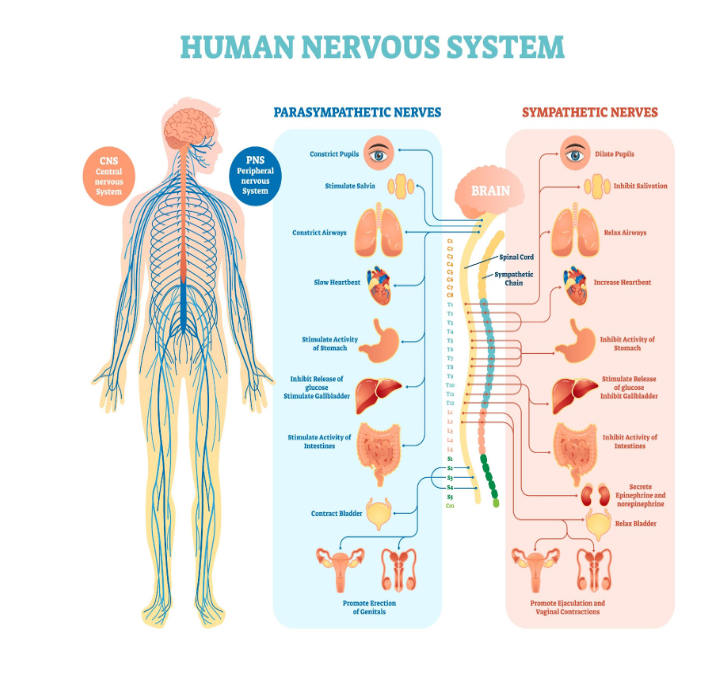
Humans have the exact same system. We possess an incredibly ancient survival mechanism that relies on the Autonomic Nervous System (ANS). The ANS is the control center for your automatic body functions like breathing, heart rate, and digestion. It operates in two main modes:
- Sympathetic Nervous System (The Accelerator): This is the part that gears you up for action—the fight, flight, or freeze response. It pumps adrenaline, raises your heart rate, and diverts blood to your muscles.
- Parasympathetic Nervous System (The Brake): This is the part responsible for rest and digest. It slows your heart rate, relaxes your muscles, and allows your body to feel safe and calm.
But because we have big, thinking brains and social rules, we often interrupt this natural discharge. In a traumatic or overwhelming situation, we might want to scream or run (fight/flight), but if we can’t (for example, being trapped in an accident or immobilized by fear), our body hits the ultimate emergency brake: the freeze response.
- The Problem: When the freeze response hits, all that intense, mobilized survival energy gets bound up or trapped in the nervous system. The accelerator is still floored, but the brake is jammed on.
- The Result: The nervous system gets stuck in a state of high alert (hyper-vigilance, anxiety, insomnia, racing thoughts) or stuck in a state of collapse (numbness, dissociation, fatigue, depression). This is what leads to symptoms like chronic pain, panic attacks, or feeling perpetually “on edge.”
Somatic Experiencing offers a way to gently unlock and release that trapped energy, allowing your body to finally complete the natural survival cycle it started.
Connect Free. Improve your mental and physical health with a professional near you
How Somatic Experiencing Works: Gentle and Incremental
SE works by shifting your attention away from the “story” of the trauma and onto your moment-to-moment somatic sensations—the subtle physical feelings inside your body (called interoception).
Your therapist doesn’t want you to fully relive the trauma, as that can be overwhelming and re-traumatizing. Instead, they guide you through a gentle process using three core techniques that prioritize safety and slow, manageable steps:
- Resourcing (Finding Your Anchor)
Before you even touch a stressful topic, you and your therapist will establish a resource. This is anything that brings you a sense of safety, calm, or stability.
- What it is: A cherished memory, a beloved person or pet, a favorite place in nature, or a physical feeling of comfort (like the weight of your feet on the ground, the warmth of your hands, or the feeling of a supportive chair).
- How it helps: The resource becomes your anchor and your safe place. By focusing on the pleasant, calming sensations of the resource, you build up your capacity (your Window of Tolerance) before approaching anything difficult. It’s like building up your emotional savings account.
- Titration (Sipping, Not Gulping)
Titration is a word borrowed from chemistry, where a solution is added slowly, drop by drop, to another solution to prevent an explosive reaction. This is the heart of SE.
- What it is: The process of introducing a tiny, manageable “dose” of a charged or difficult sensation. Your therapist might have you briefly recall a difficult moment, but only until you feel a slight, tolerable physical shift (a flicker of heat, a slight tremor in your hand).
- How it helps: You are never plunged into overwhelm. You spend most of your time in the calm, regulated space of your resource. The therapist guides you to only feel a tiny bit of the trauma energy at a time, ensuring your system can integrate and release it safely. This prevents re-traumatization and builds resilience because your nervous system learns it can handle small, controlled doses of activation.
- Pendulation (Swinging Between States)
Pendulation is the rhythmic movement of attention between the parts of your body that feel uncomfortable or activated (tension, heat, tightness—the “charge”) and the parts that feel neutral or comfortable (warmth, calmness, relaxation—the “resource”).
- What it is: Your nervous system learns to move back and forth, like a pendulum, between activation and calm. You might notice a knot in your stomach (activation), and then immediately shift your attention to the feeling of your relaxed shoulders (calm). The therapist is constantly encouraging this movement.
- How it helps: This constant movement between the two states helps your nervous system understand that even when a charge comes up, safety is still present. It teaches the nervous system flexibility and the ability to self-regulate, essentially helping it return to its natural rhythm instead of staying “stuck.” This movement is what eventually leads to the discharge of the trapped energy.
What a Somatic Release Feels Like
When the bound-up survival energy starts to release, it’s called a somatic release. This is your body’s way of completing the fight/flight response it couldn’t finish before. It’s always treated with immense respect and care in the session.
A somatic release might include:
- Shaking or Trembling: Your body finally releasing the charge, just like the gazelle! This is incredibly common and harmless—it’s just old energy leaving your system.
- Twitching or Jerking: Small, involuntary movements that discharge residual tension.
- Heat or Cold: Sudden shifts in temperature, often localized.
- Deep Sighs or Yawns: Large, involuntary breaths that signal your nervous system shifting from sympathetic (alert) to parasympathetic (rest and digest).
- Gurgling or Digesting Sounds: Often a sign that the parasympathetic system is coming back online, meaning your body feels safe enough to focus on things like digestion.
- A Sense of Warmth or Melting: A profound feeling of relaxation and relief as muscle tension dissolves.
The goal is not to force a release, but to allow your body’s natural intelligence to take over in a safe, witnessed environment. When these releases happen, they often lead to a greater sense of calm, peace, and feeling more present in your own body, often described as feeling “lighter” or “more settled.”
Somatic Experiencing in Your Daily Life
You don’t need a therapist next to you 24/7 to benefit from the SE mindset. You can begin to apply its core principles to your daily life right now.
- Practice Grounding: When you feel anxious or spaced out, immediately focus on your body’s connection to the earth. Notice the feeling of your feet on the floor or the weight of your seat in the chair. This is a powerful instant resource that pulls you back into the present moment and signals safety.
- Orienting: If you are distressed, slowly look around the room. Find five things that are neutral or pleasant to look at. Let your eyes move slowly, taking in your current, safe environment. This process, which is similar to what animals do to scan for safety, signals to your nervous system that you are safe now.
- Self-Hug or Hand on Heart: Place one hand on your heart and one hand on your stomach, or give yourself a gentle, self-soothing hug. This simple action of self-contact can be profoundly regulating, as it activates the calming side of your nervous system.
- Track Your Sensations: During a moment of mild stress (like waiting in line), gently turn your attention inward. Don’t judge the feeling, just name it: “I notice tightness in my jaw,” or “I feel heat in my chest.” Simply noticing without reacting helps build awareness and prevents the feeling from overwhelming you.
Somatic Experiencing is an invitation to heal from the inside out, acknowledging that your body is not just a container for your mind, but a co-pilot on your journey toward wholeness. It is a way to stop fighting your symptoms and instead, befriend the wise, instinctual part of yourself that simply wants to feel safe.
If you’d like to explore this further, here is a helpful video explaining how Somatic Experiencing helps with trauma and nervous system regulation. Healing the Nervous System From Trauma: Somatic Experiencing. This video is relevant because it provides a visual and verbal explanation of how Somatic Experiencing works to regulate the nervous system, which is the core concept of the article.
Free consultations. Connect free with local health professionals near you.
Conclusion
Embracing the Body’s Path to Wholeness
We’ve journeyed through the core principles of Somatic Experiencing (SE), understanding it not as a complicated technique, but as a profound approach that honors the deep wisdom and biological capacity for healing inherent in your body. We started with the realization that trauma isn’t just a story in your head; it’s a physical state of trapped survival energy in your nervous system.
The beauty of SE lies in its gentle, incremental methodology. It doesn’t demand a confrontation with overwhelming memories. Instead, it invites you to slowly, safely discharge that bound-up energy through three key processes:
- Resourcing: Anchoring yourself in a feeling of safety and stability.
- Titration: Approaching difficult sensations in tiny, manageable sips.
- Pendulation: Learning to flow rhythmically between states of charge and calm.
These techniques allow your body’s natural intelligence to complete its survival cycle, releasing the “stuck” state of fight, flight, or freeze, and restoring your system’s natural flexibility.
Now, as we conclude this introduction, let’s focus on the lasting impact of this work, the shift in your self-relationship it offers, and how this mindset can be seamlessly woven into the tapestry of your everyday life.
The Profound Shift: From Fighting Symptoms to Befriending the Body
Perhaps the most significant change brought about by Somatic Experiencing is a fundamental shift in your relationship with yourself.
Moving Beyond the Story
Many people enter therapy determined to “fix” their thoughts, believing that if they could just think differently, their anxiety would disappear. While talk therapy is valuable, SE helps you realize that the most persistent symptoms (like chronic worry, physical pain without a medical cause, or sudden panic) are often not due to a flaw in your thinking, but a mis-regulation in your nervous system.
By focusing on sensation—the tightness in your chest, the heat in your face, the instability in your legs—you move away from the often-judgmental narrative of “I am anxious” or “I am weak.” Instead, you adopt a neutral curiosity: “My body is currently experiencing a sensation of rapid heat and pulsing.”
This shift does two transformative things:
- It creates distance: You are no longer identified with the symptom; you are merely noticing it. This distance gives you the space to breathe and respond, rather than react instantly.
- It honors the body’s attempt to help: You realize the high alert state is not a sign of failure; it’s your ancient, wise nervous system doing exactly what it was programmed to do—keep you alive! By befriending these sensations and gently guiding them toward release, you stop fighting your own natural instincts.
The Power of Being Present
Trauma is an experience of being stuck in the past (reliving the threat) or stuck in the future (dreading the next threat). Healing is fundamentally about being present.
SE techniques like Orienting (slowly scanning your environment) and Grounding (feeling your feet on the floor) are immediate invitations to the here and now. They interrupt the body’s time travel machine. When you feel the weight of your body in the chair right now, your nervous system receives irrefutable evidence that in this moment, you are safe. This repeated, gentle proof of safety is the antidote to the body’s persistent memory of past danger.
Integrating Somatic Awareness into Daily Living
The principles learned in an SE session are highly adaptable for self-care and resilience building. The goal is to make somatic self-awareness a quiet background hum in your daily life, not just something you practice once a week.
- Daily Dose of Pendulation
Throughout your day, consciously practice pendulation. Notice small moments of tension (activation) and then immediately find a small area of comfort (resource).
- Example: You’re frustrated by traffic (activation: tight jaw). You then notice the smooth, warm texture of your steering wheel in your hands (resource: pleasant sensation). Hold the resource for a few breaths. This micro-pendulation prevents stress from accumulating and getting stuck.
- The Container Exercise
When a big emotion or stressor hits, the feeling can seem boundless and overwhelming. Use your imagination or your hands to create a container for the feeling.
- Example: If you feel intense worry, you might close your eyes and imagine placing that feeling inside a sturdy wooden box, a sealed jar, or a calm, dark pool of water. This is an active way of Titrating—it helps your nervous system feel contained, safe, and less likely to explode into panic.
- Tracking Resilience
Don’t just track the stress. Make a conscious effort to track your moments of resilience and pleasure.
- When you laugh: What does your belly feel like?
- When you take the first warm sip of coffee: What sensations do you notice in your throat and chest?
- When you look at something beautiful: What happens to the tension in your face?
By intentionally tracking these pleasant sensations, you are strengthening the neural pathways associated with the Parasympathetic (Rest and Digest) System. You are teaching your body how to be calm and happy, not just how to survive.
Somatic Experiencing offers the profound gift of trusting your body again. It tells you that your symptoms are not a life sentence, but merely incomplete movements waiting for a gentle, final act of release. By tuning into the subtle language of sensation, you are giving your body the voice it needs to finally say, “The danger has passed, and I am safe now.”
Your body is your oldest ally and your greatest healer. Keep listening to its whispers
Time to feel better. Find a mental, physical health expert that works for you.
Common FAQs
Here are the most common questions people ask when they are learning about or considering Somatic Experiencing, answered in a simple and supportive way.
People also ask
Q: What is somatic body healing?
A: “It’s a treatment focusing on the body and how emotions appear within the body,” Baker explains. “Somatic therapies posit that our body holds and expresses experiences and emotions, and traumatic events or unresolved emotional issues can become ‘trapped’ inside.”
Q:What is somatic healing of the nervous system?
A: Somatic Experiencing (SE™) aims to resolve symptoms of stress, shock, and trauma that accumulate in our bodies and nervous systems. Trauma, from an SE lens, is focused on how it shows up in the nervous system and how that dysregulation impacts life.
Q: What happens in a Somatic Experiencing session?
A: What happens in a Somatic Experiencing session? In a Somatic Experiencing session, you will work with a trained therapist who will guide you through a process of exploring and releasing physical sensations and emotions related to past traumatic experiences.
Q:Can somatic therapy help with PTSD?
A: Somatic therapies (STs) are used to treat PTSD with a focus on sensations. STs may be a culturally relevant option not requiring exposure.