Your Body Holds the Story: An Easy Guide to Somatic Experiencing (SE)
Welcome! If you’re on a path toward healing, you’ve likely spent time talking about your past, your feelings, and your thoughts. Traditional talk therapy is incredibly valuable. But have you ever noticed that sometimes, even after talking for an hour, your body still feels tight, your jaw is still clenched, or your anxiety seems to buzz right beneath your skin?
That’s because trauma, stress, and intense emotions don’t just live in your mind; they live in your body. These stored experiences become physiological patterns, creating a disconnect between what your mind knows to be true (“I am safe now”) and what your body is constantly signaling (“Danger is near”).
This is where Somatic Experiencing (SE) comes in.
Somatic Experiencing is a gentle, yet profoundly powerful, way to heal from trauma and chronic stress by tuning into your body’s own natural wisdom. It’s a body-based approach that helps your nervous system complete the natural physical movements it needed to make during a distressing event but couldn’t.
Time to feel better. Find a mental, physical health expert that works for you.
Think of it this way: Your mind might know you’re safe now, but your body is still running the old emergency program. SE helps you safely turn off that emergency switch. It’s not about reliving the event; it’s about processing the residual energy of the event.
This article is for you—the everyday person seeking a calmer, more integrated life. We’ll explore what SE is, how it works, and why it can be the missing piece in your healing puzzle.
What is Somatic Experiencing? (The Basics)
Somatic Experiencing was developed by Dr. Peter A. Levine, who spent decades studying how wild animals deal with life-threatening events. He observed a crucial difference between humans and animals in nature: after escaping a predator, animals instinctively shake, tremble, or run vigorously for a short time before calmly returning to graze. They literally shake off the trauma, discharge the survival energy, and move on.
Humans, however, often interrupt this natural release process due to cultural, social, or personal constraints. We learn to suppress the trembling, stifle the urge to run, or freeze completely because fighting or fleeing isn’t an option. When this happens, the massive survival energy—the energy meant for fighting, fleeing, or freezing—gets trapped in our nervous system, essentially putting the body on perpetual high alert.
The Key Idea: The Traumatic Residue
Trauma is not what happened to you; it’s what your nervous system is still doing with what happened.
SE is a method for gently releasing that trapped survival energy from your nervous system, allowing your body to finally complete its natural healing cycle. It’s about restoring the body’s self-regulating capacity, teaching it how to move fluidly between states of stress and states of calm.
What “Somatic” Means and Why it Matters
“Somatic” simply means relating to the body. In SE, the focus is less on the detailed story of the event and more on the felt sense in your body—the internal physical experience.
The body is always sending signals, but we’re trained to ignore them. For instance:
- Mind: “I feel anxious about my work presentation.” (Cognitive Label)
- Soma (Body): “My stomach is clenched, my chest feels tight, my hands are sweaty, and I have a pulsing sensation behind my eyes.” (Felt Sense/Somatic Data)
SE works directly with this latter data, using your physical sensations as the roadmap to healing. When we allow these sensations to be present and to move, they tell the story that words cannot.
Your Nervous System: The Body’s Emergency Brake
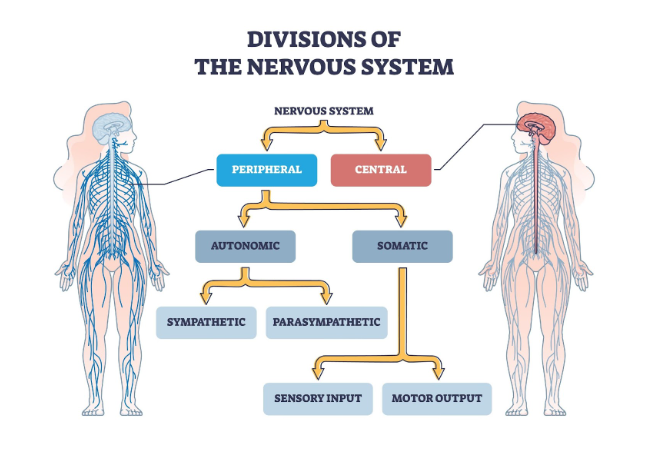
To understand SE, you need a simple grasp of your Autonomic Nervous System (ANS)—the automatic control center that manages your heart rate, breathing, stress responses, and digestion.
The ANS has two main modes that must work in harmony:
- The Accelerator: The Sympathetic Nervous System (SNS)
This is the Go! system, designed for action. When your brain senses danger (real or perceived), the SNS floods your body with adrenaline and cortisol. This triggers the powerful Fight, Flight, or Freeze response. Your heart races, blood rushes to large muscles, pupils dilate, and breathing speeds up—all to prepare for survival.
Connect Free. Improve your mental and physical health with a professional near you
- The Brake: The Parasympathetic Nervous System (PNS)
This is the Slow Down and Rest system. It calms your body, lowers your heart rate, aids digestion, and is responsible for deep relaxation and social connection (the “rest and digest” mode).
The Trauma Loop (The Freeze Response)
When a traumatic or highly stressful event occurs, the SNS activates with full force. If you successfully fight or flee, the PNS smoothly brings you back to calm. However, if you are overwhelmed, trapped, immobilized, or if the threat is chronic (like emotional neglect), the survival energy has nowhere to go. You enter a state of freeze (a powerful, ancient, life-saving mechanism).
In this freeze state, your body shifts into profound immobility, but the high-octane SNS energy remains stuck, like a car with the pedal to the floor and the brakes on. This trapped, undischarged energy causes long-term symptoms: chronic anxiety, constant hypervigilance (always on edge), chronic fatigue, or unexplained body pain. SE gently unlocks this freeze state.
How Somatic Experiencing Works: Titration and Pendulation
SE is a subtle dance between stress and safety, designed to heal the nervous system without overwhelming you. It is slow, deliberate, and deeply respectful of your body’s unique pace. Two key concepts guide this work: Titration and Pendulation.
- Titration: Small Drops of Sensation
In chemistry, titration means adding one substance to another, drop by drop, to observe the reaction without causing an explosion. In SE, it means accessing and releasing trauma energy in tiny, manageable doses.
The crucial distinction here is that we aren’t reprocessing the memory; we are processing the stored sensation. Your therapist will help you focus on a very small, tolerable sensation related to the stress—maybe a slight buzzing in your finger, a tension in your shoulder, or a fleeting image. You only stay with that sensation for a few moments, just long enough for the nervous system to process that tiny piece of information, and then you pull back.
By working in small drops, or “micro-dosing” the activation, you teach your nervous system that you are in control, that you are resilient, and that you can handle these internal sensations without being flooded into a flashback or emotional shutdown.
- Pendulation: Swinging Between Activation and Resource
Pendulation is the rhythmic swinging between a feeling of activation (the stressful, uncomfortable sensation) and a feeling of resource (a place of calm, ease, and safety).
- Activation: The shaky knees, the sudden heat in your face, the tight chest. These are the physical signs of the trapped survival energy trying to complete its cycle.
- Resource: This is an anchor of safety and regulation. It can be internal (the solid feeling of your feet on the floor, the warmth of your hands, a calm spot in your belly) or external (the memory of a favorite vacation spot, the supportive presence of your therapist, or a safe object in the room). The resource is your safe harbor, your “home base.”
The therapist guides you to briefly notice the activation, and then swiftly guides you back to the comfort and stability of your resource. “Notice that slight clenching in your jaw… now, let’s feel the heavy, solid support of the chair beneath your thighs. How does your breath feel in your belly now as you notice the support?”
This gentle, back-and-forth movement helps your nervous system learn a new, corrective pattern: that it can experience stress (activation) and always return to a regulated, calm state (resource). This rhythmic return is the core skill that heals the trauma loop, creating resilience where chronic fear once resided.
What Does an SE Session Actually Look Like? (It’s Slow and Internal)
An SE session is often slower and more focused than traditional talk therapy. While you will talk, the language of the session is the language of the body.
- Somatic Tracking
The session often begins with the therapist asking simple, open-ended questions about your current felt sense in the body. This is called Somatic Tracking. This might involve: “Where do you notice the most comfort today?” or “If you trace the tension in your back with your mind, what shape does it make?” This establishes a baseline of regulation and starts to build your capacity for non-judgmental internal awareness.
- Focusing on the “Edge”
When a stressful topic or memory comes up, the therapist immediately shifts the focus away from the story and onto the sensations that arise. These small, subtle sensations (trembling, warmth, tingling) are the signs of the trapped survival energy attempting to complete its movement. The therapist works right up to the “edge”—the point where the activation starts to feel too strong—and then immediately uses pendulation to bring you back to your resource, preventing overwhelming or flooding.
- The Completion (Discharge and Relief)
As you safely continue this careful process of titration and pendulation, you create a channel for the stored energy to finally discharge. This release is often physical and involuntary, providing the body with the ending it never got. This discharge happens naturally through:
- Uncontrolled, small physical movements (trembling, shaking, twitches).
- Vocalization (deep yawns, spontaneous sighs, burps, or guttural sounds).
- Temperature changes (a sudden feeling of heat or cold passing through the body).
When these releases happen, they are not frightening. They are often accompanied by a profound, immediate sense of relief and relaxation. Your body has finished the stress response it started long ago, leading to lasting relief from chronic symptoms.
A Note of Hope: You Are a Survivor
Somatic Experiencing offers a powerful message: your symptoms—the chronic anxiety, the hypervigilance, the unexplained pain—are not signs that you are broken or “crazy.” They are signs that you are a survivor whose intelligent body is still trying, in the only way it knows how, to protect you.
SE doesn’t demand that you relive your trauma; it simply gives your body the supportive, safe space it needs to finally finish the fight it never got to win. By connecting your brilliant mind with your wise body, SE helps you move from constantly surviving to truly thriving in a calm, integrated state.
Free consultations. Connect free with local health professionals near you.
Conclusion
The Essential Role of the Somatic Experiencing (SE) Practitioner: Your Body’s Compassionate Guide
You’ve read about Somatic Experiencing (SE) and how it focuses on the body’s wisdom, using titration and pendulation to release trapped survival energy. This process sounds subtle, almost mystical, but at its core is a highly practical and trained professional: the Somatic Experiencing Practitioner (SEP).
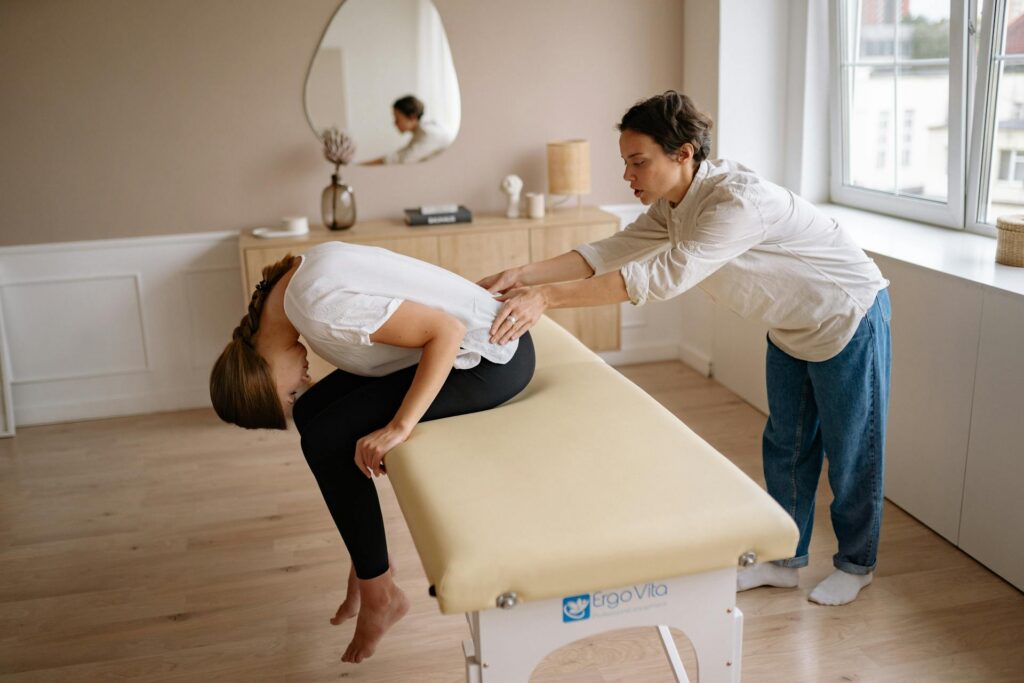
For the everyday therapy customer, understanding the role of the SEP is vital. They are not simply a coach or a yoga instructor; they are specialized trauma therapists whose core skill is helping your nervous system find its way home to calm. This section dives deep into the SEP’s essential functions, highlighting how they create the necessary conditions for your deep, enduring healing.
The SEP as the Co-Regulator and Anchor
The most fundamental role of the SEP is to act as a co-regulator for your nervous system. When you are feeling activated (anxious, hypervigilant, panicked) or shut down (numb, frozen, exhausted), your nervous system is temporarily disorganized. It has forgotten how to return to a calm baseline.
The SEP provides the anchor. Their presence—calm, grounded, and non-reactive—sends constant, subtle signals of safety to your body. They are trained to manage their own nervous system so that they remain steady and present, even when you are experiencing intense emotional turbulence.
The Power of Presence
- Mirroring Calm: Your nervous system subconsciously monitors the nervous systems of those around you. When the SEP maintains a regulated, slow, and measured pace, your body begins to mirror that regulation. This is a non-verbal, physiological process that helps interrupt the stress cycle.
- Holding the Space: The SEP creates a safe, predictable, and contained environment. They know that when old survival energy begins to stir, it can feel scary. Their non-judgmental stability allows you to finally let the physical responses—the shaking, the hot flushes, the tears—emerge without shame or fear of overwhelming the room. They are trained to handle the intensity without reacting to the “story,” keeping the focus safely on the sensation.
This co-regulation is the foundation of SE; it’s what makes the gentle work of titration possible.
The SEP as the Somatic Translator and Tracker
Unlike a traditional therapist who focuses primarily on cognitive content (what you think and say), the SEP is a specialized somatic translator. They are listening beyond your words for the subtle language of your body, a skill called Somatic Tracking.
Listening for the Unspoken Story
The SEP is tracking tiny, non-verbal cues that signal the state of your ANS, often before you consciously recognize them:
- Micro-Movements: A slight tremble in your hand, a small head movement, a twitch in your eye.
- Vocal Shifts: A sudden rise in pitch, a deepening of the voice, a sharp intake of breath.
- Changes in Skin Tone: A sudden flush (activation) or paleness (freeze).
- Tension Patterns: A subtle clenching of the jaw, tightening of the shoulders, or bracing in the stomach.
These cues are the body’s attempt to complete a thwarted survival response. The SEP gently brings your attention to these small, organic movements, asking, “I notice your hands just made a tiny movement—what happens inside when you notice that?” By focusing on the movement itself, the energy is often allowed to discharge, providing relief.
Navigating “The Edge”
The SEP’s expertise lies in sensing your “Edge”—that precise point where gentle activation tips into overwhelming flooding or collapse. They are always working in the Zone of Tolerable Arousal.
Through skillful questioning and observation, they ensure that you only process a small drop (titration) of the activation, preventing the reliving of trauma. If they observe your body bracing or dissociating (signs you’ve gone past the edge), they immediately employ pendulation, swiftly guiding you back to a strong internal or external resource to restore regulation. This prevents re-traumatization and builds trust in your body’s capacity to handle intensity.
The SEP as the Expert in Resource Building
A critical and ongoing part of SE therapy is resource building. A resource is anything—a memory, a physical sensation, a visual image—that brings your nervous system a sense of calm, capacity, or delight. The SEP is an expert in helping you identify, deepen, and anchor these resources.
Anchoring Internal Safety
The SEP guides you to find resources that are always available, regardless of your external circumstances. These might include:
- Grounding: Feeling the solid chair beneath you, or the weight of your feet on the floor. The SEP helps you focus on this tactile input until it creates a palpable sense of stability.
- Boundary Awareness: Noticing where you end and the world begins. This is done through gentle touch or self-touch experiments, helping you establish a felt sense of protection.
- Positive Memories: Spending several minutes slowing down and fully embodying the physical sensations of a genuinely positive memory (e.g., the warmth of the sun on your skin, the smell of a favorite place).
By repeatedly guiding you to feel these resources, the SEP helps to strengthen the Parasympathetic Nervous System (PNS)—the brake system. Over time, you build a powerful toolkit of internal resources that you can use instinctively outside of the therapy room to regulate stress.
The SEP as the Facilitator of Completion
The ultimate goal of the SEP is to help your body complete its thwarted survival response and experience successful discharge. This is the moment of true healing in SE.
When your nervous system is ready, the SEP creates the space for the trapped energy to be released safely. This might manifest as tears, shaking, spontaneous sighs, deep breaths, or gut movements. The SEP’s role here is simple but profound: to witness and normalize.
- Normalizing Discharge: Many people suppress shaking or crying, believing it signals weakness. The SEP validates these responses as natural, healthy signs of the body returning to balance. They might say, “That trembling you feel is your body’s innate wisdom finishing the fight you couldn’t finish then. Just notice it.”
- Integration: After the discharge, the SEP helps you notice the resulting difference in your body—the new felt sense of calm, spaciousness, or lightness. This moment of contrasting the old activation with the new calm is essential for your nervous system to fully integrate the healing and adopt the new, healthier baseline.
In essence, the Somatic Experiencing Practitioner doesn’t just treat symptoms; they help your nervous system rewrite its fundamental programming, transforming a state of perpetual fear into one of flexible, resilient balance. They are the gentle guides who rely on the fact that your body already knows the way to heal.
Time to feel better. Find a mental, physical health expert that works for you.
Common FAQs
Reading about the body’s role in healing can bring up a lot of questions. Here are the answers to the most common things people wonder about when considering or starting Somatic Experiencing.
People also ask
Q: Can somatic therapy help with PTSD?
A: Somatic therapies (STs) are used to treat PTSD with a focus on sensations. STs may be a culturally relevant option not requiring exposure.
Q:What is Peter Levine's theory?
A: Peter Levine uses his famous “Slinky” presentation to demonstrate the effects of trauma on the nervous system, and his philosophy of treating trauma, which involves slowly releasing (or titrating) this compressed fight-or-flight energy a bit at time to give the individual the ability to reintegrate it back into the …
Q:What are the 4 F's of Cptsd?
A: Pete Walker’s “Complex Trauma: From Surviving to Thriving,” explores the four F’s of complex trauma, fight, flight, freeze, and fawn, to help survivors understand their coping mechanisms and reactions, and begin to work towards actions that may better serve them in their life and relationships.
Q:Can you 100% heal from trauma?
A: Most people recover naturally from trauma. But it can take time. If you’re having symptoms for too long—or that are too intense—talk with your health care provider or a mental health professional. In times of crisis, call the National Suicide Prevention Lifeline at 1-800-273-TALK (8255) or visit the emergency room.