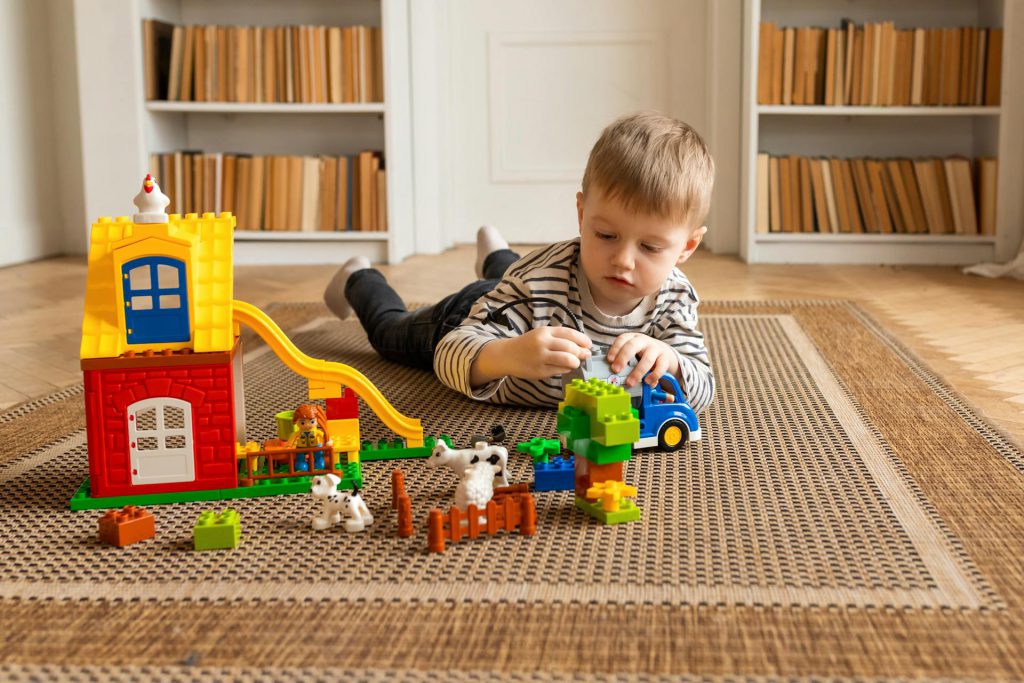
Play Therapy for Children: The Language of Action and Healing for the Young Child
Play Therapy is a dynamic, systematic, and therapeutic approach specifically designed to help children prevent or resolve psychosocial difficulties and achieve optimal growth and development. It is grounded in the recognition that play is the child’s natural medium for self-expression, communication, and mastery, serving the same function for children as verbal therapy does for adults. The theoretical foundation posits that children, due to their limited cognitive and verbal capacities, process their inner world, traumas, anxieties, and relational experiences not through abstract language, but through the concrete and symbolic actions of play. In the safety of a non-judgmental, structured therapeutic relationship, the child is empowered to play out their deep feelings and conflicts. The therapist, trained in multiple theoretical models (e.g., psychodynamic, humanistic, cognitive-behavioral), actively tracks the child’s play, interprets its meaning, and responds in ways that facilitate insight, emotional release (catharsis), and the development of more adaptive coping skills. Play Therapy is, therefore, a crucial intervention for children who have experienced trauma, loss, attachment disruption, or developmental challenges.
This comprehensive article will explore the historical and theoretical origins of Play Therapy, detail the distinct characteristics and clinical application of the two major paradigms—Non-Directive (Client-Centered) and Directive Play Therapy—and systematically analyze the core therapeutic principles, including the use of the therapeutic relationship, the significance of symbolic play, and the development of self-regulation. Understanding these concepts is paramount for appreciating the precision and efficacy of this child-centered healing modality.
Time to feel better. Find a mental, physical health expert that works for you.
- Historical Foundations and Theoretical Unification
The history of Play Therapy tracks the growing recognition by clinicians that adult-based verbal models were inappropriate and ineffective for treating children. This realization led to the formal integration of play as a structured therapeutic modality.
- Roots in Psychoanalysis and Early Pioneers
The initial use of play emerged directly from psychoanalytic observation, but soon branched into distinct modalities based on differing views of the child’s development and the therapist’s role.
- Freud and Klein: Sigmund Freud first noted that children’s play provided access to their unconscious conflicts and repetitive relational patterns. Later, Melanie Klein formalized the technique of Play Analysis, interpreting children’s play actions (especially aggression toward doll figures or symbolic representations of parents) as equivalent to adult free association. She utilized symbolic actions to analyze unconscious drives, fantasies, and early object relations, often focusing on the child’s internal world.
- Anna Freud’s Developmental Approach: In contrast, Anna Freud emphasized the role of the therapist as an educator and supportive figure focused on the child’s ego development and adaptation to external reality, recognizing the child’s dependency on the primary environment. Her work stressed the therapeutic relationship as a necessary prerequisite to any form of analysis.
- Virginia Axline’s Non-Directive Shift: The true conceptual shift occurred with Virginia Axline, who applied Carl Rogers’s Person-Centered principles to children, creating Client-Centered Play Therapy (CCPT). CCPT emphasizes the child’s innate capacity for growth and resilience, focusing on the quality of the non-judgmental, accepting therapeutic relationship rather than the therapist’s interpretation of unconscious material.
- The Unifying Principle: Play as Communication
Despite diverse theoretical orientations, all forms of Play Therapy share a unifying belief about the function of play as a vital mechanism for emotional expression and cognitive mastery.
- The Child’s Language: Play is the child’s primary, most spontaneous, and developmentally appropriate form of communication. It is the verbal and behavioral equivalent of an adult’s narrative, providing a window into the child’s internal emotional life.
- Symbolic Processing: Difficult emotions, traumas, and relational conflicts (e.g., aggression, helplessness, loss) are too complex for a child’s nascent cognitive structures to handle abstractly. Play allows the child to externalize and process these issues through symbols (e.g., using a small doll to enact fear, or a stuffed animal to represent a rejecting parent). By reenacting the scenario in play, the child gains a sense of mastery over the experience.
- Major Therapeutic Paradigms
Contemporary Play Therapy is often categorized along a continuum from entirely non-directive to highly directive approaches, each serving different clinical needs and goals depending on the child’s age, developmental stage, and presenting issue.
- Non-Directive Play Therapy (Client-Centered)
Also known as Child-Centered Play Therapy (CCPT), this humanistic approach places complete faith in the child’s inner wisdom and self-healing capacity, providing maximum freedom within safe boundaries.
- Theoretical Stance: Rooted in Rogerian principles, the therapist creates a permissive environment by providing the core conditions of unconditional positive regard, empathy, and congruence. The therapy is entirely child-led, relying on the child to initiate the healing process when they feel safe enough to do so.
- Therapist Role: The therapist follows the child’s lead, avoiding suggestions, interpretations, teaching, or questioning. The therapist’s primary technique is to reflect the child’s feelings and the content of their play (e.g., “You sound very angry when you crash those cars,” “You wish the mommy doll would stay”). This reflection validates the child’s internal experience and shows the child they are being truly heard and accepted.
- Goal: To allow the child to experience total acceptance, autonomy, and responsibility within the playroom, thereby fostering self-acceptance and integrating the self, leading to greater emotional congruence and resilience in the face of life’s challenges.
- Directive Play Therapy
Directive models integrate specific techniques and themes to address defined symptoms or issues, often derived from behavioral or cognitive approaches, where the therapist takes a more structured, guiding role.
- Theoretical Stance: Rooted in Psychoanalytic, Cognitive-Behavioral (CBPT), or even Gestalt frameworks. The therapist actively structures the play session to target specific clinical goals.
- Therapist Role: The therapist takes an active role, initiating activities, suggesting themes, or introducing specific materials with a therapeutic purpose (e.g., “Let’s draw what worry looks like,” or “I want you to build a safe house for this family”). The therapist initiates the play to confront specific problems or teach skills directly.
- Goal: To achieve specific, measurable behavioral changes (CBPT, such as using play to practice relaxation skills or social scripts), or to guide the child toward insight regarding a specific conflict (Psychoanalytic). This approach is often shorter-term and highly focused on symptom reduction and skill acquisition.
Connect Free. Improve your mental and physical health with a professional near you
III. The Playroom Environment and Therapeutic Principles
The Playroom itself is a vital element of the therapeutic process, functioning as a contained, structured world that facilitates emotional risk-taking and expression.
- Structure and Boundaries (The Playroom)
The physical and psychological structure provides the necessary safety and predictability for the child to express strong, disorganized emotions.
- Selected Materials: The play materials are intentionally chosen to encourage expression across the emotional spectrum (e.g., aggressive release via pounding clay or toy soldiers; imaginative and nurturing expression via dollhouses, puppets, or sand trays; creative expression via art supplies). Materials are selected for their capacity to elicit a wide range of feelings and situations.
- Clear Limits: The therapist establishes strict boundaries related to safety and property destruction (e.g., “You can be mad at me, but you cannot hurt my body or break the toys”). This process of limit-setting, known as the ACT process (Acknowledge, Communicate, Target), teaches the child that all feelings are acceptable, but not all behaviors are. This external control helps the child develop internal self-control and provides a necessary structure for disorganized internal states.
- The Principle of Emotional Catharsis and Insight
Play facilitates the release and reprocessing of emotions within the safety of the relationship, leading to profound psychological shifts.
- Catharsis: Through the action of play, particularly repetitive play or aggressive play, the child experiences a release of pent-up tension and anxiety related to the original conflict. This emotional discharge is a necessary step in the healing process.
- Insight and Mastery: The child gains mastery over the played-out conflict (e.g., by making the scared doll brave, or having the angry animal apologize), leading to a cognitive and emotional resolution within the symbolic world. This resolution is then generalized and transferred into real-life functioning, leading to sustained behavioral and emotional improvement.
Free consultations. Connect free with local health professionals near you.
Conclusion: Play Therapy—The Synthesis of Expression, Mastery, and Self-Regulation 🧸
The detailed examination of Play Therapy validates its specialized role as a crucial, developmentally appropriate, and evidence-based mental health intervention for children. At its heart, Play Therapy functions on the fundamental premise that play is the child’s language, enabling them to express, explore, and resolve emotional conflicts that are inaccessible to abstract verbalization. The therapeutic power of this modality rests on the principles of symbolic communication and the safety provided by a strictly structured, non-judgmental relationship. By offering a contained environment and carefully selected materials, the therapist facilitates the externalization of internal chaos, allowing the child to move from the position of a powerless victim to an active master of their internal world. This conclusion will synthesize how the effective use of limit-setting and catharsis promotes ego strength, detail the critical process of generalization and integration into the family system, and affirm the ultimate goal: fostering enduring emotional regulation and genuine relational competence in the young client.
- The Mechanism of Healing: Catharsis and Mastery (approx. 300 words)
The therapeutic process within the playroom is a dynamic cycle involving the release of emotional pressure (catharsis) followed by the child’s gaining a sense of control over the previously overwhelming material (mastery).
- Catharsis and Emotional Release
The safety of the playroom allows the child to express strong, often “forbidden” emotions in a contained, acceptable manner.
- Acceptance of Intensity: Emotions like intense aggression, fear, or vulnerability, which might be socially unacceptable or dangerous to express elsewhere, are given full permission within the play scenario. The child can aggressively destroy clay, punish toy figures, or weep with the dollhouse characters.
- Reduction of Pressure: This symbolic and action-oriented expression acts as an emotional pressure valve, reducing the intensity of the internal conflict. This is particularly vital for traumatized children whose emotional systems are chronically hyperaroused. The therapist’s non-anxious presence and acceptance of the intense play validates the child’s feeling, reducing the sense of shame and isolation surrounding the emotion.
- Achieving Mastery Through Repetition
The ultimate goal is not just emotional release but gaining ego mastery over the trauma or conflict.
- Repetitive Play: Children often repeat the traumatic scene or distressing conflict in their play numerous times. This repetition compulsion is not pathological; it is the child’s unconscious, biological drive to gain control over the experience by playing it out until they can achieve a different, successful ending in the symbolic world.
- Internalizing Competence: When the child successfully resolves the conflict in play (e.g., the scared animal finds a way to escape; the aggressive puppet learns to share), they internalize this success as competence and self-efficacy, which strengthens their developing Ego and sense of identity.
- Boundaries, Limits, and the Development of Ego Strength
The seemingly permissive environment of Play Therapy is, in fact, rigorously structured by clear, consistent boundaries, which serve a critical developmental function—fostering self-regulation.
- The Function of Limit-Setting
The consistent application of limits (e.g., “You can’t hurt me,” “You can’t break the window”) is a core component of the therapeutic process, especially in Non-Directive models.
- Safety and Predictability: Limits provide a predictable, external structure that contains the child’s disorganized or overwhelming internal experience. For children who experienced chaos or abuse, this consistency is the foundation for trusting the therapeutic relationship.
- Teaching Internal Control: By enforcing limits, the therapist teaches the child that feelings are acceptable, but behaviors must be managed. This direct experience helps the child move from reliance on external control (the therapist stopping the behavior) to developing internal control (self-regulation). The child learns to channel intense feelings into acceptable symbolic play rather than destructive action.
- Relational Competence: The child learns to test and trust the limits of the adult, a necessary precursor for forming healthy, boundaried relationships in the real world. The therapist’s ability to remain calm and firm during limit-testing models appropriate emotional responsiveness.
- The Therapist’s Role in Reflection and Integration
The therapist’s reflection is the bridge between the child’s spontaneous, non-verbal play and their cognitive-emotional understanding.
- Reflecting Feeling and Content: The therapist’s accurate reflection (e.g., “You sound angry at that block,” or “You wish the dinosaur was big enough to protect you”) provides the child with a verbal label for their non-verbal experience. This connection between the internal feeling state and a cognitive word helps integrate the left and right hemispheres of the brain.
- Facilitating Insight: This verbal mirroring allows the child to see their internal experience reflected externally, making the emotion objective and manageable. It is the beginning of insight: the child sees that the emotion is not overwhelming them but is simply a part of their experience.
- Conclusion: Generalization and Lasting Change
Play Therapy is a comprehensive healing process that focuses on the child’s internal world to create lasting external behavioral change.
The final measure of success in Play Therapy is generalization—the transfer of the insights, emotional management skills, and self-efficacy gained in the playroom to the child’s daily life, school, and family system. The child who learned to tolerate and regulate anger in the playroom begins to use those new skills to manage frustration at home. The child who resolved themes of powerlessness in play feels confident speaking up in school.
Ultimately, Play Therapy achieves structural change by creating a stronger, more flexible Ego. The child develops the capacity for emotional regulation—the ability to recognize, tolerate, and modulate their affective states without resorting to extreme behavioral outbursts or withdrawal. By restoring the child’s belief in their own self-worth and competence, Play Therapy provides the foundation for continued resilience and success throughout their developmental trajectory, affirming the profound truth that play is not a distraction from life, but the very mechanism by which a child heals and learns to live fully.
Time to feel better. Find a mental, physical health expert that works for you.
Common FAQs
Core Principles and Communication
Common FAQs
Outcomes and Change
People also ask
Q: What is play therapy for children?
A: It is a type of therapy that allows children to express themselves through play. It takes place in the presence of a trained mental health professional and is designed to help a child process their experiences, understand their emotions, manage relationships, and build self-esteem.
Q:What are the 5 stages of play therapy?
A: Norton and Norton concluded that children go through five stages of play therapy: exploratory stage, testing for protection, dependency stage, therapeutic growth stage and termination stage.
Q: What is an example of play therapy for children?
A: For example, a child might not talk about bullying in school. However, if a role play technique is used during the sessions, the child will impersonate the bully. Therapists are then able to make their diagnosis and help the child overcome such occurrences..
Q: What are the 4 phases of play therapy?
A: In Child Centered Play Therapy the child moves through four stages of play – Warm Up, Aggression, Regression, and finally Mastery. Symptoms tend to increase in the Aggression stage as difficult feelings are processed, and then typically resolve by the time the child reaches Mastery.
.